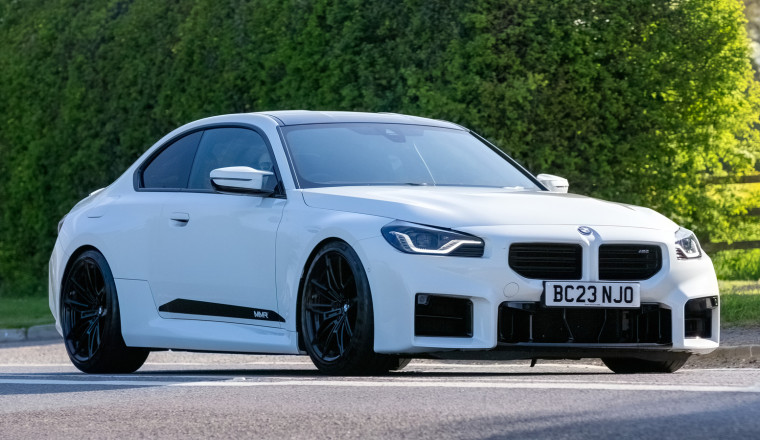

Over the last few years, traditional automatic transmissions seem to have come back into vogue. One of the newer types, the Dual Clutch Transmission (DCT), has fallen by the wayside. This shift became even more pronounced when BMW announced that it would move away from DCTs and adopt slushboxes across all its vehicles.
BMW used the DCT in several of its M performance cars, including the M3, M4, M5, and M6, as well as in a few non-M cars like the E92 335iS and the baby BMW 135i. But as Top Gear reported, Dirk Hacker, the Head of Development for BMW's M division, said in 2023 that the German manufacturer would be phasing out both DCTs and manual gearboxes from future M models. The decision to return to traditional automatics was driven by the comfort they offer, according to Hacker, as well as the higher price of DCTs, which are generally more expensive than other types of automatic transmissions. He also cited the convenience of traditional automatics as another reason to move away from DCTs, noting that customers had reported difficulties with low-speed control and parking.
BMW claims that the ZF 8HP traditional automatic transmission used in most of its cars offers better fuel efficiency than DCTs and can be fitted to both rear-wheel-drive and all-wheel-drive vehicles, whereas the DCT was designed primarily for rear-wheel-drive. The company also contends that the ZF 8HP matches its DCTs in performance parameters. In fact, BMW has such confidence in the traditional automatic that it has even equipped its race cars with it.
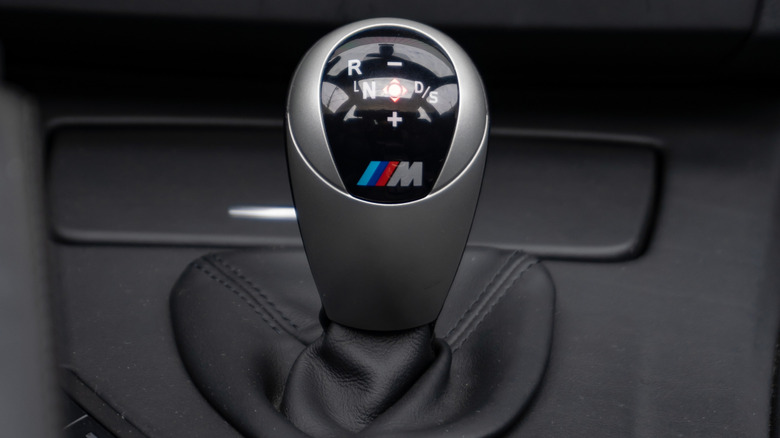 JustPhotos22/Shutterstock
BMW's call for a return to the torque-converter transmission has been years in the making. It actually dates back to 2017, when reliability concerns and rapid advancements in traditional automatics first pushed the company to begin moving away from DCTs. While DCTs offer exceptional shift speeds, their jerkiness — especially in stop-and-go traffic — has long been one of their biggest shortcomings.
In contrast, traditional automatics deliver smooth, refined shifts. An even bigger issue with DCTs has been their reliability, which has proven costly for some manufacturers, such as Ford, whose PowerShift DCT suffered from numerous problems, including clunky gear changes, harsh noises, and TCU failures. Ford faced class-action lawsuits in multiple countries due to its gearbox, which was plagued with issues, and eventually moved to traditional automatics. Hyundai is set to switch the 2026 Santa Fe from a DCT to a conventional automatic for better drivability.
Experts believe that torque converters have improved significantly in shift speed, which was the one major area where DCTs previously held an advantage. With that edge now gone, one of the oldest automatic transmission technologies — the torque converter, which was patented in 1905 — is here to stay and continue to rule the roost. Despite several automakers phasing out the DCT, the gearbox may still have some life left in it. However, it may remain limited to performance cars such as Porsche models with the PDK gearbox or McLarens like the 720S.