

By WILIAM HUNTER, SENIOR SCIENCE & TECHNOLOGY REPORTER
Scientists have revealed why hybrid vehicles are so dangerous – as new data shows the eco–friendly motors' shocking death rate.
Department for Transport (DfT) figures, analysed by the Daily Mail, show that hybrids are three times more likely to be involved in a deadly crash than petrol models.
According to road safety experts, the biggest risks aren't faced by those inside the car itself.
Instead, the vast majority of fatalities are pedestrians on the street.
Speaking to the Daily Mail, experts have pinpointed three key factors that make hybirds more dangerous than petrol or diesel alternatives.
These are: heavier design, quieter running, and popularity among drivers in busy, pedestrian–dense cities.
Professor Phil Edwards, a health statistics expert from the London School of Hygiene & Tropical Medicine, told the Daily Mail: 'Road traffic injuries are a leading cause of death, particularly for children and young adults.
'As we already know that pedestrians are twice as likely to be hit by a hybrid car as a petrol or diesel car, a national investigation into the relative safety of hybrid vehicles is urgently needed.'
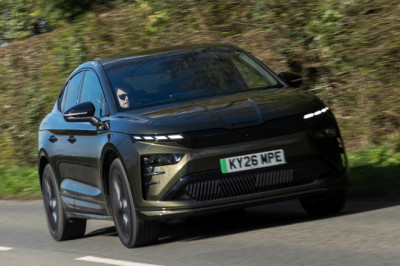
As new data shows that hybrid cars have a death rate three times higher than petrol cars, experts have revealed why these eco–friendly motors are so dangerous (stock image)
The DfT's data showed that 122 people died in hybrid car crashes last year, compared with 777 in accidents involving petrol cars.
However, hybrids are outnumbered almost 20 to one by petrol models on Britain's roads, making their death rate three times higher than petrol cars.
Scientists say that this is not because crashes involving hybrid vehicles are inherently more deadly than those involving other types of cars.
Professor Zia Wadud, a transport safety researcher from Leeds University, told the Daily Mail his research actually shows that the opposite is actually true.
'Once you have considered other crash factors, such as speed, vehicle body type, weather, light conditions, driver and pedestrian characteristics, we actually found that hybrids were less likely to cause a more severe injury once a collision happens,' he said.
What gives hybrid vehicles their alarmingly high death rate is the fact that they are so much more likely to be involved in a crash with a pedestrian.
There are a few possible factors that could explain this higher collision rate.
One important detail is that some earlier hybrids didn't have an Acoustic Vehicle Alerting System (AVAS) – a warning noise that triggers at low speeds to alert pedestrians.
A total of 122 people died in hybrid car crashes last year, compared with 777 in accidents involving petrol cars, despite being outnumbered almost 20 to one (stock image)
The death rate is measured as the number of people killed in collisions per car on the road.
There are fewer hybrids on the road than petrol cars, but they tend to be driven much further.
Hybrids are popular choices for taxis and private hire cars in urban areas, putting them in close proximity to pedestrians.
Combined with their heavy construction and quiet running, this means hybrids are around twice as likely to hit pedestrians.
That gives them a much higher death rate than petrol, diesel, or electric alternatives.
These only became mandatory for new vehicles in 2019 and newly registered vehicles in 2021, meaning there are still lots of hybrids on the road that are effectively silent at low speeds.
Hybrids, especially plug–in hybrids, are also often much larger vehicles.
Nicholas Lyes, director of policy at road safety company IAM RoadSmart, told the Daily Mail: 'Plug–in hybrids are often heavier and more complex vehicles owing to the fact they run on both a traditional combustion engine and a battery for limited miles.'
This could contribute to the increased collision rate by making hybrid vehicles harder to control and more likely to crash.
However, the biggest reason that hybrids are more deadly likely has more to do with their drivers than the make of the car itself.
Professor Wadud says: 'The casualty rates for hybrids is higher, not because they are hybrids per se, but possibly because of the way they are driven.'
Hybrids are extremely popular as taxis or private hire vehicles because they are fuel–efficient and exempt from emission surcharges such as London's ULEZ.
The average private hire vehicle, which includes services such as Uber or Bolt, can be on the road up to five times as much as a privately owned car.
Experts say that hybrids' low emissions make them very popular for taxis and hire cars in urban areas such as London's ULEZ. This puts them in close proximity to pedestrians, leading to a higher number of fatal collisions
That means hybrid cars might be safer per mile driven, but still have a much higher death rate per vehicle on the road.
Additionally, since hybrids are popular in urban areas, they are much more likely to be in close proximity to pedestrians than a diesel vehicle used in a rural area.
Professor Wadud adds: 'It is likely that a large share of hybrids are driven a lot in cities and urban centres, closer to pedestrians, as such the probability of conflict with pedestrians is higher, and the death rates could be higher.'
On the other hand, it has been suggested that hybrid vehicles could be more deadly because of the greater risk of fires.
Last year, the Swedish Civil Contingencies Agency published data suggesting that hybrid vehicles faced the highest fire risk, with 3,475 conflagrations per 100,000 vehicles.
Due to the mixture of battery and fossil fuel power sources, these fires are often particularly dangerous and hard to control.
The DfT's official guidance suggests that 'only fire service personnel with specialist training, using self–contained breathing apparatus, should tackle these types of fires or events.'
The DfT adds that these battery fires may 'result in jet–like, directional flames and will release toxic chemicals, which can pose a risk to health.'
Fires involving electric or hybrid vehicles can be particularly dangerous, but experts say that they are not more likely to catch fire than fossil fuel vehicles. Pictured: The aftermath of a fire that consumed nine electric vehicles on the M5 in October
However, more robust research and data from British roads suggest that this is not the case.
In 2019, the London Fire Brigade dealt with just 54 electric vehicle fires compared to 1,898 petrol and diesel fires, according to data obtained by Air Quality News through a Freedom of Information request.
Fires are therefore unlikely to account for the difference in death rates between hybrid vehicles and their fossil fuel counterparts.
Likewise, Professor Oliver Carsten, a vehicle safety expert from Leeds University, told the Daily Mail: 'Battery fires do not seem a likely explanation as EVs have been shown to be no more dangerous than internal combustion vehicles.

'It is unlikely that hybrid vehicles are inherently more unsafe than other internal combustion vehicles.'
Overall, experts believe it is hybrid vehicles' high mileage, quiet running, and urban usage that are likely to be the biggest factors behind their deadly impact.
The RAC Foundation, a transport research organisation, called for a 'dedicated investigation branch' to look into the trend.
'It's high time we had a specialist resource to address road safety risk', director Steve Gooding said.
Never use a domestic multi socket extension lead when charging your electric vehicle. If you do need to use an extension lead only ever use one that is suitable for outdoor use such as a reel cable.
Never ‘daisy-chain’ extension leads. The method of plugging more than one extension lead into another in order to reach a greater distance increases the risk of an electrical fire as well as electric shock.
Always buy your charging cable from a reputable retailer or directly from the manufacturer who will put such products through rigorous tests to ensure they meet UK safety standards.
Ensure you frequently check your charging cable for wear and tear and replace it if any damage is evident.
If you are charging from a 13A mains socket in your home, ensure the wiring in your property has been checked prior to doing so. Old wiring may not be able to cope with the demand from charging your vehicle overnight and risk a fire in your property.
The safest and most convenient way to charge your vehicle at home is through a dedicated wall box charging point. Ensure this is installed by a qualified, registered and competent electrician only. Use our ‘find an electrician’ page to locate one near you.
Take advantage of the on-going Government schemes aimed at relieving consumers of some of the cost linked to the installation of a home charging point.
Source: Electrical Safety First
Share what you think
The comments below have not been moderated.
The views expressed in the contents above are those of our users and do not necessarily reflect the views of MailOnline.
By posting your comment you agree to our house rules.
Do you want to automatically post your MailOnline comments to your Facebook Timeline?
Your comment will be posted to MailOnline as usual.
Do you want to automatically post your MailOnline comments to your Facebook Timeline?
Your comment will be posted to MailOnline as usual
We will automatically post your comment and a link to the news story to your Facebook timeline at the same time it is posted on MailOnline. To do this we will link your MailOnline account with your Facebook account. We’ll ask you to confirm this for your first post to Facebook.
You can choose on each post whether you would like it to be posted to Facebook. Your details from Facebook will be used to provide you with tailored content, marketing and ads in line with our Privacy Policy.
 Trump hits back at Venezuela's new leader and threatens her with a fate WORSE than Maduro's... as he names the next country he has his eyes on