


AM car radios date back to the 1930s and have since become as ubiquitous as the steering wheel. So why are automakers getting rid of them, especially in electric vehicles? The simple answer is that electric motors and other electronic components in modern vehicles increase the amount of static interference that AM radio is prone to, and limiting this interference would cost manufacturers billions. Given the problem is particularly prevalent with EVs, several major OEMs (including but not limited to BMW, Tesla, and Mazda) are removing AM radios from their electric vehicles entirely, with automakers claiming that internet and satellite-based radio offerings will serve as effective substitutes for the real thing.
However, these decisions have met governmental resistance and representatives are imploring OEMs to consider the safety costs of abandoning AM radio. Beyond the countless AM talk shows that may or may not be missed, AM radio serves as a crucial emergency response tool that remains accessible in situations where cell and internet tools may not. Originally introduced to Congress in 2023 and re-proposed in 2025, the AM Radio for Every Vehicle Act (if passed) would require automakers to keep AM radio broadcasting available in all newly produced vehicles for no additional cost to the consumer (suggesting that some OEMs might try to make it an optional extra if left unregulated). The proposal would also require that automakers clearly disclose which of their existing vehicles don't have AM radio capabilities.
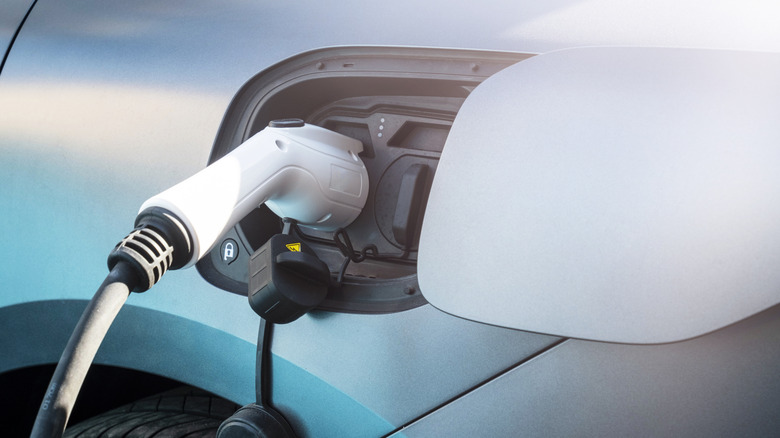 Natalya Maisheva/Getty Images
Is AM radio static really that much worse in EVs? Well, according to executives at Volkswagen, Volvo, and Mazda, it is. To varying degrees, spokespeople from each of these brands have commented on electric motors' significant worsening of AM radio static and subsequent poor performance in their cars.
If you're unfamiliar with how radios (and radio static) works, here's a quick refresher. The reason you're able to hear something playing back to you when you turn on your car's radio is because radio stations send out encoded information over carrier radio waves, then your receiver picks up these signals and translates them into sound. AM and FM refer to two different ways of encoding information in a carrier wave. Where FM (frequency modulation) transmits information over variations in the carrier's frequency, AM (amplitude modulation) transmits information over variations in the carrier's amplitude, or the height of the radio wave. The variability in amplitude subjects AM radio to a lot of static.
Despite the exacerbation of this static by the electrical components in many EVs, keeping them in vehicles has received bi-partisan support. That's a rarity these days, but cynics might suggest that's because the government wouldn't be footing the bill.