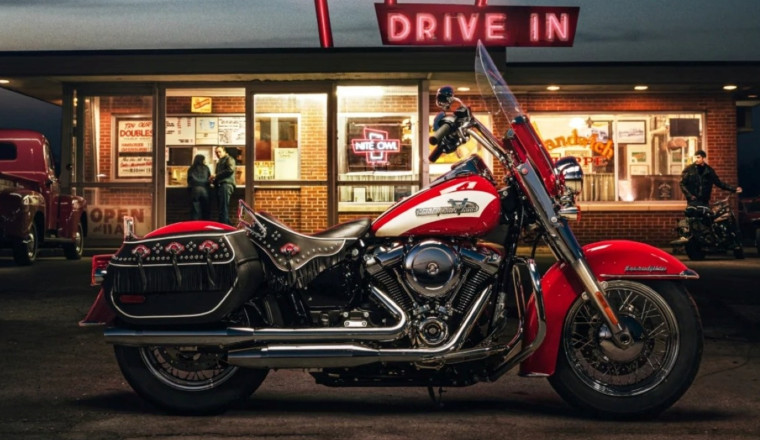

Having unbalanced V-twin engines bolted directly to their steel frames is one reason Harley-Davidsons vibrate so much. To alleviate the vibrations, Harley-Davidson began using rubber-mounted engines on its more upscale touring models over four decades ago. Digging into the archives of Cycle World magazine, we found reports of Harley-Davidson's use of rubber engine mounts on the all-new-for-1980 FLT Tour Glide's 80 cubic-inch V-Twin. In addition, Doc Harley from the Low Country Harley-Davidson YouTube channel puts the year of Harley-Davidson's first rubber-mounted engines at 1980.
The Harley-Davidson Museum confirms the 1980 FLT Tour Glide as Harley-Davidson's first motorcycle to use a rubber-mounted drivetrain. While other Harley Davidson motorcycles continued using solid connections between engines and frames, the Sportster lineup, among the best Harley-Davidson motorcycles for new riders, switched to rubber mounts in 2004.
 Low Country Harley-Davidson/YouTube
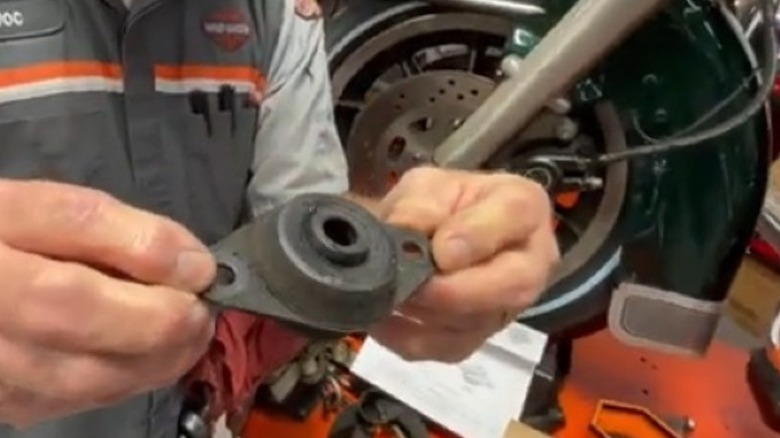
The only major negative associated with Harley-Davidson's use of rubber engine mounts is that they eventually wear out. When they do, they'll require some expertise to change them safely. Replacing engine mounts is a fairly straightforward task for any DIY mechanic with the proper tools and equipment, but please don't trust ChatGPT for repair advice.
The most significant factor in favor of rubber-mounted Harley-Davidson engines is the reduction in vibrations transmitted to the rider, but some riders prefer the solid mounts. Harley-Davidson Forums user aswracing says the vibrations felt at mid-range rpm are "actually kind of pleasant" and "makes the bike feel alive." Rubber mounts don't always eliminate all the vibrations, though. Dynamark, another Harley-Davidson Forums user, reported the rubber-mounted engine in the 2010 Street Glide they borrowed from a dealer vibrated more than their Dyna.
Beginning in 1999, Harley-Davidson began offering internally counter-balanced engine designs, such as the B-series Twin Cam V-Twin, to reduce engine-induced vibrations. The company used rigid engine mounts to install its B-series Twin Cam engine on its Softail models. Later, the internally counter-balanced Revolution V-Twin engine debuted in 2002 on the V-Rod using rubber engine mounts. Current counter-balanced Harley-Davidson V-Twin engines include the Milwaukee-Eight and the Revolution Max.