
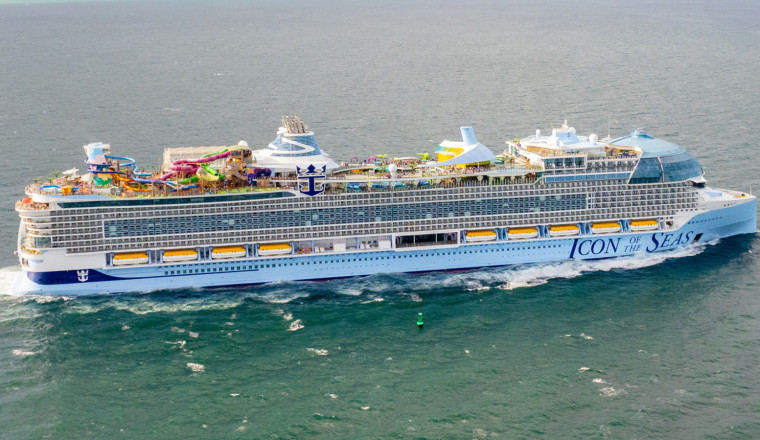

Sure, there are occasional mishaps — like the infamous poop cruise that resurfaced this year in a Netflix movie — but sailing the ocean blue remains a big deal in a lot of ways. For one, 2025 is on pace to be the third straight year of record-setting ticket sales for cruise ships, with 2026 expected to be even bigger, according to AAA. Then there's Royal Caribbean, which launched the world's biggest cruise ship in 2024. Named Icon of the Seas, it is some 1,200 feet long, has a gross tonnage of more than 250,000, and can carry nearly 8,000 people (crew included).
And with growing demand for bigger ships, you have to wonder where all those vessels will go when they retire from duty. Well, there was a time when many large ships were simply abandoned. Mauritania, for example, had a rather casual approach to letting people dump their ships in the Bay of Nouadhibou for many years — for the right price.
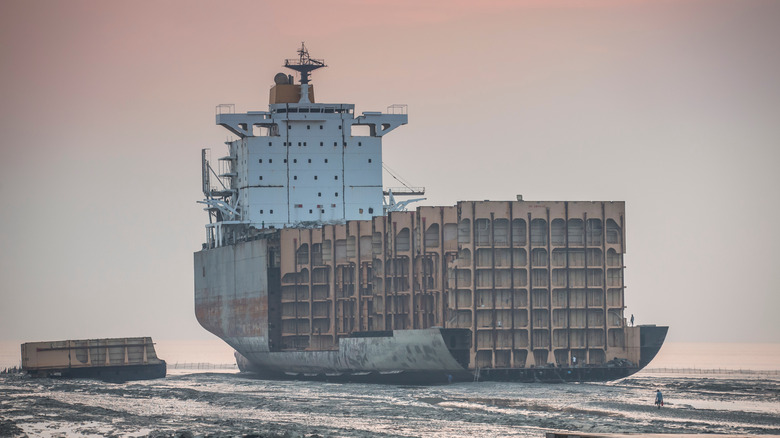
But as most folks became more concerned about the environment and recouping money from derelict boats, they began developing large junkyards dedicated to disassembling ships for scrap. The very largest is in Alang, India, along the Arabian Sea's Gulf of Khambhat, and handles about half of the world's retired ships. Just be aware that while recycling these vessels sounds like a good idea, "ship-breaking," as it's called, can be a dangerous, low-paid job with a history of using child labor and a bare minimum of tools or safety precautions.
 Katiekk/Shutterstock
There are some modern ship-breaking facilities, of course, where the dirty work is done in a dry dock or at a specialized site dedicated to the process. Here, employees and employers often have to comply with detailed guidelines like those in OSHA's Safe Work Practices for Shipbreaking. Now, it's unlikely people follow these strict rules when ships are simply run aground on the beach at a place like Alang. But they do at least provide a basic look at what should happen.
The first step is a survey to identify areas of the ship where there may be hazardous materials requiring special handling or precautions to remove. After this, crews can start removing those materials, along with any other liquids — like ballast water — and what OSHA calls "equipment" in general. This would include items ranging from chains and fixtures to large engine parts. When the ship is pretty much stripped down to the metal, the metal surfaces themselves must be rid of any coatings. It's only then that the cutting can begin. Needless to say, OSHA mandates careful sorting of all scrap for recycling, resale, or safe disposal, too –just like when you want to recycle used motor oil from your car.
The thing is, India, along with Pakistan and Bangladesh, deals with about 90% of the world's scrapped ships (by weight). So the majority of ship-breaking, as mentioned, involves manual labor with sledgehammers, blowtorches, and routine exposure to a long list of deadly chemicals — which usually pollute the surrounding areas, too.
 Brian E Kushner/Shutterstock
On the other hand, some old cruise ships can be used to help nature. Consider the SS United States: It was launched in 1951 with 395 staterooms, 14 first-class suites, and a sleek design that helped it set a still-standing record for quickest trans-Atlantic crossing. What helped matters was an ability to exceed 44 mph — yes, ships do measure speed in knots, and that works out to 38 of them. Anyways, during the summer of 2025, the SS United States was towed to Mobile, Alabama, where it's being prepped for safe sinking as the world's largest artificial reef.
Another famous ocean liner saved from the scrapyard is the original Queen Mary. The ship spent many years transporting passengers across the Atlantic both before and after World War II, and it served as a troop ship during the conflict. Now it's docked in Long Beach, California, where it serves as a hotel and tourist attraction. Likewise, Queen Elizabeth II became a floating hotel in Dubai following more than 40 years as a working passenger liner.
Some designers have also floated the idea of transforming decommissioned cruise ships into affordable housing. As the architect involved in the project, Abe Desooky, told Business Insider: "As we move closer to environmental decay and climate change, cities like Miami need to start coming up with [affordable housing] solutions that are atypical. I think taking decommissioned ships and not just using them for hospitality is something that should be happening now."