

By ROB HULL, MOTORING EDITOR
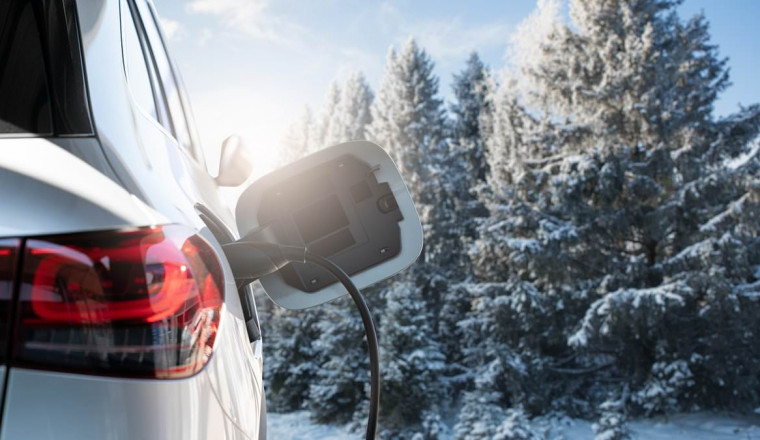
A third of electric car owners driving more than 200 miles to destinations over Christmas have major range concerns - and some say they will instead use a petrol car, a poll reveals.
In an Auto Express survey of 2,253 drivers - 34 per cent of whom own an EV - more than two thirds say they are planning to drive over the festive period.
When asked the length of their longest trip, a quarter said 50 miles or less, however, the majority are gearing up for single journeys longer than this.
Almost half say they will cover over 100 miles, while 28 per cent have planned routes that are over 200 miles.
But when looking at EV drivers specifically, more than half are taking a trip of 100 miles or more.
One in five say their longest journey will be between 100 and 200 miles, while a third are plotting at least one single trip of 200 miles or more.
A third of electric car owners covering more than 200-mile single journeys have major range concerns ahead of hitting the road for Christmas
And while for most range anxiety is not an issue, two in five (22 per cent) covering 100-mile trips admit that getting to their destination is causing them apprehension. For those travelling 200 miles, this rises to 33 per cent.
Of those who have concerns, more than a quarter are so worried that they have decided to 'take another car', reaching instead for a trusty petrol or diesel model.
Paul Barker, editor at Auto Express, said: 'Our research shows that range anxiety is still putting a lot of EV drivers on edge at Christmas, with more than a third of those polled saying it is a concern.
'However, in many cases, these worries are exacerbated by an underestimation of how much the public charging network has improved in recent years - and by habits that aren't always efficient.'
During the festive period, the RAC estimates there will be 37.5 million leisure trips taken in the days running up to Christmas.
A small percentage of EV owners covering long journeys over the festive period have said they will 'take another car' to avoid range anxiety
With Christmas falling mid-week in 2025, the numbers suggest drivers are keen to set off early to avoid an undoubtedly frantic weekend on the roads, the breakdown provider claims.
While the RAC expects the main wave of festive journeys to have started yesterday (Friday 19 December) with 3.6 million trips planned, before escalating to 4.1 million today on what it's dubbed 'Snarl-up Saturday'.
If this is the case, today will be the busiest Saturday of any Christmas getaway period since its records began in 2013.
Approximately 3.5 million journeys are expected on Sunday while a further 10.3 million will set off between the Monday and Christmas Eve on Wednesday.
For EV drivers completing longer trips, the volume of road traffic over this weekend could potentially trigger queues at charging points, especially rapid devices at motorway services.
While the previous two Christmas periods have seen little evidence of extended charging queues, the 2022 festive week sparked EV charging drama, when Tesla owners in particular forced to wait in three-hour lines to access an available device.
In December 2022, EV owners - particularly drivers of Tesla cars - had to endure three-hour charging queues as many tried to top up their batteries while trying to complete Christmas trips to see friends and family
Reducing the potential for this to occur again has been a growth in the charging network in the last three years, which has expanded from 34,000 chargers in December 2022 to over 86,000 today.
In the last year alone, 17,356 rapid and ultra-rapid chargers have been added to the network, notably at motorway services and locations where traffic tends to be busiest.

That means the likelihood of charging queues shouldn't be a major concern for those planning to use their EVs over the coming days.
But Paul Barker says charging etiquette will have a major impact, too.
'One of the biggest mistakes drivers make is waiting for their car to charge all the way to 100 per cent at a rapid charger,' he explained.
'Beyond around 80 per cent, charging speeds drop dramatically, which means you're paying more and waiting around unnecessarily.
'For most long journeys, it makes far more sense to charge to 80 per cent and get back on the road.
'It's quicker, cheaper and often no less practical, especially if you've planned your route properly and know where the next charger is.
'Public charging works best when drivers treat it like a quick top-up rather than a full tank.'