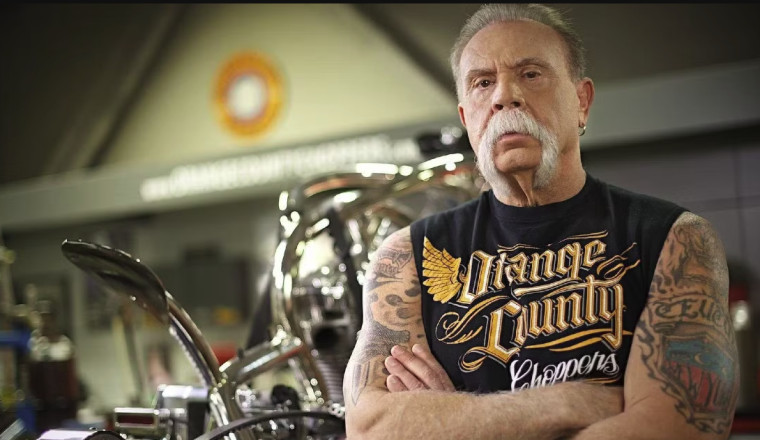

Paul Teutul Sr. grew up in Yonkers, New York, beat a drug addiction in his twenties, and built a welding company called OC Iron Works from a single truck in the early 1970s. By the 1990s the steel business was profitable and Paul Sr. was bored. He had been obsessed with motorcycles since the Easy Rider and The Wild One era of the 1960s, and in 1999, at the age of 50, he started building custom choppers out of Newburgh, New York. He did not want to build motorcycles. He wanted to build a brand.
In 2002 he caught the break that changed everything. The Discovery Channel came looking for content. The custom motorcycle building process turned out to be perfect for episodic reality TV: a build with a deadline, enough technical craft to be interesting, and a cast of characters with enough friction to generate drama every week. Paul Sr. had two sons who worked in the shop. Paul Jr. was the creative talent, the designer responsible for the bikes that made the brand famous. Mikey drifted between admin work and the role of hapless referee. Paul Sr. controlled everything and answered to no one. The family was purpose-built for the format.
American Chopper debuted on Discovery on 29 September 2002. By 2004 it was pulling 3.4 million viewers per episode and was frequently the number one programme in the male 18 to 49 demographic, excluding sport. Orange County Choppers hit $40 million a year in revenue. The company grew from a handful of employees to nearly 60. Web orders for merchandise were arriving in the dozens per minute. T-shirts, posters, diecast models, branded gear. Corporations were paying $50,000 to $150,000 for a single custom motorcycle themed around their brand. Will Smith had one. Jay Leno had one. The New York Yankees and the New York Jets had theirs. The brand was everywhere, and Paul Sr. decided to make it permanent.
In 2007, he commissioned a new headquarters on Route 17K in Newburgh: 61,000 square feet of showroom, museum, visitor centre and movie theatre, designed as a destination rather than a factory. The vision was to make it a Graceland for motorcycle culture, somewhere fans would make pilgrimages to. The cost was $13 million. The grand opening was scheduled for April 2008.
Five months later, Lehman Brothers collapsed.
The family that broke the business
The $13 million headquarters was the most visible mistake. The preceding years had been building toward a less visible one: the relationship between Paul Sr. and Paul Jr. had deteriorated past the point of creative tension into something genuinely toxic. Paul Sr. wanted total control and total obedience. Paul Jr. wanted creative autonomy over the designs that were, not incidentally, the actual reason people were watching. The conflict made for extraordinary television. It was destroying the company.
In September 2008, Paul Sr. fired his son from Orange County Choppers. Paul Jr. left to start his own operation, Paul Jr. Designs. Father sued son. Son sued father. The chair-throwing incident that became the world's most recognised business meme happened in 2009, one year after the firing, during a filming session in which the argument between them became physical. A chair came from Paul Jr. A chair came back from Paul Sr. Junior left. The moment was watched but not yet famous.
Discovery leaned into the split, rebranding the show to follow both companies as rivals. Ratings kept declining anyway. By 2012, Discovery cancelled the franchise entirely. The chairs, the lawsuits, the drama — all of it had finally exhausted its audience.
With the show gone, the reasons for anyone to visit a 61,000 square foot motorcycle headquarters in upstate New York evaporated. Revenue collapsed. In 2011, unable to service the debt on the building, the Teutuls handed it back to the lender, GE Commercial Finance, and negotiated a lease to keep operating inside it. In 2016, GE sold the building at auction for $2.3 million, 82 per cent less than it had cost to build nine years earlier. Paul Sr. attempted a pivot into hospitality, opening a bar and grill called the Orange County Choppers Roadhouse. Multiple investors later claimed they had each been separately sold stakes in the same project, with losses totalling between $12 million and $15 million.
Like this? Get the app: iOS | Android
The meme that arrived too late
On 27 February 2018, the day before the Discovery Channel rebooted American Chopper with a reconciliation episode reuniting father and son, Paul Teutul Sr. filed for Chapter 13 bankruptcy. Court documents showed he owed 50 creditors $1,070,893. His home in Montgomery, New York was in foreclosure. He was bringing in $15,070 a month and spending $12,612. The value of Orange County Choppers was listed in the filing as zero.
The same week, for reasons unrelated to the reboot, the 2009 chair-throwing clip went viral on the internet and became a globally recognised meme. By 2018 the format of the joke had spread into every industry: two figures facing each other across a table, a chair about to fly, captioned with whatever argument you wanted to illustrate. The clip had been watched over 100 million times online before most people had any idea it came from a cable television show about motorcycles in upstate New York.
Paul Sr. sold his 38-acre estate in upstate New York for around $1.5 million, well below his asking price. The Newburgh headquarters, abandoned since 2020, was converted into a self-storage facility. OC Iron Works, the steel business that had funded everything, was the subject of bankruptcy fraud accusations after assets were systematically transferred between entities controlled by family members, leaving creditors unpaid. Paul Sr. was found in contempt of court in 2019 for failing to pay a debt to a car customisation shop that had worked on his Corvette.
Today, Orange County Choppers operates out of an 11,000 square foot complex in Pinellas Park, Florida, where Paul Sr. runs the OCC Roadhouse and Museum, a restaurant, concert venue and motorcycle display. Paul Jr. still runs Paul Jr. Designs in New York and continues building motorcycles. Father and son have reconciled. They will not work together again.
The custom chopper industry peaked with the show and has not recovered. Between 2006 and 2010, total US motorcycle sales fell 41 per cent, from just under 700,000 units annually to under 400,000. The market for $50,000-plus hypercustom motorcycles essentially ceased to exist after the Great Recession and has never returned. Jay Leno, who owns an Orange County Chopper, described it on camera as a terrible motorcycle. They were always art pieces. They just happened to be art pieces built at the exact moment America was willing to pay a fortune for them, and watch other people fight about them on television.
The lesson Paul Sr. never applied to himself was the same one every reality television subject eventually learns: the show and the business are not the same thing, and confusing them will eventually cost you one or both.
Sources: SlashGear, October 2023 | PopCulture.com | Nicki Swift | TheWrap / IMDb | San Jose Bankruptcy Lawyers, March 2018 | Georgia Bankruptcy Blog | The Biography, February 2026 | Distractify, January 2024 | Page Six via New York Post, February 2018 | US Bankruptcy Court Southern District of New York, case filings | Miami Herald, 2016