
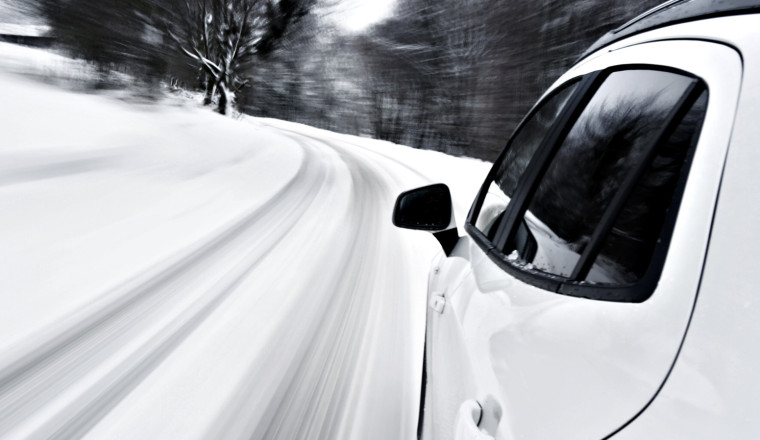

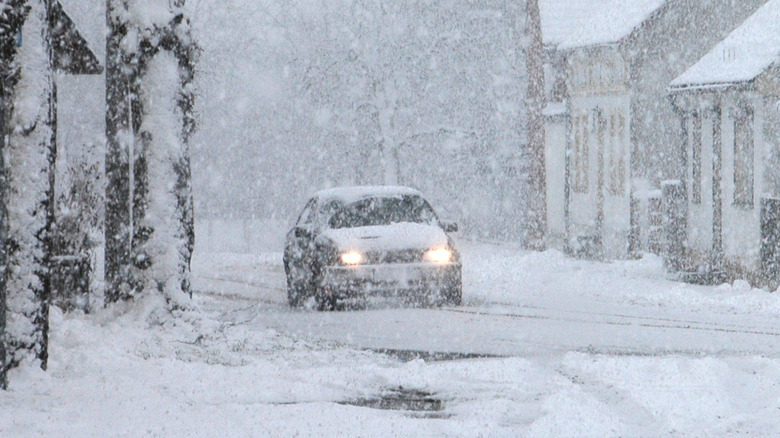
Despite the very real effects of climate change, like rising temperatures, snow and ice are still big safety concerns for many drivers. In fact, climate change can actually make local snowstorms worse even when the world as a whole reports less total snowfall. That's why many folks switch to snow tires when the white stuff starts to fly, and it's why we've already looked at the best winter and snow tires per Consumer Reports. It turns out they're plenty effective, but also plenty expensive, and there is some hassle involved in swapping with regular tires.
The good news is that they aren't your only option for improving traction in cold weather. Brands like Vredestein, Nokian, and Michelin provide top-quality all-weather tires that can be right in the sweet spot for, well, all weather situations. Their treads and rubber compounds are specifically engineered for better performance in snow and ice, like winter tires, and they even earn the same kind of mountain/snowflake symbol on their sidewalls to prove it. And while they aren't likely to quite match true snow tires for performance, they hold up better when temperatures start to rise — and vice versa, since all-weather tires have more grip but less durability than all-season alternatives.
So what's the bottom line? "The best all-weather tire provides year-round traction that truly combines all-season and winter/snow performance. Despite the higher prices [than all-season tires], they typically represent a good value," explains Ryan Pszczolkowski, tire program manager at Consumer Reports.
 AustralianCamera/Shutterstock
A top choice for cars — not SUVs and trucks — comes from the brand Nokian Tyres, which claims to have invented the winter tire in 1934 in its home country of Finland. Nokian now has facilities in the United States — in Dayton, Tennessee, to be more specific.
Nokian's Remedy WRG5 tires are in fact one of just two all-weather car tires recommended by CR, which singled them out for having the very best snow traction of any all-season non-SUV tire. Technically, all-weather tires are considered a subset of all-season tires.
Consumer Reports also rated the Nokians above average when it comes to dry braking, hydroplaning, and ice braking. They don't sacrifice refinement, however, and have the same kind of scores for ride comfort and noise. At the same time, Nokian provides a 60,000-mile limited treadwear warranty — which is good because CR indicates the predicted lifespan of the tires is closer to 50,000 miles. Another notable benefit for Nokian tires is a factory pothole warranty that will come in handy until all cars can jump over potholes on awful roads.
 aaddyy/Shutterstock
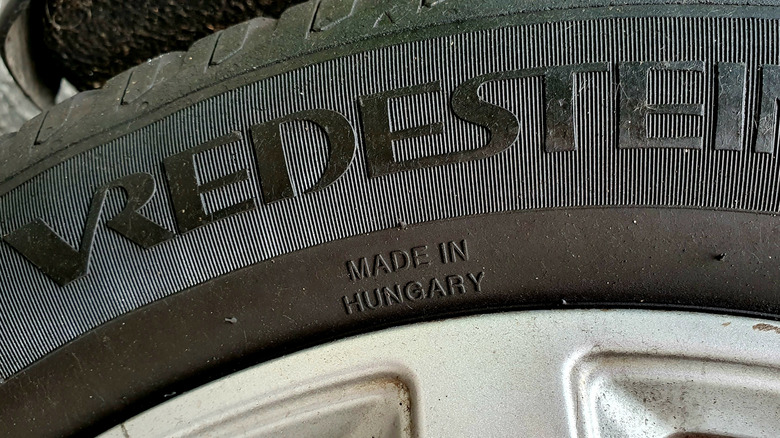
Founded in 1908 in the Netherlands and now owned by India's Apollo Tyres, Vredestein began manufacturing tires for bicycles in 1910 and for cars in 1912. Today, its Quatrac Pro+ is ranked No. 1 overall among all-weather car tires and No. 3 among all-season car tires, according to CR. The Vredestein rubber also stands out for low pricing. When CR checked out tire costs, the Quatrac Pro+ was estimated at $144 per tire; that compares to $194.53 for the Nokian Remedy WRG5.
Vredestein then builds on its low-cost foundation with above average ratings in nearly all aspects of Consumer Reports testing, including snow traction, ice braking, hydroplaning, noise, and ride comfort. Consumer Reports predicts these tires will last about 60,000 miles as well. When you take into account all those advantages, plus the low price point, it's easy to understand why the Vredestein Quatrac Pro+ further had the best score for owner satisfaction in the all-weather car class, while finishing No. 2 in that measure for all-season rubber.
 Hadrian/Shutterstock
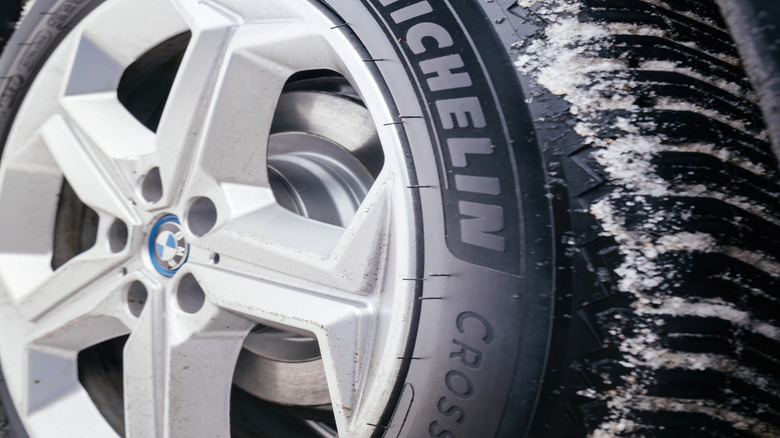
The best all-weather tires for SUVs — and the best overall — come from Michelin. That shouldn't be a surprise, since Michelin has a strong track record of providing premium rubber that dates back to the company's invention of the modern tire in 1891. More recently, Michelin also claimed CR's No. 1 rating for Best Tire Brand of 2025 and Most Satisfying Tire Brand of the year. In addition, just as an FYI, there are a number of other popular tire brands owned by Michelin, such as BF Goodrich and Uniroyal.
The CrossClimate2 was particularly impressive in CR testing when it came to snow traction and ice braking, and it was above average in all of the other Consumer Reports categories, from hydroplaning and handling to ride comfort and rolling resistance. That said, they are all fairly pricey: a set of four will set you back nearly $1,000 before any balancing or installation charges. The Nokian Tyres One, meanwhile, will take an $868 bite out of your bank account for a set of four.
 Kryuchka Yaroslav/Shutterstock
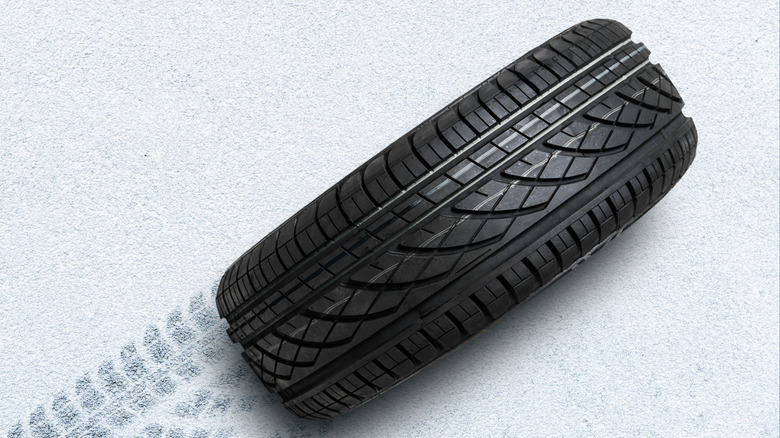
Consumer Reports tested nine all-weather tires for this specific study, and no dedicated light-truck tires made the cut (CR counts SUVs and trucks separately for tires). However, plenty of data on truck tires is available elsewhere on the Consumer Reports website. Checking out that info, you will find two all-season truck tires with top scores for snow traction, but only one of them has the Consumer Reports seal of approval: Continental's TerrainContact H/T. The other was the Nexen Roadian HTX2.
Priced from $243.99, the TerrainContact H/T also turned in above-average results in the CR test for ice braking, albeit with only average scores for wet braking and hydroplaning. Nonetheless, CR concluded that the tires were "very quiet" and had "excellent snow traction and stops well on dry and icy surfaces." Continental also earned praise for the 70,000-mile expected tread life. Just remember, diesel trucks can wear out tires faster than gas models.