
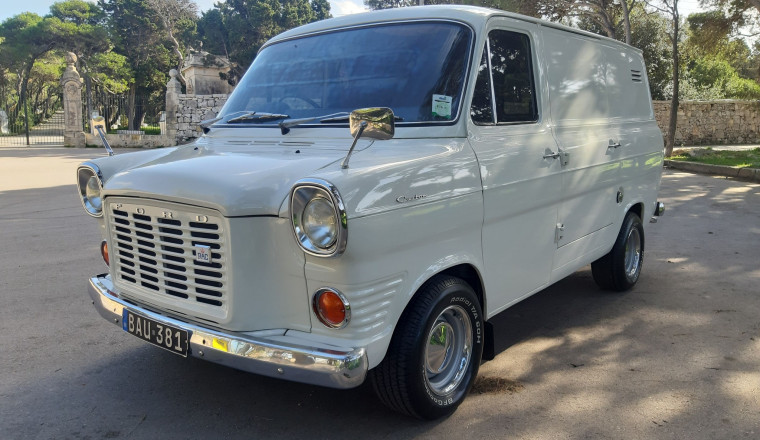

A rare bullnose version was available from 1965 to 1971, with a new nose that was longer than normal versions to accommodate the larger Perkins diesel engine. While standard MK1 Transits came with Ford's compact V4 petrol engine and a flatter front, spotters could tell the initially much less common diesel version by their pugnose grille, which was needed to accommodate the longer inline Perkins diesel. The extended nose gave these vans a distinctive profile that looked nothing like their petrol siblings.
The Ford Transit was launched in 1965 and was an immediate success, with Ford making nearly 50,000 examples in the launch year alone. Although extensively revised in 1978, the basic structure remained in production until 1986, by which time over 2 million had been produced in a staggering number of body styles ranging from tippers to ambulances. Out of those millions, the bullnose diesel variants represented a tiny fraction. Most buyers chose petrol. Diesel was slower, noisier, and cost more upfront. The extended nose looked odd compared to the standard van. Fleet buyers avoided them.
That rarity now defines their value. Finding a bullnose Transit today requires patience and luck. One pickup version was bought and registered in 1976 and remained with the same owner for four decades, with the vehicle knowing barely anything else other than the current owner's ways and mannerisms. The asking price was under £6,000 plus shipping to the UK, though that listing dates back several years when values were lower. Current asking prices for restored examples can exceed £15,000, with exceptional vehicles commanding more.
The extended front wasn't just cosmetic. If the front crossmember is original, the engine mounts should be on it or signs of where they were, with bullnose Transits originally fitted with the 1760cc Perkins diesel or, after October 1971, the 2360cc York diesel. The entire front structure differed from petrol vans, making bullnose parts specific and increasingly difficult to source. Rust claimed most of them decades ago. Work vans weren't restored. They were driven until they died, then scrapped.
One collector quality MK1 2.0 litre Transit LWB twin wheel panel van from 1972 was kept in a heated garage for over 40 years during the early part of its life, though this wasn't a bullnose variant. The bullnose diesels rarely received such treatment. They were commercial vehicles bought to haul goods, not preserve automotive history. The survivors exist because someone couldn't bear to scrap them, not because anyone recognized their future value.
Finding a Transit Double Cab Pickup is rare, and they are becoming more and more popular among collectors. Bullnose versions of these body styles are rarer still. Panel vans were most common, followed by pickups and crew cabs. Specialty conversions like ambulances or motorhomes using the bullnose front barely exist. Each surviving example represents a vehicle that dodged decades of rust, accidents, neglect, and the scrapyard.
The appeal extends beyond rarity. The October 1970 short wheelbase van was comprehensively restored by Ant Anstead of Evanta Motors working with Ford specialists Classic and Retro in Essex for Series 2 of Channel 4's For the Love of Cars. Television exposure introduced these vans to collectors who'd never considered them before. What looked like an awkward commercial oddity suddenly looked like a piece of industrial design worth preserving.
Standard MK1 Transits trade for £5,000 to £10,000 depending on condition and specification. Bullnose variants command premiums of 50 to 100 percent over equivalent petrol models. The extended nose that made them unpopular when new is precisely what makes them valuable now. Collectors want what others don't have. A standard Transit can be found with effort. A bullnose requires luck, connections, and willingness to pay whatever the seller asks because another one might not appear for years.
Most surviving bullnose Transits live in the UK and mainland Europe. The vehicle spent time in Malta before being repatriated to the UK, and several forum members report owning examples imported from Germany or other European countries where Transits were popular. Australia received some variants with different engines. The global scarcity makes any example significant regardless of location.
There are millions of Transits on the roads. There were millions more that came and went over six decades of production. But bullnose MK1s from 1965 to 1971? Maybe a few hundred left worldwide, possibly fewer. Every year that number shrinks as rust, accidents, or parts scarcity claim another. The diesel van that nobody wanted in 1970 is now the Transit everyone wants to find. Good luck with that.