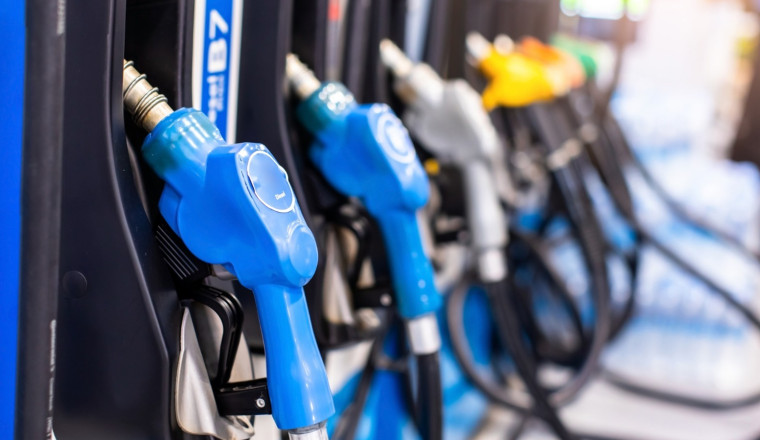

The power of choice is a cornerstone of the automotive industry. There's a myriad of different segments, brands, and models to choose from. Then, when that vehicle choice is made, the same goes for all of the products available to keep it driving down the road. This even translates to the fuel that powers the engine, and E85 flex fuel is worth considering if its appeal piques your interest and your vehicle can run on it.
In terms of benefits, E85 is often cheaper than conventional gasoline — regardless of octane rating — and chains like Sheetz often offer reduced prices on E85. Additionally, it is produced domestically and is known to burn cleaner while offering significant performance advantages.
There are also some downsides to E85, including how it affects fuel economy and the effects it can have on a vehicle's fueling system. Plus, it's not readily available in all corners of the United States, not all vehicles can use it, and it may not be as clean as it's marketed to be. It's complicated, so let's discuss many of the pros and cons of switching to E85 flex fuel.
 Smith Collection/gado/Getty Images
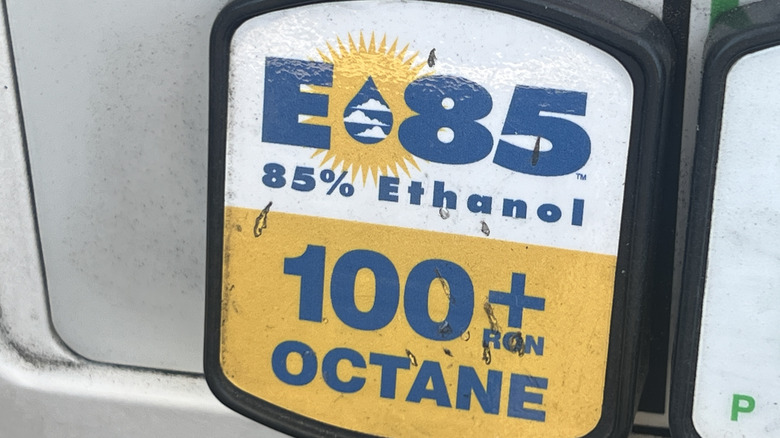
Let's quickly clarify what E85 flex fuel is. Most gasoline has some amount of ethanol content, up to 10%. In comparison, E85 ideally has 85% but can have as low as 51%, depending on the season. Ethanol has a higher octane rating and is sourced from fermented plant sugars — namely corn, which is why enthusiasts often refer to it as corn juice — but also barley, sugar cane, and other agricultural products.
The flex part refers to cars sold as flex fuel vehicles (FFVs), especially a good number of GM vehicles. The Buick Envista is one choice, but anything rocking a yellow fuel cap, flex fuel badging, and with flex fuel listed on the fuel sticker is good to go. These cars can run 100% E85, no E85, or any percentage in between. They're, wait for it, flexible. An ethanol content sensor is included in the fueling system and tells the vehicle's ECU what the exact percentage of ethanol is at any given time. For a car that doesn't run on E85 from the factory, appropriate equipment and ECU tuning must be installed.
That brings us to E85's benefits. Because of the high octane, the engine can run more advanced ignition timing before knock occurs, creating more power. This trait is deeply appreciated in the aftermarket — a prime example is Integrated Engineering's E85 tuning for certain Audis and Volkswagens that offers significant performance gains.
Additionally, E85 is often cheaper than any conventional gasoline (though it varies depending on location and season), and it produces fewer carbon emissions, too. It's also sourced from domestic manufacturers, reducing our dependence on foreign-sourced oil and lowering transportation costs.
 Greenleaf123/Getty Images
While the benefits are quite apparent, E85 still has some negative aspects – you can even watch John Oliver complain about ethanol fuel. A gallon of E85 has lower energy density than a gallon of conventional gasoline — this means a car running it has reduced mpg, which then affects overall environmental friendliness. If more must be burned, is it really reducing the fuel's overall energy footprint?
Furthermore, while E85 exhaust contains less carbon dioxide and benzene, it does have higher acetaldehyde emissions, which are classified by the EPA as probable carcinogens. There's also the matter of how it acts in a vehicle's fuel system. Although this is generally not an issue in cars made from 1994 and later, ethanol is hydroscopic, meaning it attracts moisture, which can lead to a buildup of water and gunk in the fuel tank, lines, and other components. It's best not to let E85 sit in the tank for long periods of time, and you should use a fuel stabilizer if the vehicle is in storage.
Before diving into the corn juice life, it's important to weigh the pros and cons of switching to E85 flex fuel. It could mean more power for less money per gallon, plus lower CO2 emissions, yet it may also cut down on mileage and potentially cause issues inside a vehicle's fuel system.