
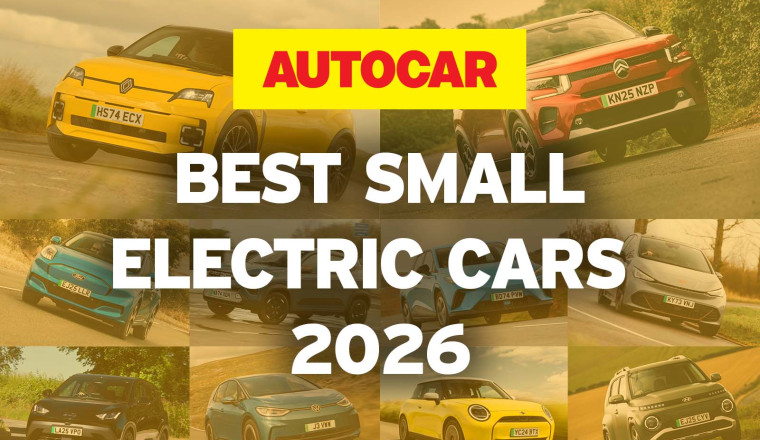

The UK car buying public’s appetite for high-riding crossovers and bigger cars has meant that the majority of new electric offerings have arrived with an SUV-shaped silhouette.
But in the last few years, and in 2025 in particular, the pendulum has swung back in the favour of smaller models, with the likes of the Renault 5 and Hyundai Inster sparking a small car renaissance.
Engineers have now cracked the code for the small electric car class. Once this was a segment full of heavy, inefficient, poorly packaged EVs that were much dearer than their piston-powered counterparts, but the current crop of diminutive EVs couldn’t be more different.
Thanks to advancement in battery technology, manufacturers are now able to fit smaller, energy-dense packs into supermini-sized EVs. Small electric cars of yore could barely touch 150 miles on a charge; today many now offer a range of up to 250 miles. Factor in their lighter construction, greater agility and improved efficiency and a small EV offers a sense of character that a two-tonne crossover simply can't match.
If you're in the market for a small EV, we think the best option is the Renault 5. It neatly blends retro-inspired style with engaging dynamics and a premium interior.
But which other models should you add to your shortlist? Check below for the models we think are the best small electric cars on sale in the UK today.
Best for: Driving dynamics
The best small electric car money can buy today is the reborn Renault 5.
The 5’s blend of style, value, driving dynamics and fuss-free tech makes it an obvious class leader.Illya Verpraet, Road Tester
Its talents range from its fluid, dynamic handling to its supple ride quality, which trumps the Mini Cooper E for comfort while remaining fun to drive. With 148bhp on tap, there’s more than enough oomph for urban jaunts, as well as longer schleps along the motorway.
The interior is also top-notch, with cues from the original 1970s 5, strong material quality and a generally intuitive layout.
If there is anything to complain about with the 5, it's its efficiency. It's not awful, but its touring range isn't as good as we would like it to be for motorway journeys.
Opt for the 52kWh battery and it has a claimed range of up to 250 miles – and all versions are eligible for the UK government's £3750 EV grant.
Budget car specialist Dacia introduces its first electric car to the UK, and it's a bargain
Best for: Style
While the old Mini Electric hatchback was fun, it was let down by poor packaging and a limited range.
This new electric Mini is certainly a more grown-up electric car than the original, embarrassing its predecessor.Illya Verpraet, Road Tester
The sleek new Cooper E is more powerful, has a broad choice of batteries and is packed full of usable digital technology from parent company BMW.
The Cooper E is powered by a 181bhp electric motor and uses a 40.7kWh battery that offers up to 190 miles of range, while the Cooper SE gets a 215bhp motor and a 54.2kWh battery for up to 250 miles of range.
It’s heavier than before, which means it has lost a bit of driver appeal. That said, it has a better range, a premium feeling interior and it's well priced.
The infotainment touchscreen is a bit fiddly but, despite the odd minor qualm, the Cooper E is up there with the best in the segment.
Best for: Long range
Since the brand’s relaunch under Chinese giant SAIC, MG has been the value champion of the electric car sphere – and the 4 is no exception.
The MG 4 EV may not move any technological boundaries, but other manufacturers should undoubtedly see this car as a serious threat.Illya Verpraet, Road Tester
Prices for the Volkswagen Golf-sized hatchback start from around £27,000, but we would stretch our budget to just under £30,000 for the Long Range SE, which will do 288 miles on a charge. There’s even a bonkers-fast 429bhp XPower model, if you’re after all-out performance.
The 4's rear-wheel-drive layout serves up some real handling thrills, while its soft but controlled ride means it's well suited to rough British roads.
Low-grade interior materials and slightly haphazard infotainment and ADAS suggest where the savings might have been made, but none of it is egregious enough to detract from how much value for money the 4 offers.
Best for: Compact proportions
Comfortable, well-equipped and practical, the Citroën ë-C3 is another affordable option helping to bring price parity with petrol cars.
Citroën is to be commended for making a car that offers something truly distinctive in the supermini class and at a price we can all get behind.Mark Tisshaw, Editor
Priced from less than £22,000, the electric version of the C3 is one of the cheapest EVs on sale in the UK.
Energy comes from a 44kWh battery, which offers a claimed range of 199 miles. It powers a front-mounted 111bhp electric motor that allows the ë-C3 to hit 0-62mph in around 11.0sec and a top speed of 84mph.
The ë-C3 could hardly be easier to drive and is packed full of usable standard kit.
Downsides? Its range of 199 miles might not be quite enough for some drivers and, while it's fairly comfortable, it's not the most dynamic car to drive, having numb steering.
Best for: Driver engagement
For the keener drivers among us who want their small EV to come with dextrous handling and an engaging, rear-wheel-drive chassis, the Cupra Born is an excellent choice.
Being rear-motored and rear-wheel-drive, there’s a sense of natural poise about the way the Born gets down a road and around a corner.Matt Saunders, Road test editor
With prices starting from around £35,000 (or £34,000 with the UK government grant applied), the Born is a great-all round EV that offers enough driver appeal to keep you interested without sacrificing on range or efficiency.
There are several trims and two batteries to choose from. With the larger 79kWh pack fitted, the Born should achieve between 270-330 miles on a charge, which is more than enough for short hops into town and longer stints along the motorway.
Does its focus on range and driver engagement dent its usability as a family car? Not in the slightest: with four usable seats and a decent boot, the Born is a very complete package.
Best for: Boot space
While it's not quite at the top of our list, the Ford Puma Gen-E might just be the most important, not least because it brings some genuine driver engagement to the class.
This is a nicely rounded small electric crossover and, unlike the Volkswagen-based Explorer, it's recognisably ‘Ford’ in its handling. Richard Lane, Deputy road test editor
This is an electric version of the UK's best-selling car, and it's Ford's second crack at an EV that has been developed fully in-house, following the Mustang Mach-E (the Explorer and Capri were co-developed with Volkswagen).
Energy comes from a 43.6kWh battery, which drives a 166bhp, front-mounted electric motor. According to Ford, you will get around 233 miles of range on a charge.
Best for: Interior versatility
The funky-looking, segment-blending Inster has the dimensions of a smaller A-segment offering, but inside it’s far bigger and more versatile than rivals like the Fiat 500e.
It’s all very predictable to drive, which will suit a large number of buyers, but it would still be nice if the Inster could make you raise a smile.Mark Tisshaw, Editor
Indeed, the chunky little Inster is roomy, with its sliding and folding rear bench enhancing cabin flexibility. It’s a very easy car to operate, too, with plenty of physical secondary controls.
Around town it’s pliant and easy to drive, while at higher speeds it has the maturity and road manners of a larger car.
When it was first introduced, the Inster’s ambition pricing made it harder to recommend over European competitors, but Hyundai has since introduced its own 'EV grant' to cut its list price down by £3750.
Prices now start from £20,005 for the entry-level 01 trim, but we would stretch to £23,255 for 02 trim, which gets a larger battery for an impressive 229-mile range.
Best for: Refinement
While the ID 3 managed to secure plenty of sales from the off, it was plagued by issues that dented its progress in becoming a true Golf successor.
Despite the price, Volkswagen has done a really thorough, objectively commendable job on its updated ID 3. Jack Warrick, Staff Writer
Early cars were afflicted by a poor infotainment touchscreen and a complex model line-up, not to mention the cabin that lacked material richness.
Volkswagen sought to assuage these faults by treating the ID 3 to a much-needed facelift, with the hatchback gaining a more eye-catching front end, a simpler model line-up and an uplift in material quality inside.
The touchscreen was also given a big overhaul, and it’s far easier to use than the one fitted to its predecessor – although the heating controls that sit below it are still touch-sensitive, as are those on the steering wheel.
The ID 3 range now comprises the 52kWh Pure, 58kWh Pro and 77kWh Pro S, with the last of those promising up to 345 miles of range.
Prices start from around £30,000, with the most expensive model being the sporty 322bhp GTX.
As for the drive, there’s little to dislike. It doesn’t engage you like the technically related Cupra Born, but the steering is agile enough and it's very easy to pilot in town and manoeuvre around car parks. And much like in the Golf, ride quality remains intact, even for a heavy compact car with big wheels.
Best for: Equipment levels
Price parity with petrol counterparts has long been an issue for small electric cars, but that’s no longer the case, as proven by the BYD Dolphin Surf.
The Dolphin Surf is efficient, well-packaged and well-priced, with some forgivable minor transgressions.Matt Saunders, Road test editor
At £18,675, it’s not only one of the cheapest electric superminis but one of the most affordable EVs full stop, undercutting many European rivals like the Citroën ë-C3 and Renault 5.
And yet a low price isn’t the Dolphin Surf’s only calling card. Inside it’s spacious, well-equipped and has a sense of quality that surpasses its prices.
To drive it's pleasant and easy-going, but don’t expect much engagement or excitement.
It can’t match the 5 for kerb appeal and character, but it has a good range of up to 200 miles in Boost form and will return close to 5.6mpkWh during everyday use.
Best for: Value
The little Dacia Spring is the UK's cheapest full-size electric car, with prices starting from under £15,000.
Above all else, the Spring is a charming car. It’s smartly styled, well equipped and reasonably practical, but it’s the price that seals the deal.Jack Warrick, Staff Writer
It also comes close to being the UK's cheapest car overall, the Dacia Sandero and Kia Picanto being the only cars that undercut it.
The entry-level model is powered by a puny-sounding 69bhp electric motor, hitting 0-62mph in a leisurely 12.3sec.
The slightly pricier 99bhp variant reduces that to 9.6sec. Again, that might not sound all that quick, but it's notably quicker than a 1.0-litre petrol Volkswagen Up.
Both models are equipped with a 24.3kWh battery, which is good for a claimed 139 miles of range overall or about 50 miles more than that with some careful city driving.
Equipment levels are good too, including a 7.0in infotainment touchscreen, electric windows, cruise control and rear parking sensors as standard.
When choosing the best small electric car, it's important to look beyond key factors such as range and price. You should also consider battery efficiency and how a particular small EV will fit into your specific lifestyle.
Here’s what to look for:
Battery size and efficiency
Why it matters: A bigger battery adds weight and cost. In a small car, efficiency is king.
Charging
Why it matters: Being able to charge overnight at home is much more economical than using the public network.
Size
Why it matters: The whole point of a small car is for it to be compact and easy to drive in urban areas.
Cost and incentives
Why it matters: Small EVs are often the entry point to electric motoring and many are now eligible for the UK government’s Electric Car Grant (ECG).
Do you need a small electric car?
A small EV makes sense if:
You shouldn’t buy a small EV if:
When reviewing small electric cars, we don’t just assess how a car performs in its natural habitat. We drive cars across all environments to test their agility, efficiency, drivability, ease of use and how much 'big car' technology has been packed into a compact footprint.
Here’s what we assessed:
Urban agility
Small cars need to be easy to live with. We tested the turning circles of every car on this list to ensure they could handle tight mini-roundabouts and multi-storey car parks. We also evaluated visibility and the effectiveness of parking sensors and cameras in real-world urban environments.
Real-world efficiency (mpkWh)
In a small EV, every kilowatt-hour counts. We didn’t just look at the official WLTP range; we measured real-world efficiency (miles per kWh) across various environments to assess each car's everyday, average and touring economy.
Ride quality
Small cars often have shorter wheelbases, which can make them feel less pliant over potholes and speed bumps. We tested these cars on broken urban surfaces and expansion joints to find the ones that offered the most comfort and rolling refinement.
Practicality and packaging
We measured how easily four adults can fit inside, the ease of access to the rear seats, and whether the boot could actually handle a weekly shop or a set of charging cables. We also looked for smart storage solutions like frunks and sliding rear benches.
Charging versatility
Since small car owners are less likely to have a dedicated driveway, we assessed how well these cars handle public charging. We looked for fast AC charging (for street lamp or kerbside chargers) as well as the DC rapid-charging speeds needed for the occasional longer journey.
Join our WhatsApp community and be the first to read about the latest news and reviews wowing the car world. Our community is the best, easiest and most direct place to tap into the minds of Autocar, and if you join you’ll also be treated to unique WhatsApp content.