
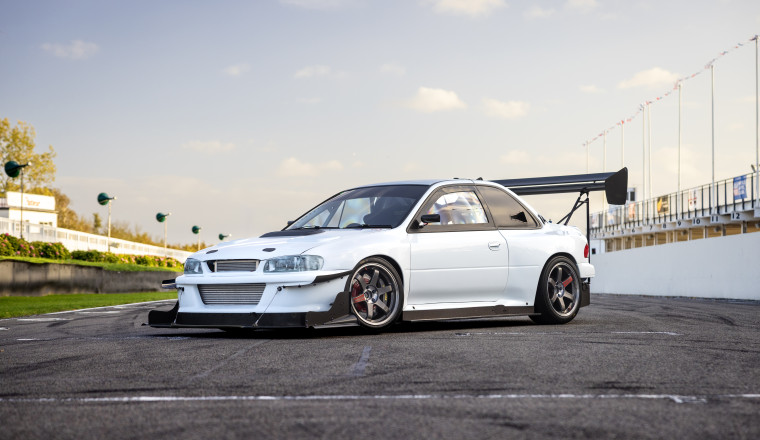

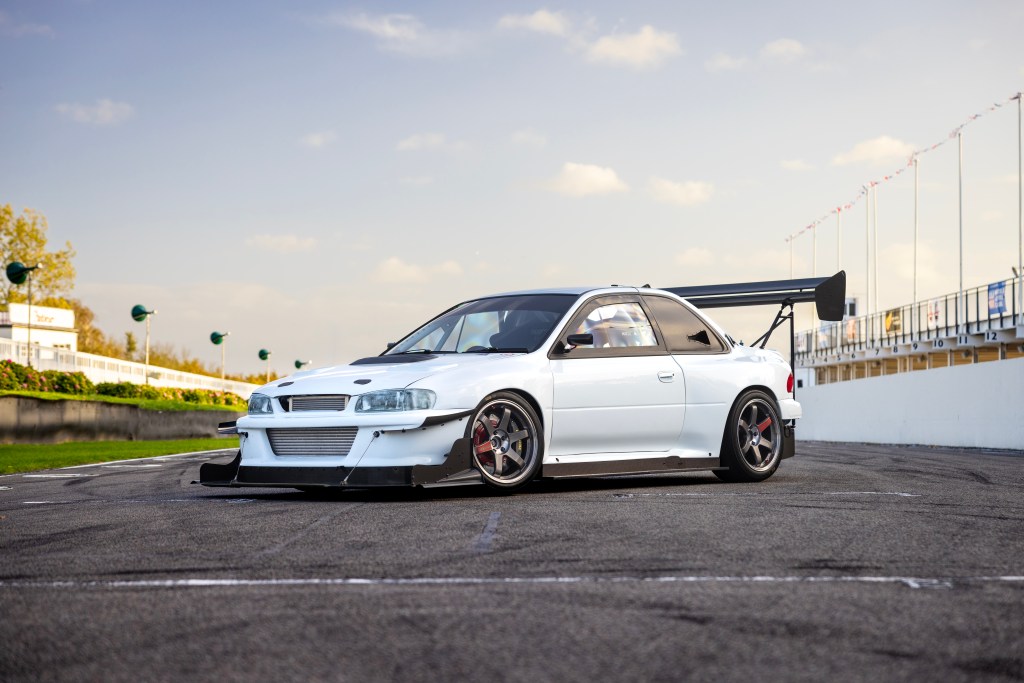
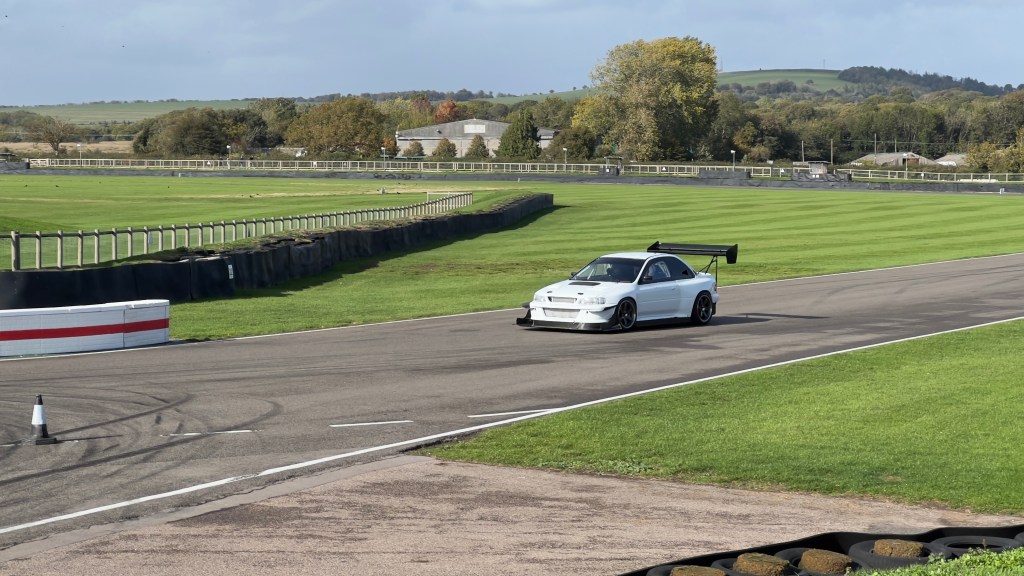
We’ve featured some wild Subarus over the years, but Rich White’s Impreza is on a completely different level. This isn’t a fast-road car with a cage and a big wing bolted on for the vibes. It’s a purpose-built Subaru Impreza time attack machine with 861bhp, full carbon bodywork, a sequential gearbox and enough aero to make your average track toy look like it’s phoning it in.
And the best bit? Rich built most of it himself.
That alone makes this thing special. Yes, the paint, wiring and certified cage work were handled professionally, but the bulk of the fabrication — including the tubbed arches, air-jack install and widebody conversion — was done at home in a garage with a cheap MIG welder.
Why this isn’t your average Impreza
Rich has owned several Imprezas over the years, but this one was always destined to be the big one. He bought it as a bare shell back in 2008 and has now had it for 17 years. The goal from day one was to create something “super crazy” — a serious circuit car, not a compromise build.
The inspiration came after his old Pulsar, which he describes as a semi-serious track car, but one limited by platform compromises like weight distribution. The Subaru, by contrast, was always the platform he wanted to move to.
Built for sprinting, time attack and high-speed aero
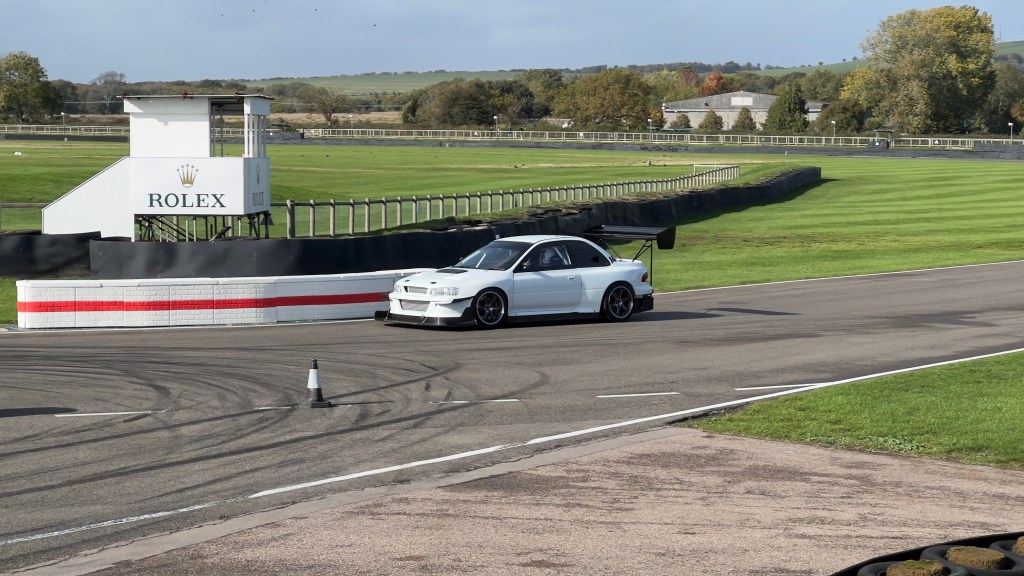
This car was built for sprinting, time attack and any event where circuit performance matters more than comfort, subtlety or your passenger’s spinal health. Rich says the aero is a huge part of the package, to the point that the car really needs proper speed and a big circuit to work at its best.
That lines up perfectly with the Time Attack scene, where highly modified competition cars in Pro Extreme run on slicks and allow major chassis and aero development. Time Attack’s official class guide describes Pro Extreme as the class “where almost anything goes”.
Carbon widebody, aero and home fabrication
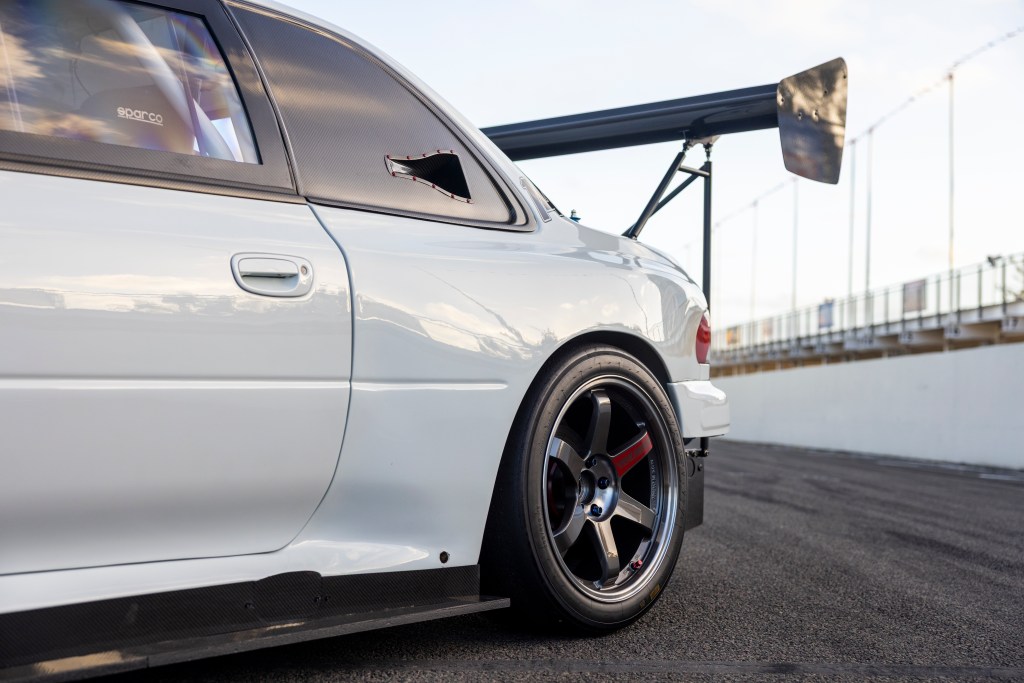
S5 WRC-inspired carbon bodywork
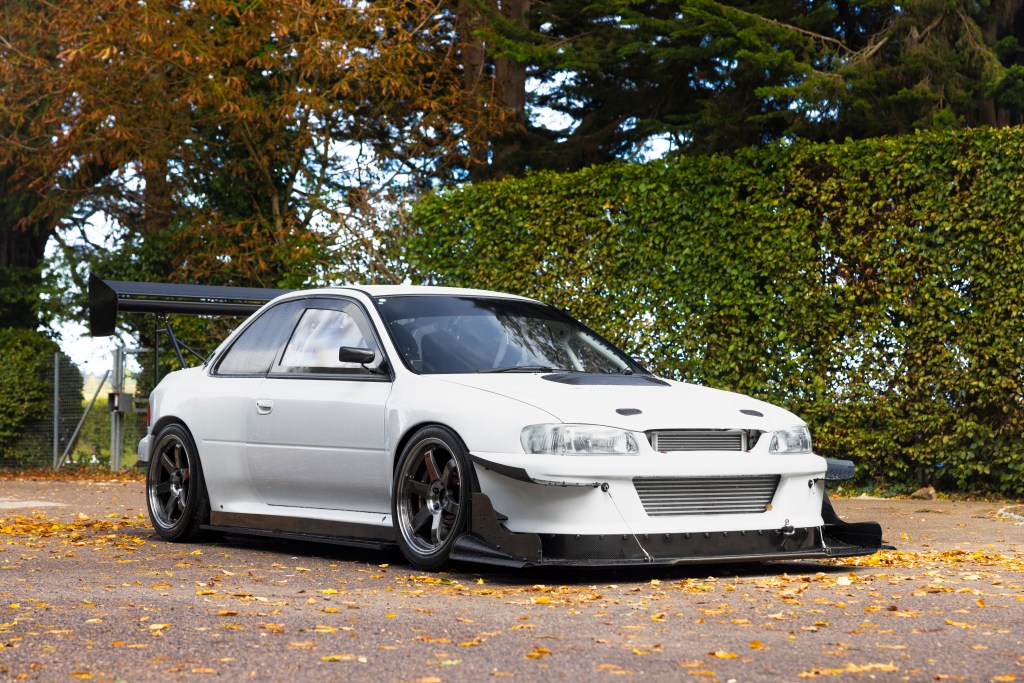
For Subaru geeks, this is an S5 WRC-style shape — effectively inspired by the 1997-era World Rally Car silhouette. Rich sourced the full carbon panels from Aerosim in California back in the Redline era, including carbon doors and the wider outer bodywork.
It’s not cosmetic. Behind those carbon panels, the original steel structure has been heavily altered, with steel arches removed, inner arches brought out and the shell tubbed front and rear to make space for the car’s extreme track hardware.
Tubbed arches, air jacks and custom fabrication
This is where the homebuilt side gets properly serious. Rich fabricated the arch tubs and other structural mods himself, with the car upside down on a rotisserie. It’s also running air jacks, because obviously when you’re building your dream circuit-spec Impreza, crawling around with an OEM scissor jack isn’t the endgame.
Splitter, wing, diffuser and flat floor
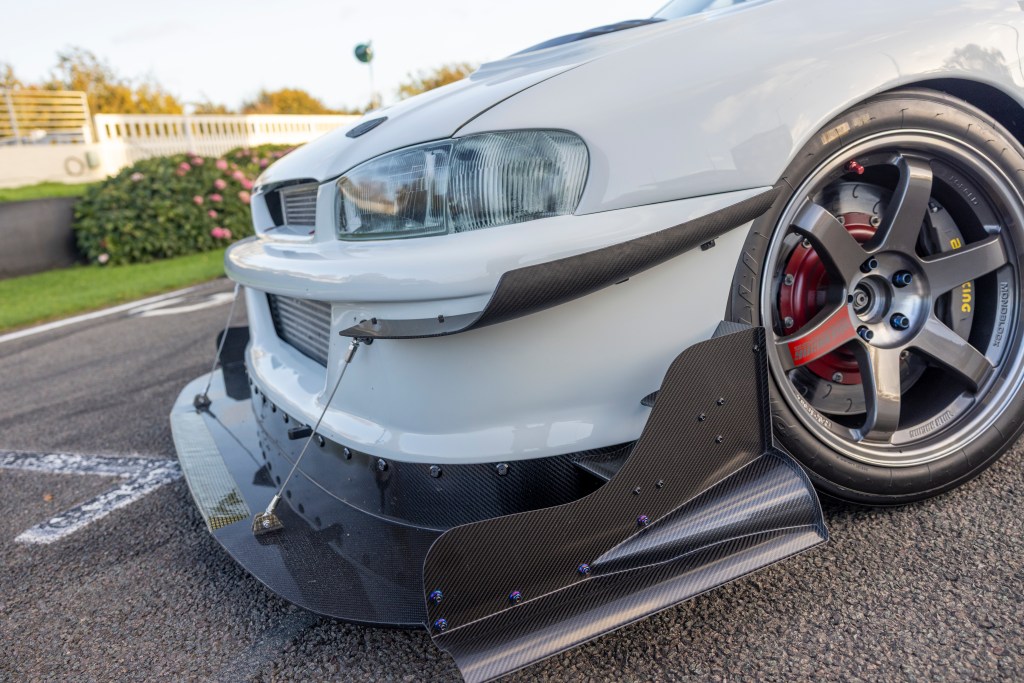
Some of the aero came from other race cars over the years, including a front splitter and diffuser from a Greek time attack car that had been broken after an engine failure. Rich then heavily modified those parts to suit this build.
The rear wing is an off-the-shelf DJ Race Cars item mounted on a custom T45 support structure that he built himself. Underneath, the car runs a full carbon flat floor of Rich’s own making, cut from carbon sandwich panels and developed over time as he learned what the car needed.
That development included adding cooling ducts underneath because the flat floor reduced airflow enough to start overheating CV boots and nearby components. That’s the kind of detail that separates proper race-car development from “stuck a splitter on it and hoped for the best”.
Motorsport chassis and suspension setup
Tubular subframes and geometry changes
The chassis is as serious as you’d expect. Rich retained the standard Subaru engine and gearbox positions, but fitted tubular subframes front and rear in a bid to optimise the platform and dial out understeer.
The front uses a Moresport subframe from Canada, while the rear is a Prodrive WRC rear subframe. The whole setup is geared around adding adjustability through caster, camber and anti-roll control.
Four-way dampers, anti-roll bars and AP brakes
Dampers are custom-shortened AST four-way items, which Rich says would cost around eight grand new — thankfully he bought them secondhand. Brakes are equally spicy: water-cooled AP eight-pots from a Skoda Fabia WRC car, running four pads per caliper.
That’s one of those specs that sounds faintly ridiculous until you remember this thing makes over 700bhp on pump fuel and weighs little more than a modern hot hatch.
Holy-grail boxer power: inside the 2.35-litre engine
EJ22 closed deck block and Paul Finch build
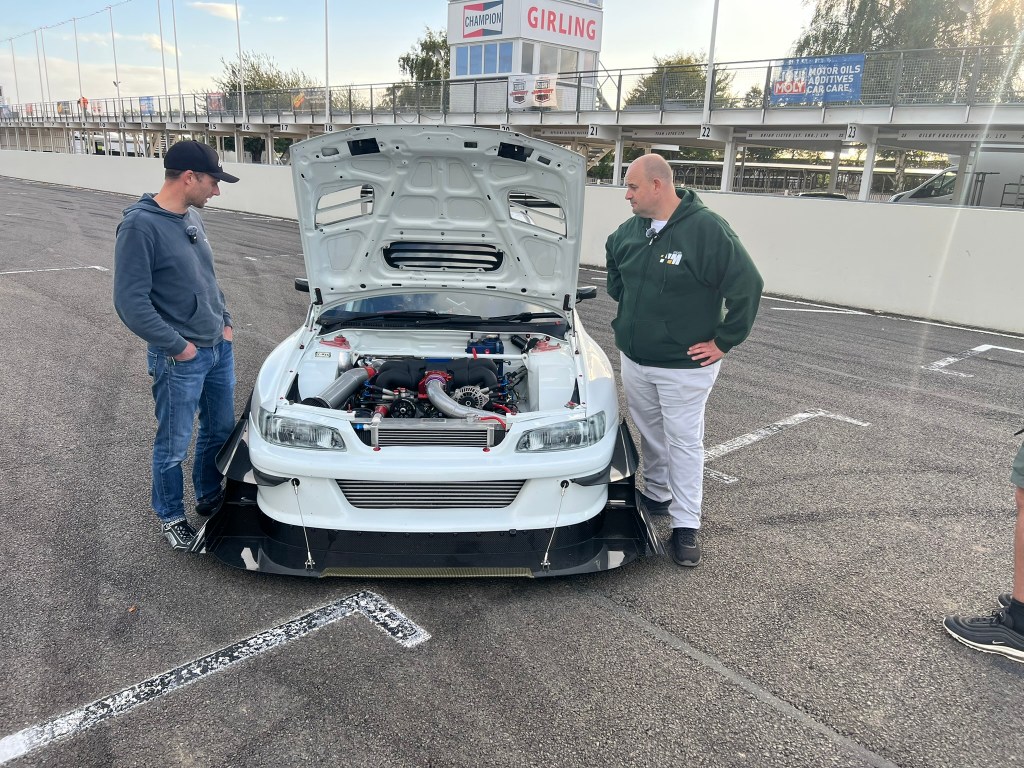
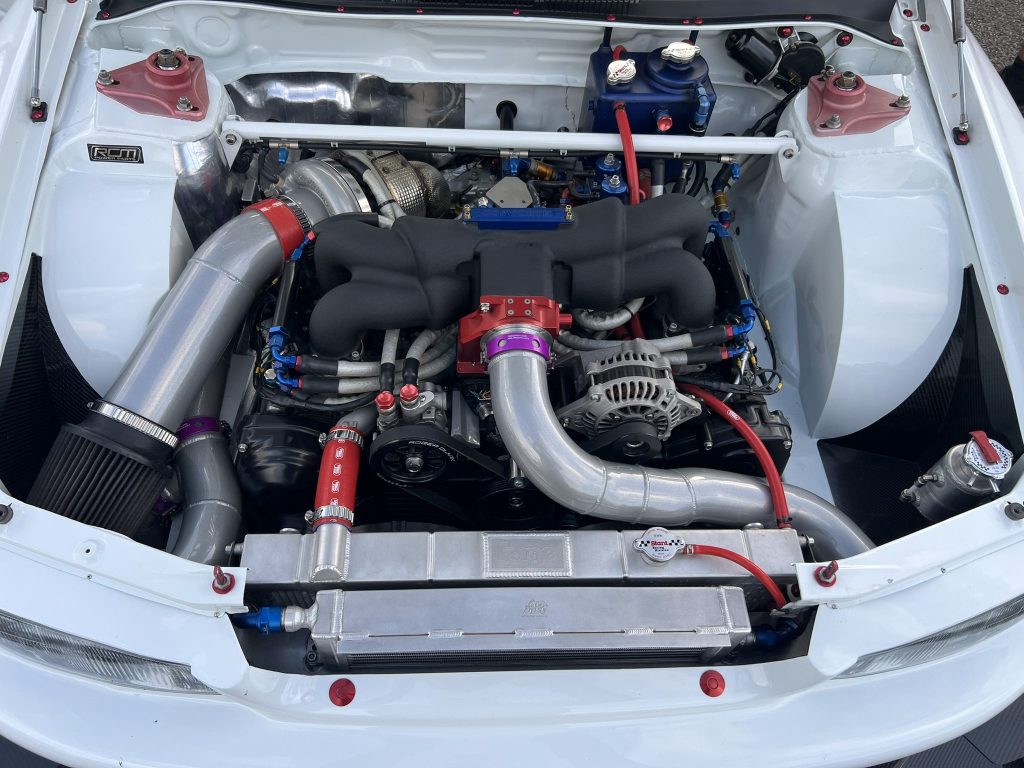
Lift the bonnet and the centrepiece is still a boxer engine — but not just any boxer. Rich describes it as the “holy grail” of Subaru four-cylinder builds. It starts with an EJ22 closed deck block, sourced from the US, then expanded into a 2.35-litre build.
The engine features Ric Wood CNC heads, a billet Arrow crank and CP pistons, while the long motor was built by Paul Finch, an ex-Mercedes F1 engine builder known in Subaru circles for his work.
BorgWarner EFR turbo and fresh-air anti-lag
Turbo-wise, Rich has experimented with a few setups, but currently runs a BorgWarner EFR 8474 after downsizing from a larger 9180. According to him, the change gave the same power with better response.
The engine pulls decent boost from around 3,500rpm and revs to 8,500rpm. It also runs fresh-air anti-lag via a Turbosmart anti-lag valve and an Inconel exhaust manifold.
In other words, yes, it’s got all the naughty bits.
861bhp on race fuel, 700+bhp on pump fuel
Here’s the headline number: 861bhp on race fuel, specifically Sunoco 118. On Shell V-Power pump fuel, it makes around 700bhp, with Rich reckoning it’s probably north of that figure depending on conditions.
The car has also run a 9.4-second quarter-mile at 147mph, albeit with a poor 60-foot and a launch setup that clearly wasn’t ideal, suggesting there’s more to come.
At the time of filming, the complete car weighed 1,160kg with aero fitted and half a tank of fuel, not including driver. That gives it an outrageous power-to-weight ratio and explains why even seasoned passengers were left “fairly gobsmacked” by it.
Sequential drivetrain and race-ready interior
Samsonas six-speed sequential and carbon prop
The drivetrain is every bit as hardcore as the engine. Rich runs a Samsonas six-speed sequential, paired with an Xtreme triple-plate clutch, Driveshaft Shop front and rear shafts, and a custom-length carbon prop shaft.
Out back there’s a Cusco RS 1.5-way differential, which he describes as clunky and aggressive — exactly what you’d expect from something this focused.
Syvecs ECU, MoTeC electronics and pedal box
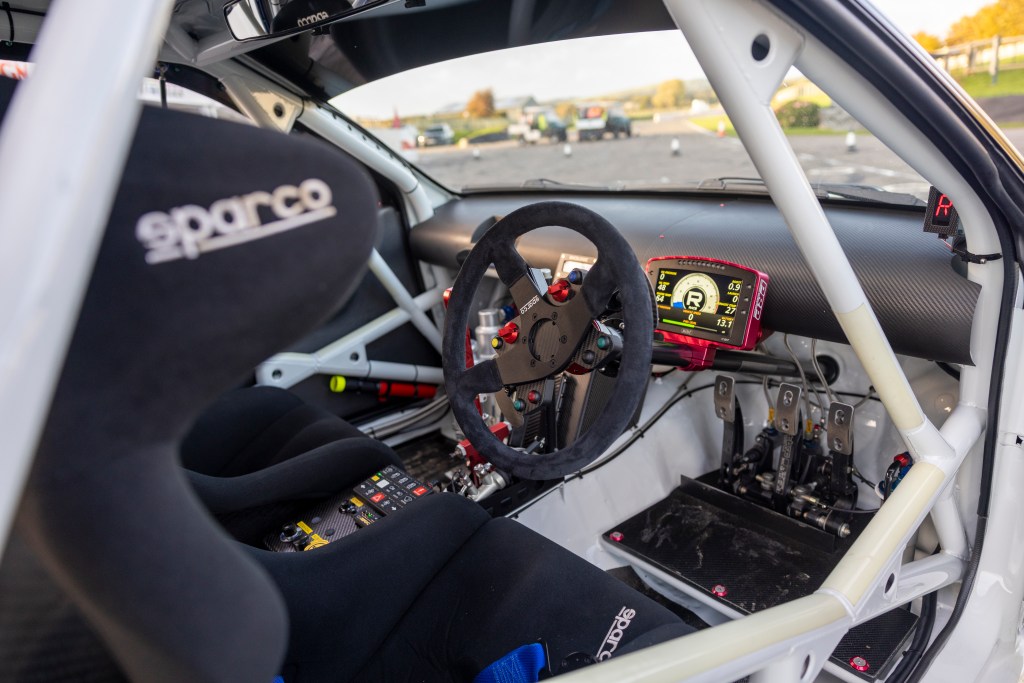
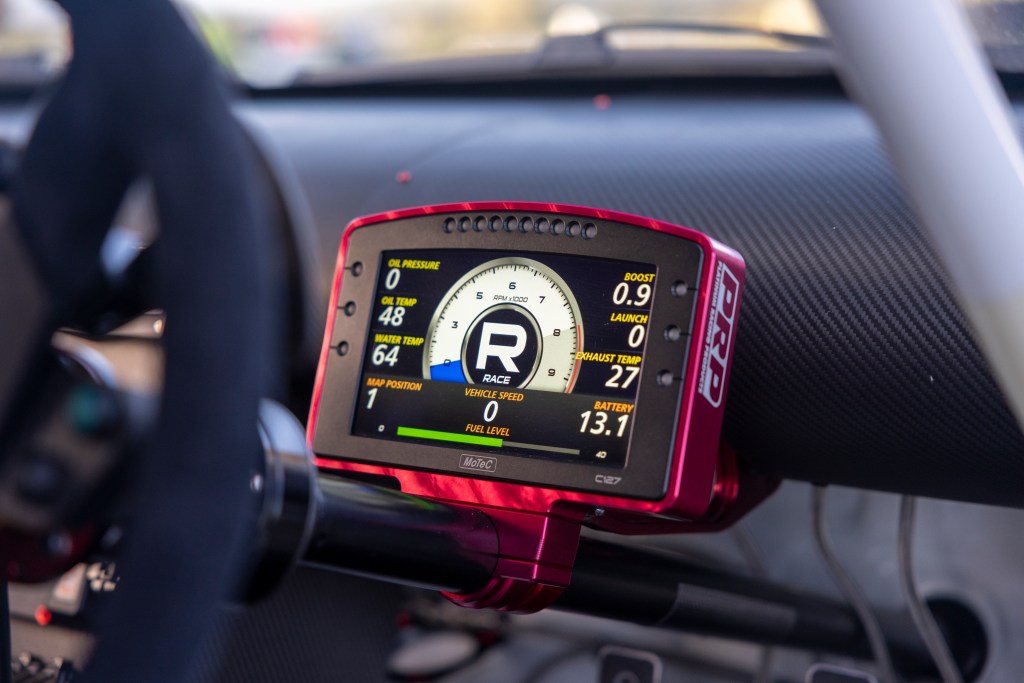
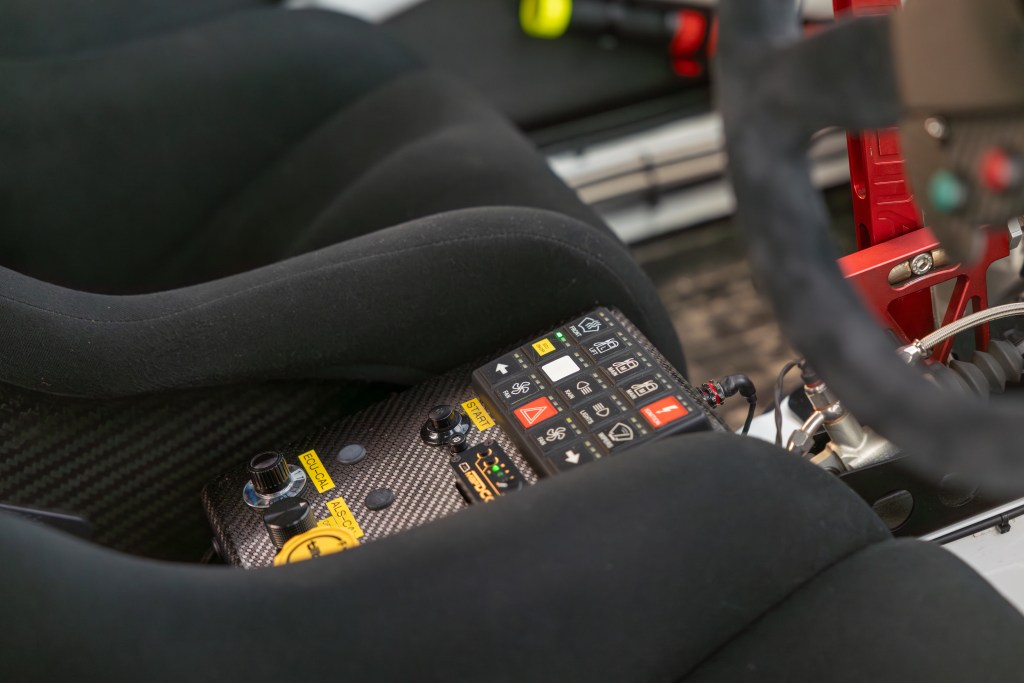
Inside, it’s full race-car. There’s a Tilton pedal box, dry sump tank, air jack controls, a Syvecs S8 ECU, MoTeC PDM, MoTeC dash and Race Technology electronics, all connected over CAN bus.
There’s even a wireless keypad and paddle-shift setup in progress, although the gearbox actuator still needs fitting before the paddles take over fully.
No stereo, mind. But when you’ve got 861bhp and a sequential ’box, Spotify feels a bit unnecessary.
Wheels, tyres and the quiet titanium exhaust trick
10×18 wheels and Pirelli slicks
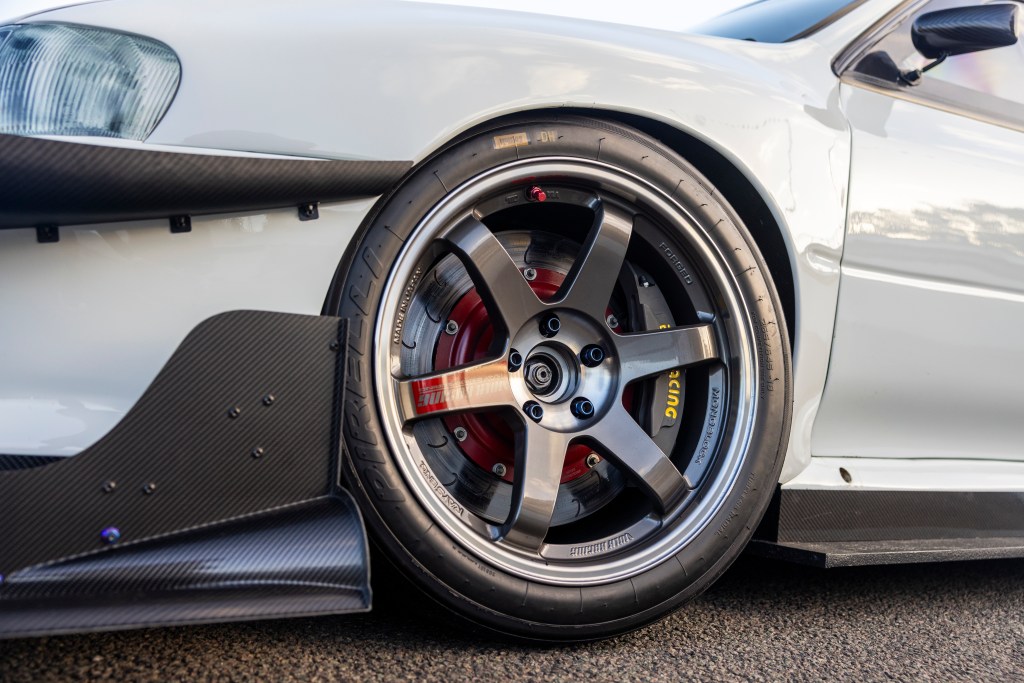
The car runs 10×18 wheels, including Rays Volk TE37 Sagas and Enkei RS05RRs depending on use, wrapped in 265-section Pirelli slicks on the day of filming. That’s serious grip, even in the hard compound.
Full titanium exhaust built to beat noise limits
One of the cleverest parts of the build is the exhaust. Rich originally ran a side-exit setup, but struggled to get the car quiet enough for track-day noise limits, with readings around 105dB.
So the system was reworked by CSK Race Exhausts into a full 3.5-inch turbo-back layout with stainless downpipe and titanium system, incorporating multiple silencers to get it down to around 95dB.
That matters because there’s no point building a serious Subaru Impreza track build if every circuit is just going to black-flag you by lunchtime.
What’s next for this Subaru Impreza track build?
ABS, telemetry and paddle shift upgrades
Rich isn’t done yet. The next big step is an ABS upgrade using a Bosch M5 Clubsport kit, along with more sensors and data logging to feed the car’s calibration and driver development.
That makes sense. GR Performance, who map the car, want more information around wheel speeds, brake pressure and consistency to help take the setup to the next level.
Time Attack ambitions and a Brands Hatch target
Long term, the goal is still proper Time Attack competition. Rich notes that the scale of the aero would place the car straight into Pro Extreme, which is the top-tier environment for highly modified cars. Time Attack UK lists Pro Extreme 2WD and 4WD as the home for the most developed competition cars, including those with heavily modified chassis.
That’s a bit daunting for what he describes as effectively a Time Attack newbie, so the likely plan is to do a one-off event first, with Brands Hatch sitting high on the bucket list.
Why this Subaru Impreza track build matters
What makes this car brilliant isn’t just the numbers, although 861bhp, 1,160kg and a 9.4-second quarter-mile are hardly subtle. It’s the fact that it feels deeply personal. Rich has had this shell since 2008, built and developed it over years, and still has a list of things he wants to achieve with it before even thinking about selling.
That’s exactly the sort of thing we love at Fast Car. Big power is easy to shout about. Long-term commitment, obsessive fabrication and a homebuilt car that can hang with top-flight time attack machinery? That’s the proper good stuff.
FAQs
1. How much power does Rich White’s Subaru Impreza make?
It made 861bhp on Sunoco 118 race fuel and around 700bhp on Shell V-Power, depending on conditions.
2. Is this Subaru Impreza fully homebuilt?
Mostly, yes. Rich carried out the majority of the fabrication work himself at home, though paint, wiring and the certified roll cage were handled professionally.
3. What engine is in this Subaru Impreza time attack build?
It uses a 2.35-litre Subaru boxer based on an EJ22 closed deck block, with Ric Wood CNC heads, an Arrow billet crank and CP pistons .
4. What turbo does the car run?
It currently runs a BorgWarner EFR 8474, which Rich says matched the previous turbo’s power while improving response.
5. How much does the car weigh?
Rich says it weighs 1,160kg with the aero fitted and half a tank of fuel, not including the driver.
6. What gearbox does the car use?
The drivetrain features a Samsonas six-speed sequential gearbox, Xtreme triple-plate clutch and carbon prop shaft.
7. Is the car built for Time Attack?
Yes. Rich built it for sprinting and circuit use, with long-term plans to take it into Time Attack Pro Extreme. Time Attack UK positions Pro Extreme as the class for the most heavily modified cars.
8. Why is the exhaust so unusual?
The full titanium system was designed to keep the car quiet enough for track-day noise limits, after a side-exit setup proved too loud.
Context:
Rich White built an 861bhp Subaru Impreza time attack car mostly by himself in his garage over 17 years.
Context:
Home-built race cars prove that dedication and skill can rival professional builds at a fraction of the cost.
Context:
Time Attack's Pro Extreme class allows almost unlimited modifications, making it perfect for extreme builds like this.