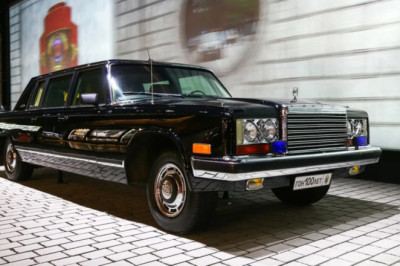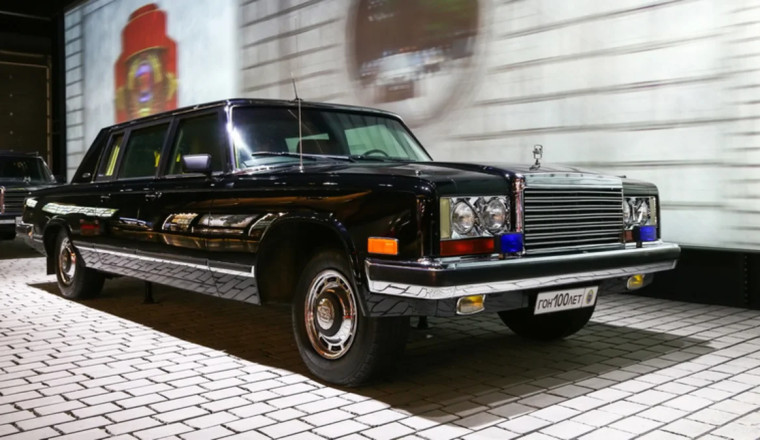

Leonid Brezhnev stepped out of his gleaming ZIL-4104 limousine at the Kremlin, its 7.7-liter V8 engine still ticking from the journey across Red Square. The General Secretary had just finished recording a speech condemning American capitalist luxury for Pravda. His car was essentially a hand-built copy of the Cadillac Fleetwood he'd ordered his engineers to reverse-engineer three years earlier.
The ZIL-4104 represented the ultimate contradiction of Soviet leadership between 1978 and 1983. While party newspapers attacked American automobile excess and bourgeois materialism, Soviet engineers were frantically purchasing Lincoln Continentals and Cadillac Seventy-Fives through intermediaries to study their construction. The result was a vehicle that matched Western luxury standards while serving leaders who publicly despised everything it represented.
Only 200 ZIL-4104s were ever built at the Zavod imeni Likhachyova plant in Moscow. Each required 2,800 man-hours to complete and cost 300,000 rubles, equivalent to more than 50 Lada cars that ordinary Soviets waited years to purchase. The luxury car division employed 1,200 specialists who crafted interiors with imported leather, rare wood veneers, and precious metal trim while their compatriots lined up for basic consumer goods.
The engineering specifications read like a direct challenge to Soviet automotive philosophy. The 315-horsepower V8 engine consumed 25 liters of fuel per 100 kilometers in a country where gasoline rationing was common. The 6.3-meter limousine featured air conditioning, power windows, a stereo system, and a refrigerated compartment. These amenities were considered decadent luxuries when found in Western cars, but essential requirements when serving the workers' paradise.
Brezhnev himself owned multiple ZIL-4104s, including armored versions with bulletproof glass and reinforced bodywork. He regularly used them for state functions while Soviet media continued publishing editorials about American automotive waste. The contradiction became so pronounced that foreign diplomats reported seeing more authentic American luxury features in Soviet leadership cars than in many actual American vehicles of the period.
Like this? Get the app: iOS | Android
The technical copying was comprehensive and shameless. Soviet engineers adopted American independent front suspension systems, power steering technology, and automatic transmission designs. They studied every detail of Western luxury manufacturing, from seat adjustment mechanisms to dashboard layouts. The ZIL plant became an unlikely repository of American automotive knowledge, assembled through systematic reverse engineering of vehicles their government officially condemned.
Production ended abruptly in 1983 when economic pressures made the program unsustainable. Each ZIL-4104 represented an enormous resource commitment in a struggling economy. The contrast between building hand-crafted luxury cars for party elites while ordinary citizens waited decades for basic vehicles became increasingly difficult to justify, even within the closed circles of Soviet leadership.
The surviving ZIL-4104s became museum pieces after the Soviet collapse, physical evidence of the gap between communist ideology and leadership practice. Today they're displayed in automotive museums across former Soviet states, their American-inspired luxury serving as monuments to political hypocrisy. Visitors often note the irony that these symbols of socialist achievement look remarkably similar to the Cadillacs and Lincolns that inspired them.
The ZIL-4104 program revealed what happens when ideology meets human desire for status and comfort. Soviet leaders discovered they could denounce Western materialism in public while enjoying its fruits in private, as long as the engineering was done behind closed doors and the results carried Soviet badges.
Sources: Automobile Magazine Soviet automotive archives, Car and Driver ZIL historical analysis, Moscow automotive museum records