
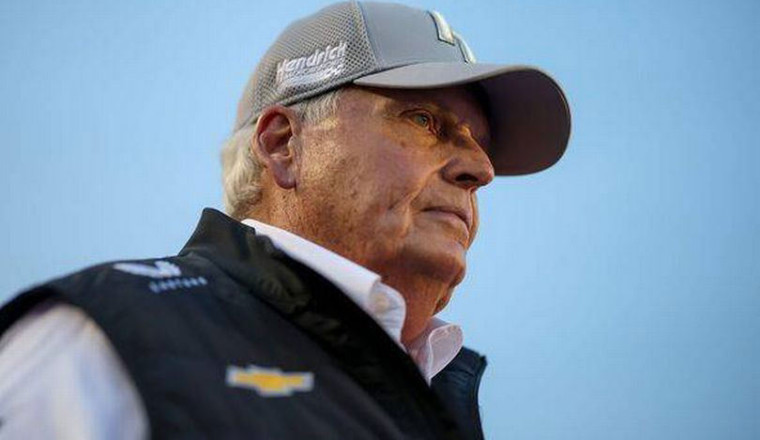

Thursday brought an end to one of the most contentious legal battles in NASCAR history, and Rick Hendrick wasted no time expressing his relief. The settlement between NASCAR, 23XI Racing, and Front Row Motorsports delivered permanent charters to all Cup Series teams, closing a chapter that threatened to tear the sport apart and forcing Hendrick into a position he'd made clear he didn't want: choosing sides in a very public courtroom.
The timing proved fortuitous for the Hendrick Motorsports owner. He was scheduled to testify as a NASCAR witness, despite filing a brief stating that he and Roger Penske could not and would not take sides in the lawsuit given their decades long relationship with NASCAR Chairman Jim France. Judge Kenneth Bell had ruled that both men must make themselves available for depositions without limitations, setting up what promised to be an awkward situation. The settlement announcement spared them that ordeal entirely.
Hendrick released a statement emphasizing industry unity: "Millions of loyal NASCAR fans and thousands of hardworking people rely on our industry, and today's resolution allows all of us to focus on what truly matters – the future of our sport." The sentiment may sound diplomatic, but it reflects genuine relief throughout the garage. Most teams never joined the lawsuit, yet they'll benefit from what 23XI and Front Row fought to secure.
Hendrick now holds four permanent charters that will rise in value thanks to the settlement. The evergreen charter structure represents a fundamental shift in how NASCAR operates. Previously, charters were tied to media rights deals with no guarantee of permanence beyond those terms. Teams had been pushing for permanent charters since negotiations began for the current agreement, but France repeatedly refused to budge on the issue. His testimony during the trial made clear he hadn't changed that position, even as evidence showed he entered negotiations determined to win rather than compromise.
The settlement changes everything. According to details revealed by Fox Sports reporter Bob Pockrass, the new framework requires two thirds of teams to approve charter renewals, and NASCAR now receives 10 percent of charter sale proceeds, up from 2 percent. Teams that don't sign a renewal still retain their charter and get at least a year to sell it. NASCAR can force teams to sell charters for not meeting performance standards, but the structure provides far more stability than what existed before.
Hendrick continued in his statement: "For more than 40 years, NASCAR racing has been my passion. I believe deeply in what we can accomplish when we work together. This moment presents an important opportunity to strengthen our relationships and recommit ourselves to building a collaborative and prosperous future for all stakeholders."
That collaborative tone represents a stark contrast to what played out during nine days of trial proceedings. The courtroom drama revealed uncomfortable financial details, including a 2024 letter from Hendrick showing his team had lost $20 million over five years despite winning two championships. Other teams like Joe Gibbs Racing and Richard Childress Racing had also been reluctant to sign the original charter agreement, ultimately feeling they had no choice with NASCAR unwilling to negotiate.
The lawsuit filed in October 2024 alleged monopolistic conduct by NASCAR, resulting in 23XI and Front Row forfeiting their six charters and competing as open entries for most of the season. The financial terms of the settlement remain confidential, though both teams received an undisclosed payout along with their restored charters.
Judge Bell praised both parties for reaching a settlement, describing it as the right thing to do and expressing belief it would prove great for NASCAR as an entity, the teams, drivers, and ultimately the fans. Hendrick concluded with obvious optimism: "I'm incredibly optimistic about what's ahead. When our industry is united, there's no limit to how far we can go or how much we can grow the sport we love."
Whether that unity holds remains to be seen. But for now, the most powerful team owner in NASCAR can focus on racing rather than lawyers, and his four charters just became considerably more valuable. Not a bad outcome for someone who never wanted to pick a side in the first place.