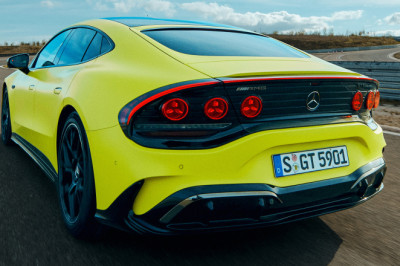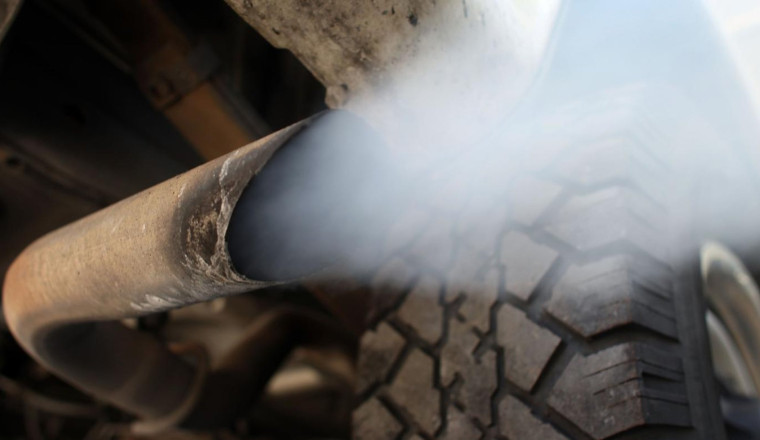

One point six million British drivers await the outcome of the Dieselgate 2 group action against Mercedes-Benz, a legal battle that could result in compensation payments exceeding £10 billion if claimants succeed. As the High Court prepares its judgment, expected in spring 2026, Rupa Huq, Labour MP for Ealing Central and Acton, argues the government must strengthen enforcement against manufacturers who fit illegal defeat devices to vehicles.
"We've seen repeated instances of car makers cheating emissions tests, yet penalties remain inadequate and enforcement patchy," Huq told Parliament during a Westminster Hall debate on automotive emissions compliance in January 2026. "The scale of the Mercedes case demonstrates this isn't isolated behaviour by rogue manufacturers. It's systemic deception enabled by weak regulatory consequences."
Among the major car firms embroiled in the case include giants such as Mercedes-Benz, Ford, Nissan, Renault and the Stellantis-owned brands Peugeot and Citroen, all of which are facing accusations of fitting unlawful 'defeat devices'.
The Mercedes group action, filed by law firm Slater and Gordon in 2020, alleges the German manufacturer fitted approximately 1.6 million diesel vehicles sold in Britain between 2008 and 2018 with software designed to manipulate emissions testing. The devices allegedly detected when vehicles underwent regulatory testing and temporarily reduced nitrogen oxide emissions to legal limits, while normal driving produced pollution levels far exceeding standards.
Mercedes-Benz denies wrongdoing, stating in court filings that its vehicles meet all applicable regulations and that any temperature-dependent emissions control adjustments serve legitimate engine protection purposes rather than test manipulation. The company argues that European regulations permit certain flexibility in emissions control under specific conditions, and that claimants have suffered no quantifiable loss justifying compensation.
The case follows the original Dieselgate scandal involving Volkswagen Group, which admitted in 2015 to fitting defeat devices in eleven million vehicles globally, including 1.2 million in Britain. That admission led to criminal charges in the United States, billions in fines and compensation, and numerous class action lawsuits worldwide. In Britain, approximately 91,000 VW Group vehicle owners joined a High Court group action that settled in 2022 for £193 million, with individual payouts averaging around £2,100 after legal fees.
Gareth Pope, head of group litigation at Slater and Gordon, explained the significance of the Mercedes case in a statement issued in December 2025. "This represents the largest consumer action in British legal history by participant numbers. If successful, it establishes that defeat device cases can succeed even when manufacturers don't admit wrongdoing, unlike VW which settled after admission. That precedent matters for accountability."
The legal arguments hinge on technical interpretations of European emissions regulations, specifically whether temperature-based adjustments to emissions control systems constitute illegal defeat devices or permissible thermal window management. Mercedes maintains its systems protect engines from damage at extreme temperatures, a defence European regulations explicitly allow. Claimants argue the systems primarily serve to circumvent emissions limits during normal driving conditions.
Independent testing by organisations including Emissions Analytics and the German Federal Motor Transport Authority has documented substantial discrepancies between laboratory test results and real-world emissions from various diesel vehicles. A 2023 report by the International Council on Clean Transportation found that Euro 6 diesel vehicles, supposedly meeting stringent standards introduced in 2014, emitted on average four times the permitted nitrogen oxide levels during actual driving.
Nitrogen oxides contribute to respiratory illness, premature deaths, and environmental damage. According to Public Health England estimates from 2022, air pollution causes between 28,000 and 36,000 premature deaths annually in Britain, with diesel vehicle emissions representing a significant contributor. The health costs and environmental damage provide context for why defeat devices matter beyond consumer protection concerns.
Huq's parliamentary intervention follows campaigning by environmental groups and consumer advocates for stronger government action. "Current penalties are derisory compared to manufacturer revenues," she argued in the Westminster Hall debate. "Even multi-billion pound settlements represent a few months' profit for companies like VW or Mercedes. Without meaningful criminal liability for executives who authorise cheating, what incentive exists for compliance?"
The government's response, delivered by roads minister Lilian Greenwood, acknowledged concerns but emphasised that Britain's departure from the European Union complicated enforcement. "Vehicle type approval now falls under UK regulations, but many affected vehicles received approval under EU regimes when we were members," Greenwood explained. "We're working with the Vehicle Certification Agency to strengthen testing and surveillance, but retrospective action against vehicles approved under previous regulatory frameworks presents legal challenges."
Those challenges haven't prevented action elsewhere. In Germany, prosecutors charged several VW executives with fraud, though convictions proved difficult to secure. Former VW CEO Martin Winterkorn faces ongoing criminal proceedings, though health issues have delayed trial. The United States imprisoned VW engineer James Liang for 40 months and fined executive Oliver Schmidt $400,000 plus seven years imprisonment for their roles in the scandal.
British enforcement relies primarily on civil rather than criminal mechanisms. The Competition and Markets Authority can investigate unfair commercial practices, but its powers focus on consumer protection rather than criminal prosecution of corporate executives. The Environment Agency oversees emissions compliance but lacks resources for comprehensive vehicle testing programmes that might detect defeat devices.
Claire Perry, a solicitor representing Mercedes claimants, highlighted the challenges individual consumers face proving losses. "Unlike a faulty product that breaks, defeat devices don't obviously harm owners. Their cars still drive. The harm is diffuse: environmental damage, health impacts on the population, and arguably reduced resale values if buyers learn about defeat devices. Quantifying individual loss requires legal creativity."
The High Court must decide whether claimants suffered actionable loss and, if so, how to calculate compensation. Potential approaches include estimated reduction in vehicle value due to defeat device revelation, notional cost of the emissions equipment owners believed they purchased but didn't effectively receive, or damages reflecting environmental harm caused. Each approach produces vastly different compensation figures.
Legal experts suggest the judgment could reshape product liability law beyond automotive cases. "If the court finds manufacturers liable for environmental harm caused by products that technically function as consumer goods, despite the harm being societal rather than individual, that's significant," Professor Sarah Green of Oxford University's law faculty told Legal Week in January 2026. "It potentially opens liability for any product causing diffuse environmental or health harms."
Meanwhile, affected drivers await outcomes that could deliver four-figure compensation payments or nothing. Many purchased diesel vehicles based on manufacturers' environmental claims and government policy encouraging diesel adoption for its lower carbon dioxide emissions compared to petrol. Discovering their vehicles produced illegal pollution levels while running higher costs than petrol equivalents understandably generates resentment.
The political dimension complicates matters. Successive governments encouraged diesel adoption from the late 1990s through tax policies favouring lower CO2 emissions. Only later did nitrogen oxide health impacts receive equivalent attention. Some argue government shares responsibility for the diesel mess, having incentivised purchases that subsequently proved environmentally harmful.
Huq dismisses that argument as deflection. "Manufacturers knew their vehicles exceeded legal emissions limits during normal driving. They fitted devices specifically to cheat tests. Government policy errors don't excuse corporate fraud," she stated. "What we need now are meaningful penalties, proper testing regimes, and criminal liability for executives who approve illegal practices. Otherwise, we're simply waiting for the next scandal."
Whether the government acts on such calls depends partly on the Mercedes judgment. A claimant victory would demonstrate that manufacturers face genuine financial consequences for defeat devices, potentially spurring regulatory tightening. A defendant victory might suggest current regulations and enforcement suffice. Either way, 1.6 million Britons have skin in the game, and their wait for answers continues.