
by Michael Gauthier
- Drivers in Massachusetts are being confused by new pedestrian hybrid beacons.
- They have five different phases including four featuring yellow or red lights.
- Many drivers are stopping when they shouldn’t, while others aren’t stopping at all.
The rules of the road largely stay the same but, every so often, something new gets introduced. While much of the attention has been focused on roundabouts, there’s a new item confounding motorists in Massachusetts.
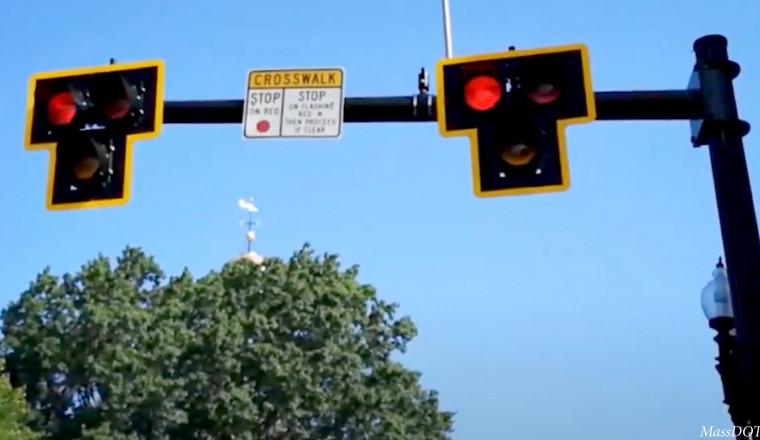
In this case, it’s “pedestrian hybrid beacons,” which are overly complicated lights that can be found at some crosswalks. Instead of giving drivers a simple red light to stop, these have five different phases including off, flashing yellow, solid yellow, red, and flashing red.
A Light Show of Confusion
That’s overkill, but the yellow and red warnings should be self-explanatory as their meaning echoes a traditional traffic light. However, solid yellow means slow down for pedestrians, while flashing yellow means prepare to stop for them. Solid red means stop, while flashing red tells drivers to stop and then proceed when the crosswalk is clear.
More: Google’s AI Traffic Lights Are Reducing Traffic Stops By 30% And Emissions By 10%
People are unsurprisingly confused and a study from the University of Massachusetts Amherst found nearly 25 percent of drivers went through solid red lights. That jumped to 65% when there were flashing red lights.
Missteps in the Mix
On the flip side, a number of drivers stopped when they shouldn’t have. 9% came to a halt when no lights were activated, while 19% stopped for flashing yellow lights. That number jumped to 30% for solid yellow lights.
The location of the pedestrian hybrid beacons appears to impact how drivers respond as on four-lane roads, there was less premature stopping but more red light running. However, at rail trail crossings, more drivers stopped when they shouldn’t have and the study’s lead author, Angelina Caggiano, chalked this up to an expected pedestrian presence.
The authors went on to question “whether or not it’s actually the best device to use at rail trail crossings or locations where there’s a steady stream of pedestrians and cyclists.” However, they noted people will likely become more familiar with the lights as more are installed.