




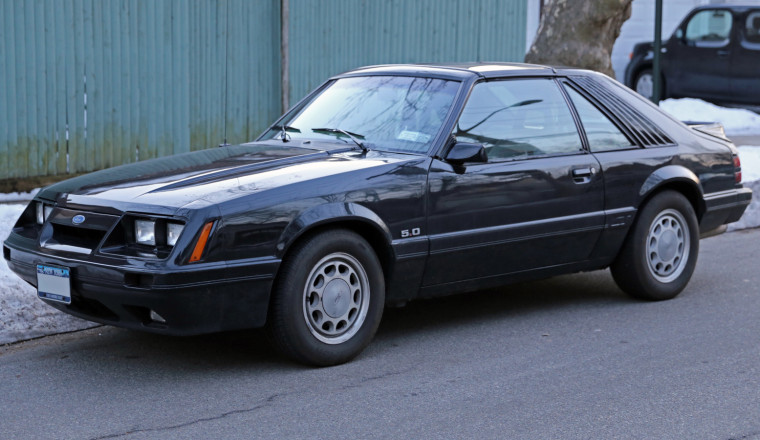

It's not unheard-of for different automakers to use the same names as each other for their vehicles, and the connection between Ford's Fox platform and the Audi Fox may be an example — but it's also almost certainly just a coincidence. Consider that Ford first mentioned the name "Fox" in February 1973, when it was used in a budget pitch to fund a new global vehicle program. Yet the Audi Fox wouldn't debut in the United States until May of that year.
Yes, the car had been on sale in Europe already, but across the pond it was known as the Audi 80. So the only way Ford could have copied Audi was if one of the former's product planners had advance notice of Audi's name-changing plans before they became public. Possible, but highly unlikely. In addition, to make the matter slightly more confusing, Volkswagen sold its own Foxes that were different from their German predecessors in almost all but name. VW's versions sold in the United States from 1987 to 1993, and elsewhere in the early 2000s. And perhaps the most popular Ford Fox body machine actually had a moniker based on another animal entirely, the Mustang. (Imagine what zoologists must think of a Fox-body Mustang Cobra.)
In the end, it may have been kind of crazy for Ford and Audi to be using the name. But as the saying goes, it was crazy like a fox. After all, both models marked major turnarounds for their automakers at a time when each was struggling desperately.
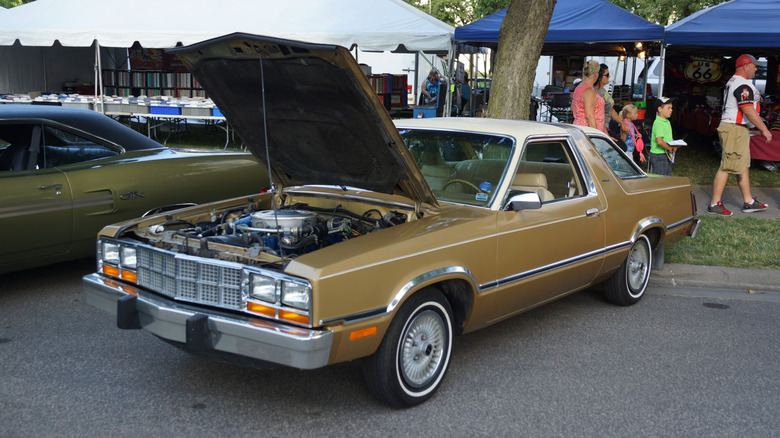
Greg Gjerdingen/Wikimedia Commons
What probably wasn't a coincidence was that both Ford and Audi needed to shake things up in 1973 as the repercussions of the first oil crisis began hitting home. At the time, Ford was also struggling to sell some 75 different models globally, which was a huge expense. The Fox platform was originally envisioned as helping whittle down that number by underpinning multiple vehicles, and it was specifically meant to first support a replacement for the Ford Pinto — the most fuel-efficient Ford of the era. Ford's global aspirations for the Fox platform fell through, but the Mustang model built on the platform went on to have a long and legendary run appealing to muscle-car enthusiasts. Additionally, a number of fascinating Fox-body cars lived in the Mustang's shadow.
Audi at the same time was just beginning to emerge in its modern form, with VW buying a controlling stake in what was still called Auto Union in 1965 — and which was still offering two-stroke engines. By 1968, the Audi 100 was in production as the brand's first modern luxury sedan, and it eventually spawned the compact Audi 80. Less expensive, lighter, and a joy to drive, the Audi 80 was named the 1973 car of the year. Exports to the U.S. — as the Audi Fox — began the same year, setting off a new, more prestigious approach to motoring that continues to this very day, with cars like the 2025 Audi A5 and S5 that take the fight right to the BMW 3 Series and Mercedes-Benz C Class.
Context:
The Ford Fox platform and Audi Fox name coincidence highlights the complexities of automotive branding.
Context:
Understanding these naming origins can shed light on the competitive landscape of the auto industry during the 1970s.
Context:
The Fox platform ultimately shaped the future of Ford, leading to iconic models like the Mustang that defined American m






























.jpg)