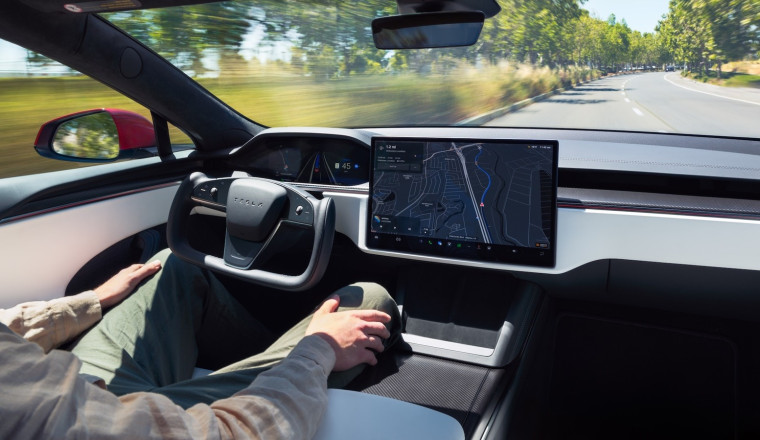

Once again, Tesla is in hot water with the feds over its so-called "Full Self-Driving" system. The National Highway Traffic Safety Administration has upgraded its preliminary investigation into the system's failures to detect low-visibility conditions to a full-blown Engineering Analysis, its highest level of investigation. This is often the final step before issuing a recall. Electrek reports that the analysis covers 3,203,754 vehicles equipped with FSD.
The investigation began in 2024, when a Tesla running FSD struck and killed a pedestrian. While this was the most serious case, additional similar crashes led NHTSA's Office of Defects Investigation to look into FSD failures in low-visibility conditions, such as sun glare, fog, or dust. Thanks to Tesla's strictly camera-based system, such conditions make it essentially blind.
A degradation detection system is supposed to identify low-visibility conditions and alert the driver to take over. However, in nine incidents, including the pedestrian fatality, this system failed to realize that it was blind until it was too late.
Tesla released an update to degradation detection after the pedestrian was killed, but further analysis determined that it would have only affected three out of the nine crashes, which is still a failing grade. Even worse, ODI believes that while Tesla is not deliberately hiding information in this case (though a separate investigation is underway for significant delays in crash reporting), there may be even more crashes like this than Tesla has reported. From the NHTSA report:
Tesla also described internal data and labeling limitations that prevented a uniform identification and analysis of crash events with the subject system engaged. ODI believes this limitation could have led to under-reporting of subject crashes over portions of the defined time-period.
All this, plus FSD's failures to stop for railroad crossings and stopped school buses, paints a pretty bad picture for a system that Tesla likes to claim is "self-driving."
This excerpt from the NHTSA report spells out what pretty much everyone saw coming except Elon Musk:
In the crashes that ODI has reviewed, the system did not detect common roadway conditions that impaired camera visibility and/or provide alerts when camera performance had deteriorated until immediately before the crash occurred. Review of Tesla's responses revealed additional crashes that occurred in similar environments and where the system either did not detect a degraded state, and/or it did not present the driver with an alert with adequate time for the driver to react. In each of these crashes, FSD also lost track of or never detected a lead vehicle in its path.
You know what would detect obstacles beyond visual range in low-visibility conditions? Radar, which Tesla FSD stopped using in 2021. Even earlier Teslas equipped with radar had it turned off in an update. At the time, Elon Musk said in a Twitter post:
Vision became so good that radar actually reduced SNR, so radar was turned off.
Context:
NHTSA upgraded its Tesla FSD investigation to the highest level, often the final step before a recall.
Context:
Tesla's camera-only system fails dangerously in fog, glare, and dust when human drivers need help most.
Context:
Tesla removed radar from FSD in 2021, eliminating a sensor that works in low-visibility conditions.