
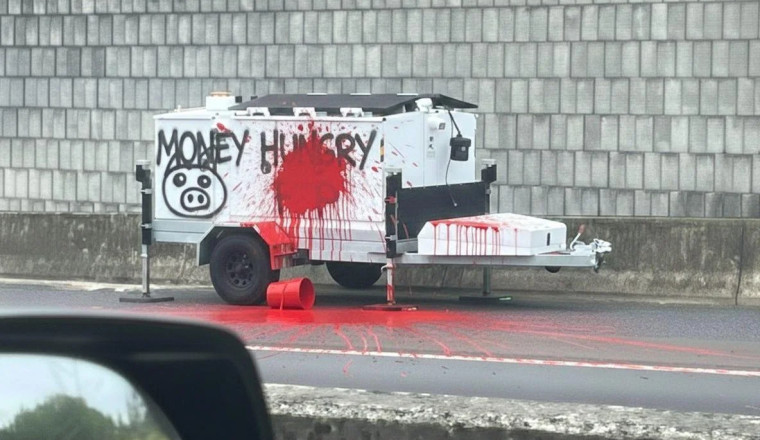

New Zealand Police issued 2,025,131 speeding tickets from mobile and fixed speed cameras between 2023 and September 2025. According to data obtained through an Official Information Act request by MotorBuzz, 971,709 of those tickets - 48 percent - were for traveling between 1 and 10km/h over the posted speed limit. Another 756,056 tickets caught drivers between 11 and 15km/h over. Combined, 85.3 percent of all camera-issued speeding tickets targeted drivers traveling 15km/h or less above the limit.
Officer-issued tickets tell a different story. Of the 1,389,759 infringements issued by police officers using radar, laser, or pacecheck methods during the same period, only 247,763 - 17.8 percent - were for speeds under 11km/h over the limit. Officers focus enforcement on higher speeds, with 39 percent of their tickets issued for drivers 16 to 30km/h over limits.
The total face value of infringement fees from both camera and officer enforcement reached $285,188,550 across the three years covered by the data. Camera tickets generated $134.7 million while officer-issued tickets produced $150.5 million. Police noted they do not hold records of actual monetary amounts received as payments go directly to the Crown's Consolidated Fund.
The disparity between camera and officer enforcement patterns raises questions about enforcement priorities. Cameras operate automatically, capturing every vehicle exceeding the threshold regardless of road conditions, traffic flow, or whether the speed poses genuine safety risk. Officers exercise discretion, typically targeting drivers who stand out from surrounding traffic or demonstrate dangerous behavior.
The 10km/h Question
Nearly one million tickets for speeds 1 to 10km/h over the limit represents systematic enforcement at margins where speedometer accuracy becomes relevant. Modern vehicles must meet ADR 18/03 standards requiring speedometers to never under-read and to over-read by no more than 10 percent plus 4km/h. In a 100km/h zone, a speedometer displaying 100km/h could indicate actual speeds between 90.9km/h and 100km/h depending on calibration.
Tire pressure, tire wear, and wheel size all affect speedometer accuracy. A vehicle showing 105km/h on its speedometer might actually be traveling 98km/h, or it might be traveling 105km/h. The 10 percent tolerance built into speed camera enforcement supposedly accounts for this variability, but cameras operating at 1km/h over the tolerance threshold will inevitably catch drivers whose speedometers indicate they're at or below the limit.
The data shows cameras issued 109,078 tickets for 1-10km/h over in 2023, rising to 224,834 in 2024, then dropping to 17,658 in the partial 2025 data (through September). Mobile cameras caught 308,431 drivers at 1-10km/h over in 2023, 277,663 in 2024, and 34,045 through September 2025. These aren't outliers or edge cases. They're the single largest category of camera enforcement.
Officers take a different approach. While they issued 54,031 tickets under 11km/h over in 2023, that represented just 13.5 percent of their total enforcement. By 2025, officer-issued tickets under 11km/h had risen to 112,309, but that still represented only 21 percent of officer enforcement even as their focus on marginal speeds increased.
The Revenue Generation Question
At $30 per ticket for speeds 1-10km/h over and $80 for 11-15km/h over, the low-end enforcement categories generate substantial revenue. The 1,727,765 camera tickets for speeds 15km/h or less over the limit produced $90.5 million across three years. That's 67 percent of total camera revenue from the lowest speed bands.
Police emphasized in their OIA response that enforcement serves road safety rather than revenue objectives. Superintendent Steve Greally, Director of Road Policing, provided data showing infringement fee face values but noted actual collection figures aren't tracked by Police as payments go directly to the Crown.
The government's position is that fines deter speeding and that even small speed increases correlate with crash severity. Research from Monash University and other institutions supports this, showing that crash risk increases exponentially with speed. A 5km/h reduction in average speeds reduces fatal and serious injury crashes by approximately 30 percent according to international studies.
Critics counter that enforcement focusing on drivers 5 to 10km/h over limits in areas where the posted speed may already be conservative doesn't target the dangerous driving that causes serious crashes. A driver doing 107km/h in a 100km/h zone on a rural highway poses different risk than someone doing the same speed past a school.
Enforcement Intensity Is Increasing
Officer-issued tickets jumped 33.6 percent between 2023 and 2025, from 399,383 to 533,586. That increase occurred despite partial-year 2025 data, suggesting actual 2025 totals will exceed 600,000 when full-year figures are available. Camera enforcement remained relatively stable with fluctuations driven primarily by mobile camera deployment patterns.
The 1,235 Stalker radar units in operation as of January 2026 represent New Zealand Police's primary speed detection tool. These units accounted for 1,163,095 of the 1,389,759 officer-issued tickets - 83.7 percent. Laser detection produced 219,753 tickets while pacecheck methods added 5,778.
Police do not record deployment data for radar units, meaning there's no public information on how many speed traps operate daily, where they're positioned, or whether deployment targets specific high-risk locations versus revenue optimization. The OIA response noted this information "is not retrievable" from police systems.
What Drivers Can't Know
Police systems don't track what happens after drivers elect court hearings on speeding tickets. While infringement notices can be challenged in court, Police cannot determine how many are withdrawn, dismissed, or result in convictions because "the subsequent court process and its result are managed by the Ministry of Justice." The data exists somewhere in government systems but not in a format that links back to original infringement notices.
This creates an information gap. Drivers considering court challenges have no way to assess success rates or patterns in judicial outcomes. Anecdotal evidence suggests many infringements get withdrawn when challenged, particularly for marginal speeds where measurement accuracy questions arise, but official statistics don't exist.
The Ministry of Justice would need to provide court outcome data matched to infringement types, something that would require system changes to track. Without that data, the actual enforcement success rate for low-level speeding tickets remains unknown.
The Safety vs Revenue Debate
Road safety advocates argue that automated enforcement removes discretion and bias, ensuring consistent application of speed limits regardless of driver demographics or vehicle type. Every vehicle exceeding the threshold gets ticketed, creating a perception of fairness that discretionary enforcement can't match.
Opponents counter that automated enforcement optimizes for revenue rather than safety outcomes, positioning cameras at locations where speed limit reductions create technical violations without addressing dangerous driving. The concentration of tickets at low speed bands supports this criticism - if cameras targeted the most dangerous speeds, the distribution would skew toward higher violations.
The data shows this tension clearly. Officers issue 56.5 percent of tickets for speeds 15km/h or under, suggesting that even with discretion, more than half of police enforcement targets relatively minor violations. But cameras push that figure to 85.3 percent, indicating that automated systems disproportionately catch marginal speeders.
Neither approach is obviously wrong. Low-level enforcement might deter future violations and incrementally reduce average speeds. High-level enforcement targets the most dangerous drivers but allows moderate speeders to continue unchecked. The optimal balance depends on whether speeding enforcement prioritizes behavioral modification across all drivers or removal of the highest-risk road users.
What The Data Shows
The Official Information Act response provides the clearest picture yet of how New Zealand Police enforce speed limits. Nearly two million camera tickets in three years, half for speeds barely exceeding posted limits. Over one million officer-issued tickets with increasing focus on marginal violations. Revenue approaching $300 million that goes directly to government coffers.
The enforcement is systematic, intensive, and profitable. Whether it's effective at improving road safety requires different data - crash rates, injury severity, speed distribution changes - that wasn't part of this OIA request. What's clear is that New Zealand operates one of the most comprehensive low-level speed enforcement programs in the developed world, and it generates substantial revenue while doing so.
Drivers doing 105km/h in 100km/h zones can expect tickets. Those doing 55km/h in 50km/h areas will likely get caught eventually. The cameras don't exercise discretion, they don't consider context, and they don't care if your speedometer reads differently. They record speeds, compare to limits, and issue tickets automatically. That's the system working exactly as designed.