

by Stephen Rivers
- Scammers hijack Facebook accounts to post fake vehicle sales.
- Victims are asked for refundable deposits before cars appear.
- The scam has run worldwide for over a year with little action.
If you use Facebook or Instagram, there’s a good chance that you’ve seen the scam we’re talking about. It often begins with an emotional hook. A heavy heart, a beloved family member suddenly falling ill, moving into a nursing home or hospice, and most importantly, a family handling the painful job of downsizing lifetime belongings like used cars as quickly as possible.
More: Car Flipping Scam Promised Riches Then Left A $57M Disaster Behind
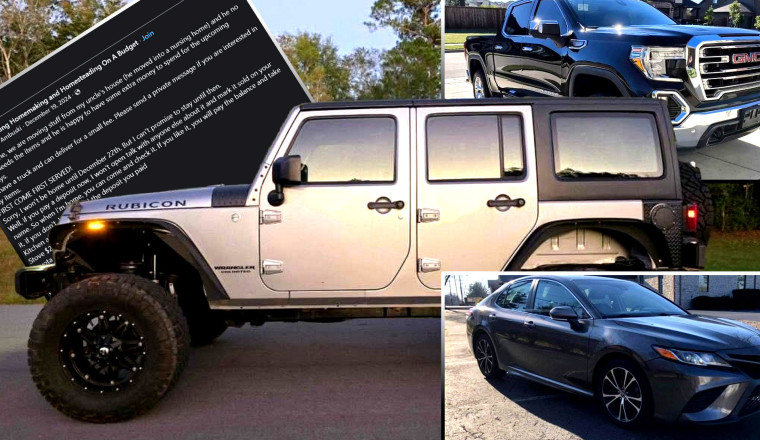
What follows is a neatly organized list of assets all priced at jaw-dropping discounts. Imagine finding a good-looking 2019 Toyota Camry for $3,000 or a 2018 Honda Accord for the same amount. Who wouldn’t jump on a 2013 Jeep Wrangler Unlimited Rubicon for $5,000? How about a 2018 GMC Sierra for just $7,500?
The Polished Setup That Pulls You In
These prices make sense if the vehicles in question are wrecked beyond recognition, but that’s not what the ad shows.
Instead, these vehicles and the rest of the assets up for sale tend to look spectacular, and remember, this is your friend on Facebook or Instagram selling this stuff. All they ask is that if you’re interested, you provide a small, fully refundable deposit.
They need that because this friend is out of town for a few days and there’s plenty of interest. In some cases, the list of goods even has a few that are already spoken for. Of course, all of this is just a scam, and it’s victimizing people worldwide.
When Your Account Gets Hijacked
I personally watched this exact scheme play out after a friend’s Facebook account was compromised last month. The scammers locked him out, posted the fake sale under his name, and began soliciting deposits through private messages. More than a week later, the post is still live, and Meta has yet to restore his account.
The playbook is disturbingly consistent. Scammers hijack legitimate Facebook or Instagram accounts, giving the post instant credibility. The emotional backstory lowers defenses, while the long, detailed item list creates the illusion of legitimacy. Vehicles and equipment are priced just low enough to feel urgent, but not cartoonishly fake.
Anyone who messages the account is told calls aren’t possible often due to hospital rules, poor reception, or being unavailable. Deposits are pitched as fully refundable, usually requested via Zelle, Cash App, Apple Pay, or other irreversible payment methods. Once the money is sent, the scammer disappears.
This isn’t a localized problem, either. Versions of the same scam have been documented across the U.S., Australia, Europe, and elsewhere for over a year. A Reddit post from the r/CarsAustralia community nearly a year ago describes an almost word-for-word identical setup, right down to the “out of town” excuse and discounted vehicles.
Facebook’s Slow Response Makes it Worse
The most troubling part may be how long these posts stay up. Even when friends report the listings as fraudulent, action can take days or never come at all. In research for this piece, it took just a few minutes to find five examples of the scam, with some posts still up that date back over a year.
In the meantime, scammers keep collecting deposits, sometimes from dozens of victims, using accounts that appear trustworthy because they belong to real people.
How to Spot the Setup
The takeaway here is simple: if a Facebook sale post combines an emotional family crisis, an unusually large list of high-value items, and a demand for a refundable deposit before you can see anything in person, don’t walk. Run.
At the very least, reach out to the individual in question since they’re already your friend. If you don’t have their contact info, get it from a mutual friend and confirm the situation before sending any money. We’ve reached out to Facebook and the FBI for more information on this situation and will update if we hear back.