
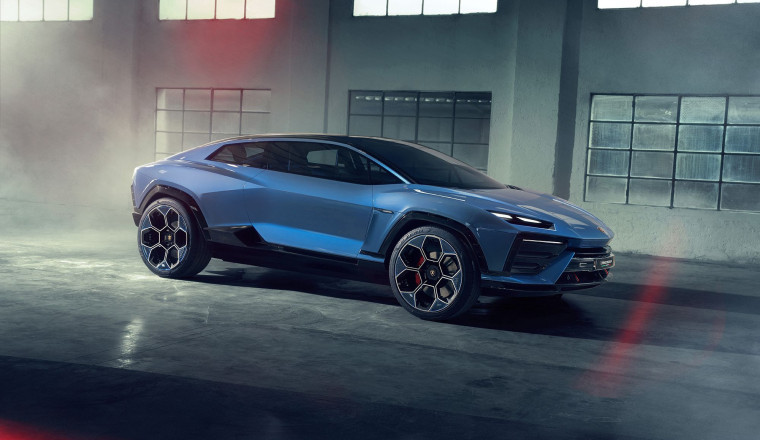

In 2023, Lamborghini stood on a stage in Monterey and unveiled the Lanzador concept. A four seater electric grand tourer with 1,200 horsepower, shooting brake proportions, and a starting price expected to clear $500,000. It was supposed to be the dawn of a new era. The first fully electric Lamborghini. Proof the brand could evolve without abandoning its identity.
Two years later, it's dead. Cancelled quietly at the end of 2025 before a single production unit was built. No funeral, no fanfare. Just a decision made in Sant'Agata Bolognese and confirmed to The Sunday Times by CEO Stephan Winkelmann.
The reason? Customer demand was, in Winkelmann's words, "close to zero."
The Concept Was Stunning. The Market Was Not.
The Lanzador looked extraordinary. Marcello Gandini's spiritual successors at Lamborghini's Centro Stile gave it presence. Dramatic flanks, lifted ride height, the unmistakable aggression the brand has built its identity around for sixty years. On paper, it ticked every box the press needed to write the electric supercar revolution story.
The problem was that the press were the only ones excited about it.
Jalopnik, which first reported last summer that Lamborghini was already reconsidering the Lanzador, noted the company had been going back and forth internally since the start of 2025. Executives held discussions with customers and dealers. The feedback was consistent and unambiguous. Lamborghini buyers valued the emotional experience of their cars above all else. Take away the V10 or V12, remove the mechanical drama, the exhaust howl, the vibration through the seat, and you remove the reason those customers buy a Lamborghini in the first place.
Winkelmann told The Sunday Times directly:
"EVs, in their current form, struggle to deliver this specific emotional connection."
That is not a controversial statement in Sant'Agata. Lamborghini builds theatre. The Huracán's naturally aspirated V10 revving to 8,500rpm is a visceral, irreplaceable experience. The Revuelto's V12 sounds like something designed in collaboration with God. Replacing that with a silent electric motor, no matter how fast or powerful, fundamentally changes what owning a Lamborghini means.
Winkelmann was equally direct about the financial reality:
"Investing heavily in full-EV development when the market and customer base are not ready would be an expensive hobby, and financially irresponsible towards shareholders, customers, to our employees and their families."
That is CEO speak for: we ran the numbers and they were terrible.
The PHEV Strategy Makes Far More Sense
The Lanzador was never going to exist in isolation. The plan was always that by 2030, every Lamborghini would be electrified. The Urus PHEV already exists. The Revuelto uses a hybrid V12. The Temerario pairs a twin turbo V8 with three electric motors. Electrification, in the sense of hybridisation, was already the brand's direction.
Full battery electric is a different proposition entirely. A Lamborghini without combustion is a Lamborghini without its reason to exist. Winkelmann confirmed to The Times that all Lamborghinis will be PHEVs by 2030, while the company commits to building internal combustion engines "for as long as possible." A fourth PHEV model will join the lineup, likely occupying the grand touring space the Lanzador was meant to fill.
That fourth car will have an engine. It will sound like a Lamborghini. It will sell.
The Lanzador, had it reached production, would have competed in a segment containing the Porsche Taycan Turbo GT, the Rimac Nevera, and the incoming Bugatti Tourbillon's electric competitors. Those are extraordinary machines. They're also considerably different propositions to what Lamborghini customers actually want from the brand. The overlap between "wants a silent four seat GT" and "wants a Lamborghini" turned out to be vanishingly small.
Like this? Get more MotorBuzz delivered to your browser. Click here to add MotorBuzz as a preferred news source on Google.
This Was Not a Surprise
MotorBuzz has tracked the wider industry retreat from aggressive EV timelines across multiple pieces. Ford scaled back, GM restructured its Ultium platform investments, Stellantis wrote off €22 billion unwinding an electric strategy its own customers rejected. The pattern is the same everywhere. Manufacturers overestimated how quickly consumers would embrace EVs, and the companies that bet earliest and hardest are paying the most painful price.
Lamborghini was, in one sense, fortunate. The Lanzador never reached production. The money spent on its development was real, but the damage of launching a car nobody wanted, building the factory capacity to produce it, and then watching it sit unsold would have been catastrophic to a brand that lives and dies by exclusivity.
Porsche is currently wrestling with exactly that decision on the electric Boxster and Cayman, with Jalopnik reporting those programs may be cancelled after extensive and expensive development work. Ram killed the REV electric pickup before launch. The list of high profile EV cancellations is getting longer, and the companies doing the cancelling are not fringe players hedging bets. They are the brands that should have been best positioned to make electrification work.
Ferrari, notably, is still pressing ahead with its Luce EV. That tells you something about brand positioning. Ferrari customers are wealthier, more diverse in their preferences, and more likely to own multiple cars. An electric Ferrari as a second or third car in a collection is a different purchase decision to an electric Lamborghini as the centrepiece of your garage, which is the emotional centrepiece of your life.
Lamborghini customers are not buying four door electric GTs that weigh 2.5 tonnes. They are buying rolling sculptures that make sounds that interfere with rational thought. Winkelmann understood that. The Lanzador concept never should have been built in the first place.
"Never Say Never" Is the Most Honest Thing Lamborghini Has Said in Years
When asked whether Lamborghini would ever return to full EV development, Winkelmann declined to close the door permanently. His exact words to The Sunday Times were "never say never, but only when the time is right." He offered no timeline. The company will continue research and development on electrification to ensure it is ready when, and if, customer appetite materialises.
That is responsible positioning. Battery technology will improve. Charging infrastructure will expand. The emotional argument against EVs narrows every generation as motors become more characterful and the surrounding experience matures. A Lamborghini EV that arrives in 2035 into a market genuinely ready for it is a very different proposition to one that arrived in 2027 into a market that was clearly not.
Winkelmann's comment about living in "fast moving times" where failing to react puts you at risk of losing momentum is worth taking seriously. Lamborghini is not dismissing electrification as a permanent non starter. It is correctly reading that its specific customers, paying its specific prices, for its specific brand identity, are not ready now. That could change.
But forcing a car nobody asked for into a market that didn't want it, in the name of appearing progressive, would have been significantly more irresponsible than cancelling it. Brands have destroyed decades of equity chasing trends their customers didn't share.
Lamborghini sold 10,112 cars in 2024, a record. Demand for the Revuelto, Temerario, and Urus exceeds supply. The brand has never been healthier. Walking away from the Lanzador was not a retreat. It was the only sensible call.
The electric Lamborghini will exist one day, when the technology and the moment are ready. In the meantime, the company will keep building the cars its customers actually want to own: loud, dramatic, combustion powered machines that make the simple act of starting the engine feel like an event.
That is the brand. The Lanzador was never part of it.