

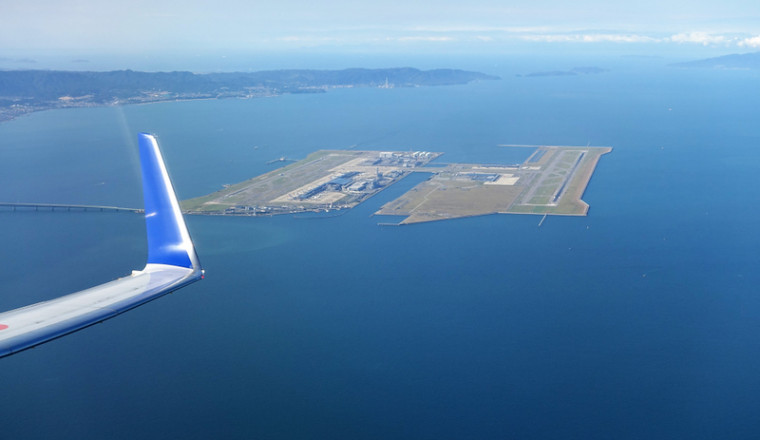

Kansai International Airport is the stuff of engineering legend, a $20 billion marvel crafted on artificial islands in Osaka Bay. Opened in 1994, it was a pioneering project, the world’s first major airport constructed entirely offshore. But beneath the soaring terminals and bustling runways lies an escalating crisis: the airport is sinking faster than anyone imagined.
Initially, engineers projected the airport would settle about 8 meters in its first 50 years. Reality hit hard. Within just a few years, subsidence had already surpassed 12 meters. The ground beneath soft alluvial clay saturated with water behaves like a sponge, compressing relentlessly under the massive weight of the filled land and infrastructure. Despite installing 2.2 million vertical sand-filled pipes designed to drain moisture and reinforce the base, the clay continues to compact, dragging the airport downward.
To combat this, an eye-watering £117 million went into strengthening seawalls and raising structures with hydraulic jacks. These measures slowed the descent from nearly 50 centimeters a year in the early days to about 10 centimeters more recently. But the uneven sinking across the islands compounds challenges, threatening structural stability and safety.
Experts issue a stark warning. If current trends persist, parts of Kansai could be submerged by 2056, turning this iconic gateway into a literal island under water. Such a fate would deal a harsh blow to the region’s connectivity and economic heartbeat, seeing millions of travelers pass through annually.
The airport remains operational and vital for now, but time is slipping through the cracks beneath its runways. Kansai Airport’s fate may be sealed..