

Golf carts are incredibly useful modes of transportation, and not just for those that play golf, either. They can be used to ferry folks around airports, theme parks, holiday resorts, and large estates. They are lightweight, nimble, and simpler than cars or trucks, making them great solutions for moving groups of people from one place to another – providing, of course, that the movement doesn't take place on public highways, as it's illegal to drive your golf cart on the road in many U.S. states.
Given their utility, it can be easy to come to the conclusion that you need a golf cart. However, which approach is correct for you, gas or electric? As you may expect, there are many similarities between the two — they are both designed with the same purpose in mind, after all — but there is also much that separates them. Cost, efficiency, simplicity, effectiveness over different terrain types, and storage considerations are just some of the ways in which gas and electric-powered golf carts differ.
As a general rule, a new golf cart in this day and age will cost anywhere between $5,000 and $18,000, while used models can command roughly 50% of those figures, depending on age, condition, and the manufacturer. Fun fact, Harley-Davidson used to make golf carts, although these hail from between the '60s and '80s and are mostly seen as collector's trinkets now. So, before you go and splash the cash, take a read through and consider whether a gas or electric golf cart is best suited for your needs.
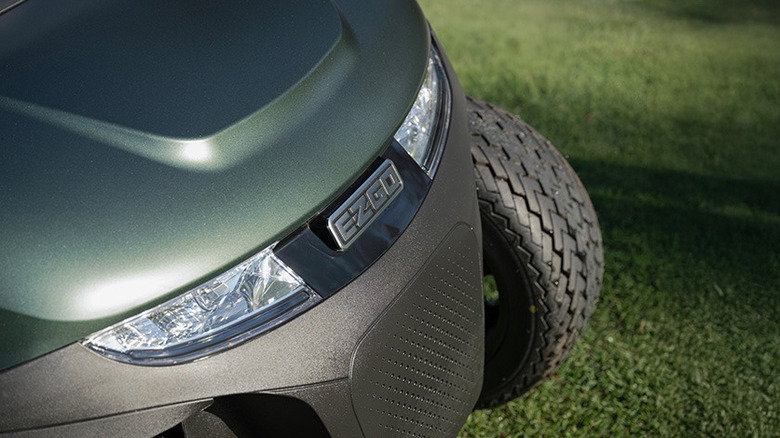
One of the main things to consider when deciding which type of golf cart you should buy is cost. There is no set rule as to whether gas or electric carts are cheaper — it depends largely on the brand and the exact details of the powertrain.
Take EZGO carts as an example. The company offers a selection of gas and electric carts, such as the Express 6, which is great for a wide range of uses. The electric version uses powerful lithium batteries — not something all electric carts boast — and is available in the Touring trim with an electric powertrain from $13,474. For the same cart in the same trim with a gas engine, you'll need to spend an extra $200.
However, with the Yamaha Drive2, the opposite is true. This entry-level cart will set you back $9,950 with a gas engine or $10,170 with an electric motor. Regardless of your preference, initial purchase costs are relatively close. However, costs can vary as you delve deeper into ownership. It's not exactly clear cut here either, though. Some outlets argue that even though the maintenance for gas carts is more involved, it is also considerably cheaper. Others suggest that electric carts are cheaper over time, due to reduced maintenance and fuel bills.
The truth is, in terms of cost, the pros and cons depend largely on the model you buy. Sometimes the gas model will be cheaper, and sometimes, it costs more. Buying gas and performing maintenance services are cons for gas models, but, likewise, electric carts need maintenance over time, too.
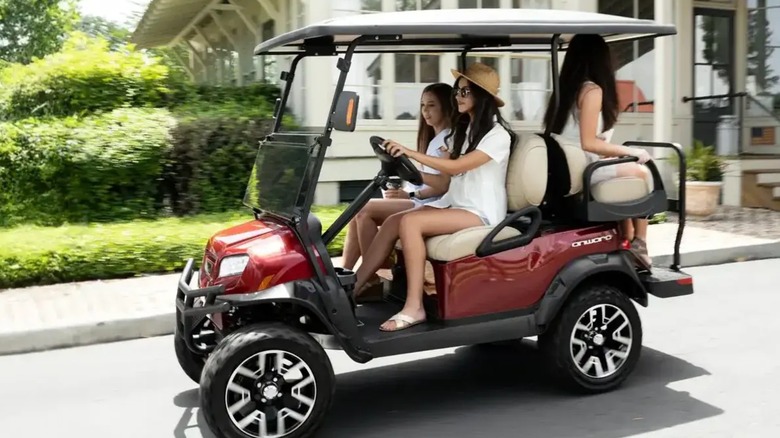
Things get a little clearer here — although, once again, there are points in favor of each powertrain type when it comes to efficiency and range. Naturally, the electric carts are cleaner and more efficient than gas-powered carts, as they do not burn gas and pollute the environment. However, when it comes to range, the victory swings rapidly in the other direction.
The distance an electric cart can travel on a full charge varies, depending largely on the battery it uses. Those with common 48-volt batteries can typically expect a range of between 25 and 40 miles, while carts equipped with lithium batteries can expect to extract closer to 50 miles per charge — more than enough for wandering around a golf course, sure.
However, for applications that require a greater range, gas-powered carts are the clear winner. A typical gas cart can expect to get up to 30 miles per gallon, which, on average, translates to a rough usable range of 125 miles or so. Of course, the bigger the tank, the greater the range. So, if the expected use of your golf cart is traveling around a hospital or navigating a simple golf course, then the chances are that a zero-emissions electric cart will do nicely. On the other hand, if traversing a country estate day-in and day-out is on the cards, then electric power will likely leave you with range anxiety. Instead, opt for a gas-powered cart, and leave charging points alone.
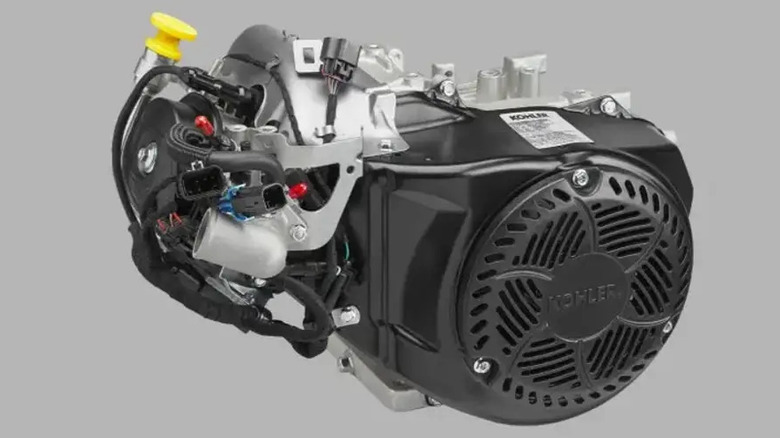
You may immediately assume that electric golf carts are the simpler option when it comes to maintenance, and in many ways, you would be right. Electric models don't need oil changes, fuel filters, spark plugs, or fuel pumps. Sure, all of that is true, but those gas-related bills are small in comparison to the costs that could plague an electric cart owner. Instead, electric carts come with bills for replacement motors and batteries. Replacement batteries can set owners back between $800 and $2,000 every 4 to 6 years, while motor replacements can command a similar outlay.
On the other hand, maintaining a gas-powered golf cart is likely to be cheaper, as routine maintenance mainly includes things like oil replacements and filter changes. However, this work is more frequent — it's possible that an electric cart could run for years before any of those aforementioned bills hit, whereas a gas cart will need mechanical attention annually.
Regardless of which approach you take, the great news is that both electric and gas carts generally prove to be reliable, which mainly boils down to their simplicity. These are light machines (relatively speaking, don't try to pick one up), and they aren't performance-focused either, which means the powertrains aren't typically put under a ton of stress. Regardless of which fuel type you prefer, your cart of choice should be able to operate for years without a major hiccup, as long as you keep up with the manufacturer's maintenance program.
 Yamaha Golf-Car Company/YouTube
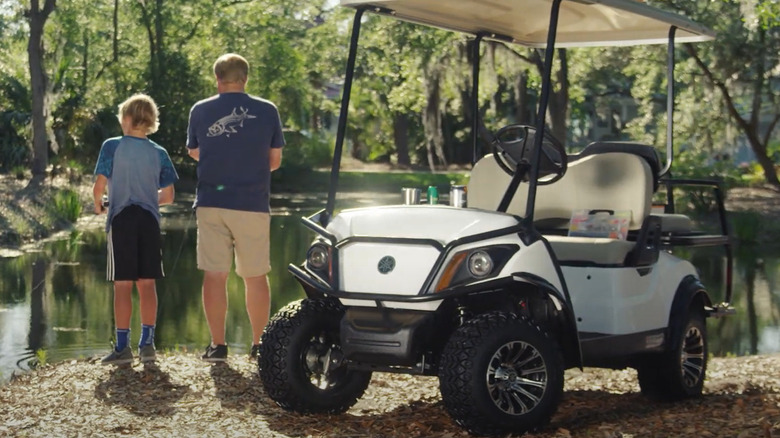
When it comes to actually driving golf carts, there are distinct pros and cons for both powertrain types. The main performance benefit of an electric cart is similar to that of an electric car — power and torque are available almost instantly, which often leads to spritely acceleration. Considering that golf carts are typically used for short distances, this is ideal for getting up and going quickly. As a general rule, electric carts also sport higher top speeds than gas-powered models, which again, is ideal for quickly darting from location to location.
However, there are downsides to using electric carts. Say, for example, you are traversing particularly uneven or steep terrain. Electric carts will struggle, due to a lack of overall power. Sure, different tires and larger batteries can help here, but out the box, a gas-powered cart will generally fare better in such circumstances. Naturally, with that extra grunt, gas-powered carts are also better suited to hauling heavy loads. Whether it's people or cargo, if you're planning on loading your cart up on a regular basis, gas could be the better choice.
Furthermore, extreme weather is not great for electric performance. So, if you live in an extremely hot or cold climate, a gas-powered model may be the best way to guarantee predictable performance. If mild weather and smooth, paved surfaces are the order of the day, then an electric cart will probably be your best bet. Uneven terrain, harsh weather, and steep climbs, however, call for gas power.
 Yamaha Golf-Car Company/YouTube
If you're shopping for a cart to tackle short and simple trips, then you may be thinking that something electric is the best bet. Electric carts are easy to maintain and cost effective. Furthermore, there is no need to buy gas, they don't smell or sound quite so mechanical, and they're more eco friendly. However, you need to consider storage, too, and if you only plan on using the cart periodically, a gas model could be the best option.
Electric carts do not like sitting for extended periods of time. If they are left in long-term storage, their overall performance can degrade, which may lead to costly motor or battery replacements if regaining that lost performance is necessary.
On the other hand, by simply adding a touch of fuel stabilizer to the tank, a gas-powered cart can happily sit for months on end and still fire up just fine when you come back to it, without drops in performance. Some fuel stabilizers are better than others, so be sure to do your homework before using one. That said, other than leaving it on a trickle charge, or simply disconnecting the battery, there really is little else you need to do prior to storing a gas-powered golf cart.