

The new Formula E season is three races old and already has the key ingredients of an epic title battle forming with a trio of winners and three past champions already underpinning their challenges.
But just as a structure forms, this week in Jeddah the added curveball of Pit Boost returns, this time with a subtle twist of only one six-minute attack mode activation to be used in conjunction with the pitstop.
A year on from Pit Boost's much talked about debut, Fortescue Zero the technology provider of the energy boosting systems, has announced its renewed facilitation of the kit to add a touch of extra strategic thinking for the teams and drivers.
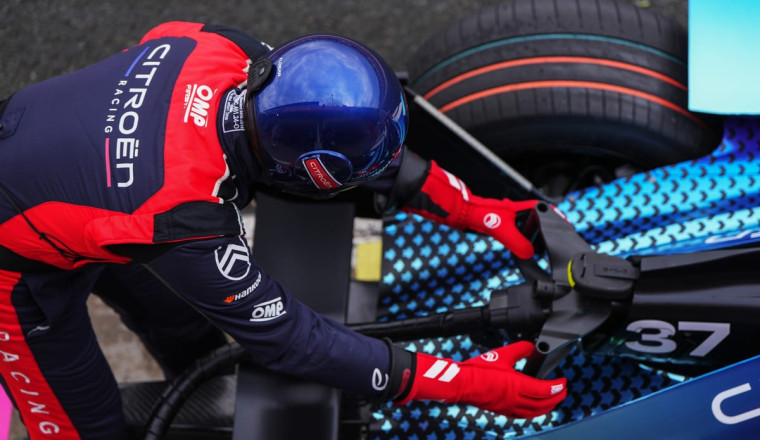
Fortescue Zero's 600kW fast-charging rigs, enhanced by its battery intelligence software Elysia, which allows for the optimisation of speed, while also preserving battery life and integrity that deliver a +10% (3.85kWh) energy boost in under 30 seconds have, in truth, been a consistent part of the paddock since 2023 when the Gen3 era kicked off. A delay in utilising the boosting in races meant extra polishing over the first two seasons but by the time Gen3Evo arrived at the end of 2024, it was ready to be unleashed for the first time at Jeddah last February.
Because of the delays there was some scepticism around the Pit Boosting tech and if it might compromise some races. The reality was that one incident apart - which came in Monaco when Nico Mueller had issues with his charge collation - the boosting was reliable considering they delivered over 1.5MWh of energy across almost 400 battery top-ups conducted across different races, sessions and tests.
There were also other incidents in races but these were episodes solely down to team operative errors. Extra training was utilised by Fortescue Zero around these problems for the teams.
"I was just really, really pleased with the technical delivery," Fortescue Zero's general manager for motorsport, Doug Campling, tells The Race.
"There was a lot of challenge, a lot of concern around the technical delivery, and we put that to bed. The reliability of the product in the field in the first instance was superb. We put in an incredible shift to get it ready for season 11 [2024-25]."
The rules modification that will mean one Attack Mode only in a Pit Boost race, set to be the first race in Jeddah, has teams thinking hard about their strategies but it is unlikely to make the earth move with tactical dexterous bombshells.
In all likelihood teams will still aim to try to dive into the pits when they get an element of clean air from competitors.
"The problem with only a single attack of six minutes is that for those in the lead group who are essentially already in clean air, they have to take it pretty much at the beginning of the window," former Mercedes and McLaren engineer and now Formula E TV expert strategy advisor, Albie Lau, told The Race.
"That is because they'll probably use up ~20% of SoC [State of Charge] during attack and they will want to have made the most of the clean air just prior to coming into the box for their pit boost.
"Some teams will get this wrong and end up coming into pitlane while still with attack time left. It's a trade-off and if it's 15-30 seconds maybe it's not a big issue but if they've got their sums wrong and come in with over a minute left of ATK [attack mode], they've screwed it up."
That little bit of jeopardy will catch some out for sure. Overall though the clear benefit will be the viewers and also fans at the track, as they will be able to tuck into a much clearer narrative on how the race is brewing up to its natural explosive finale in the closing laps.
"Time will tell whether it's the right thing but I think it's really good that Formula E are doing this and making this tangible difference between a Pit Boost race and the non-Pit-Boost race," said Campling.
"I'm really supportive. I think it's necessary and I think it was part of the fan feedback as well, certainly it was the feedback from team principals, that the risk was of the races being a bit too hard to follow from a fan perspective."
The Race has learned that whether Pit Boosting will be part of the Gen4 landscape will be discussed at a Sporting Working Group meeting at the end of this month.
Should it be then Fortescue Zero is ready and capable to continue to be the technology provider despite having lost the battery tender to Podium Advanced Technology in 2024.
"Integration testing on Gen4cars is effectively complete," said Campling.
"We've been working with FIA, with Podium and with Spark for the physical and software integration. It's ready to go, if that's the way it's taken. So, we've ticked that box."
Should Pit Boosting continue into the new era there might be possibilities in further scoping out how it will feature in the sporting landscape.
Some drivers have expressed concern to The Race that races may become locked in too early and reduce the spectacle of overtaking that has been one of Formula E's key USPs in recent seasons.
Stoffel Vandoorne - 2022 champion and current Jaguar reserve, said getting the sporting format right was "the toughest thing for the FIA to decide because of how much pack-racing they want to have".
A key part of the FIA's target is to still keep a certain amount of lifting and energy management in races and potentially keeping or advancing the Pit Boosting could be part of this.
Races where results feel locked in, that are boring with no overtaking, are not an option for Formula E given it has cultivated itself as a ‘different' type of racing since its inception in 2014.
"The problem is that those parameters being decided, the energy allocation per race, the number of laps, having it wrong by one lap can completely change the race," adds Vandoorne.
"You can go from a one-lap difference or a little bit more saving or less saving. It can basically push the race to a full-on pack race, or it can be pushed in the other way where it's locked from the start. That's a very tricky one for them to get right."
A lot of simulation work is required from the FIA side and probably input from the teams as well.
The fundamental challenge for Gen4 is that because the car is so much bigger, heavier and faster on the straights, then it consumes a lot of energy. Certain current tracks are going to be hard to race on with the Gen4 car, that is why bigger circuits are being looked at. But here is the trade-off. This will be heavier on the consumption side, so it will naturally shorten the races.
This is where Pit Boost might be able to assist a little and contribute in a fuller way to the sporting challenge of Gen4 races, although Campling opines that "the next step is not necessarily higher power or more energy".
"I think it's to increase the strategic options for the teams, so that the new option that's on the table will be variable energy," adds Campling.
"That's an option that we can certainly talk about in the future around giving the teams - in a similar way to attack mode - a few limited options of having a short or shorter pitstop but taking less energy, or longer pitstop and more energy to give them that genuine strategic advantage.
"They can trade energy for track position. They can't do that at the moment. It's 34 seconds [of pit boost], and that's it."