
by Brad Anderson
- Ford is building a Michigan battery plant using CATL’s tech.
- Licensed Chinese LFP cells will power energy storage units.
- Company says matching their tech would take a decade.
Ford isn’t just scaling back on electric vehicles, it’s rethinking how it handles batteries altogether. This month, the automaker scrapped not one but two major EV battery deals: an $11.4 billion joint venture with South Korea’s SK On, and a $6.5 billion supply agreement with LG Energy Solution.
While it’s tapping the brakes on its EV ambitions for the time being, Ford is putting more weight behind a different kind of battery, the kind built to power entire grids.
Read: Ford Kills Major Battery Deal As EV Plans Rapidly Unravel
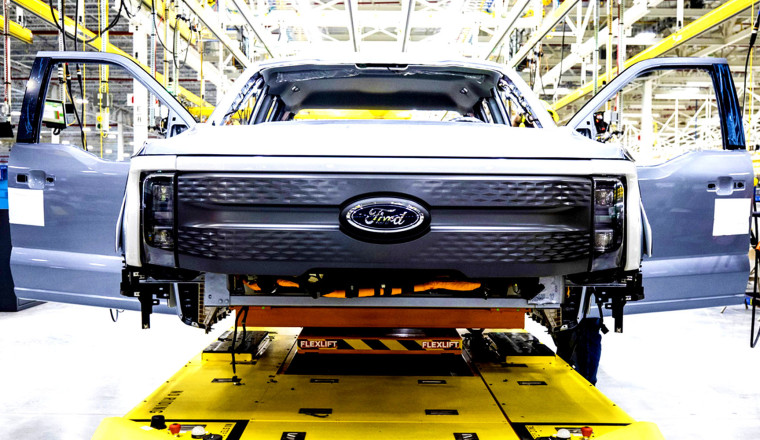
The company signed a licensing deal in 2023 with Chinese battery heavyweight CATL to use its lithium iron phosphate (LFP) technology. The original plan was to manufacture EV batteries using CATL’s chemistry, bringing production in-house with a technical edge from one of the world’s largest battery makers. That plan has changed.
Shifting Power to the Grid
Instead of funneling CATL’s LFP chemistry into cars, Ford will now use it to produce large-format batteries designed for energy storage. These units, built at scale, are intended for use by utilities and grid operators.
“Given the fact that we already had a license to build that technology in the US, you couple that with our manufacturing experience, over a century of high-scale manufacturing, it just made a lot of sense as a natural adjacency for us,” Ford vice president of technology platform programs and EV systems, Lisa Drake told Bloomberg.
Ford has had to walk through a political minefield to bring its deal with CATL to life. Virginia’s Governor rejected Ford’s plans to build a battery plant there using CATL technology due to its Chinese ties. Ford is now building its plant in Michigan and expects to open it next year.
As the Trump administration pushes to reduce America’s reliance on Chinese products, Ford believes its approach is better than continuing to import the Chinese-made batteries that have already become common in the U.S. energy sector.
The Case for Building at Home
“Given the ongoing needs of US energy producers, it seems like a no-brainer to support efforts to produce batteries in America instead of importing more of them from China,” Ford added.
The carmaker has also revealed that it spoke with potential customers to see if there was demand for it to sell energy storage cells. It “received resounding affirmation.” Not only are LFP cells great for EVs, but they’re also well-suited for energy storage, hence why Ford’s move makes sense.
Ford ultimately wants to develop its own low-cost batteries, taking lessons from its licensing agreement with CATL. According to Drake, it would have taken Ford a decade to catch up and have competitive LFP technology of its own if it hadn’t joined forces with the Chinese firm.