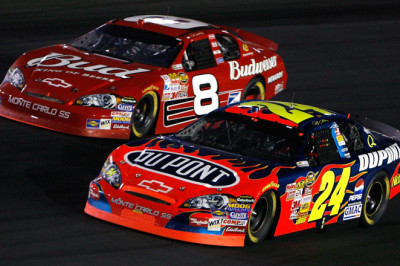

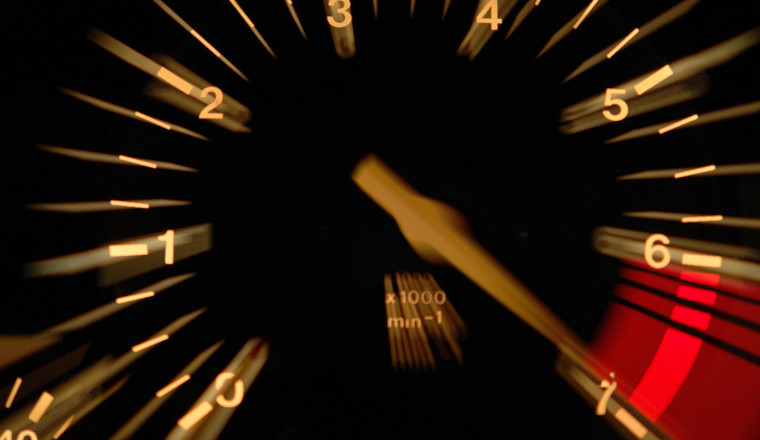

When you think of the state of Florida, what comes to mind? Maybe it's white sandy beaches or the glitz and glam of Miami, or all the headlines over the years explaining the unbelievable feats achieved by various Florida Men. One thing that doesn't come to mind though, is subtlety, so it's surprising to learn that the Florida House last week passed a bill that includes a ban on unnecessarily revving of car engines, as well as clarifying the controversial license plate frame ban and some other traffic changes, according to News 6 in Orlando:
"...HB 543 repeals... decibel-based laws and instead adds the following language to another traffic provision:
'Every motor vehicle that is required by federal law or regulation to be equipped with an exhaust system shall at all times be equipped with and maintain an exhaust system in good working order including muffler, manifold pipe, and tailpiping to prevent excessive or unusual noise.
It is a violation of this subsection to intentionally increase the revolutions per minute or unreasonably accelerate in a manner that would produce excessive or unusual noise.
This subsection does not apply to a motorcycle or moped that does not exceed United States Environmental Protection Agency noise emissions standards in 40 C.F.R. s. 205.152.'"
At least Daytona Bike Week is safe from persecution, even if the bill goes into law.
HB 543 also extends yellow traffic lights by 0.4 seconds to 3.8 seconds, makes it easier for local governments to lower their speed limits in residential districts, and clarifies that license plate frames are allowed, they just cannot cover up the alphanumeric sequence, or the registration decal in the upper-right corner. It also allows golf carts to be titled and registered for operation on roads with up to 35 mph speed limits, and allows private entities to use automated license plate recognition systems on their property, and some other small changes.
Current Florida law states that most vehicles are not permitted to produce anything louder than 72 decibels when driving 35 mph or less, or no more than 79 decibels on faster roads. Click Orlando said, "Per Legislative analysts, researchers found that most law enforcement agencies had trouble enforcing specific decibel limits." The bill would go into effect on July 1, but it still has to get the approval of the Senate, and finally Florida Gov. Ron DeSantis.