
Daimler is a name many recognize as a powerhouse in the car manufacturing business. It has been associated with some of the best-known car brands in the world, including Mercedes-Benz (Daimler-Benz) and Chrysler (DaimlerChrysler), before ultimately rebranding as Daimler AG from 2007 through 2022 when it was renamed Mercedes-Benz Group. This followed the decision to split the Mercedes-Benz luxury car unit from the truck-making division, Daimler Truck, which had been established as a subsidiary of Daimler AG in 2019.
Despite being a relatively young company in its current form, Daimler Truck controls several brands that collectively make it one of the largest manufacturers of heavy vehicles. But not every Daimler-operated brand is into semi truck production. Setra, for one, is a bus manufacturer known for models like the ComfortClass S 407 and Setra S 515 HD. It's similar with Thomas Built Buses, which, as the name suggests, produces models such as the Thomas Minotour school bus. And while brands like Rizon specialize in truck manufacturing, the company only makes Class 4 and Class 5 medium-duty electric trucks. With that in mind, here are the Daimler-owned brands that are actually in Class 8 truck production.
 Jonathan Weiss/Shutterstock
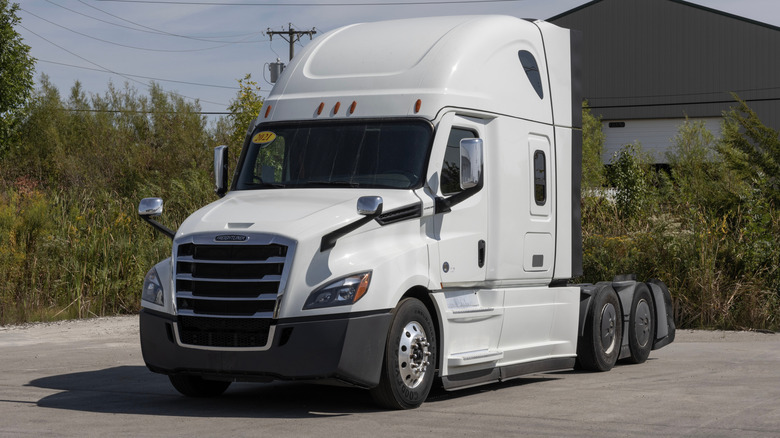
Freightliner is the largest semi truck manufacturer in the U.S., holding 33.4% of market share as of October 2025, according to data from Transport Topics. But it didn't just stumble upon success by chance. Based in Portland, Oregon, Freightliner started as the truck-manufacturing division of Consolidated Freightways (CF). The company was the brainchild of then-CF president Leland James, who sought to build an aluminum cab-over-engine truck, as he believed that using aluminum instead of traditional steel would reduce weight and enable drivers to tackle climbs better when driving up a steep hill.
The company was known as Freightways Manufacturing at its inception in 1940 but was renamed Freightliner Corporation in 1942, the same year it gave us the industry's first all-aluminum cab, the Model 600. However, like many auto manufacturers at the time, the corporation turned to making ship and aircraft components to support the World War II effort. After the war, Freightliner moved truck production from Salt Lake City, Utah, to a new manufacturing facility in Portland, Oregon, where it started building factory order trucks based on customers' specifications. However, it wasn't until 1950 that Freightliner sold its first vehicle outside Consolidated Freightways, to the Portland-based forklift manufacturer Hyster Company.
Freightliner saw further success thanks to increasing demand and remained a CF-owned brand until 1981, when it was purchased by Daimler-Benz AG. With Daimler's backing, Freightliner was able to find new customers and bolster sales for its vehicles over the next 10 years, becoming the top-selling heavy-duty truck manufacturer in North America by 1992. It also acquired several brands over the years, including the heavy truck division of Ford Motor Company, which it rebranded as Sterling Trucks – one of the many ventures Ford has sold over the years.
 Azulblue/Shutterstock
After World War I, Gottlieb Daimler's Daimler Motoren-Gesellschaft (also known as DMG) and Carl Benz's Benz & Cie. experienced financial difficulties due to post-war economic changes. And so the two companies decided to collaborate, beginning life as a joint venture in 1924 and formally merging in 1926 to fully exploit economies of scale. That decision resulted in the formation of Daimler-Benz AG, which marketed its vehicles under the Mercedes-Benz name.
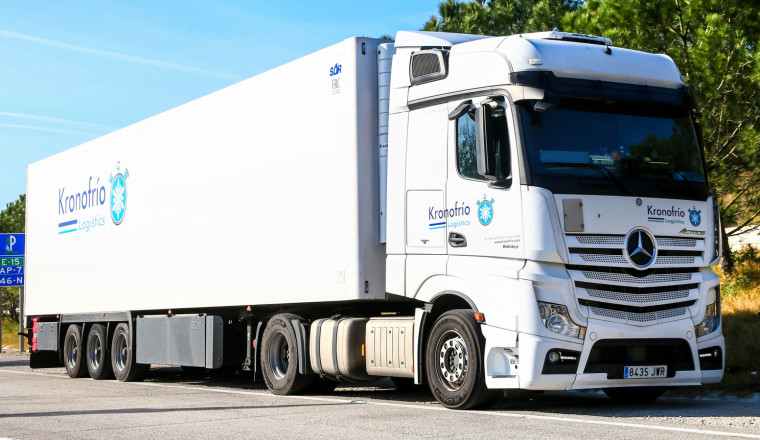
True to the purpose for which it was founded, Mercedes-Benz has since become a popular brand. Today, its truck manufacturing arm ranks among the leading brands in Europe, thanks to perennial favorites such as the Mercedes-Benz Actros series, known for their blend of driving comfort and fuel efficiency. In addition to its combustion-powered models, Mercedes-Benz Trucks also offers electric trucks such as the ambitious all-electric Mercedes-Benz eActros 600, which even set a reverse driving record.
Mercedes-Benz Trucks also serves markets in Asia, Africa, South America, and the Middle East, where it offers light-, medium-, and heavy-duty trucks. The automotive behemoth equips these vehicles with its own powertrains, which it makes in various production sites across Germany and Brazil.
In 2008, Daimler teamed up with Indian firm Hero Group to form a new joint venture — 60% owned by Daimler — dedicated to building medium and heavy commercial vehicles for the Indian market. However, both companies were forced to backtrack on plans for the Daimler Hero Commercial Vehicles (DHCV) joint venture the following year due to the economic crisis in India. Hero Group exited the alliance a year later in 2009, bringing an end to DHCV in the process.
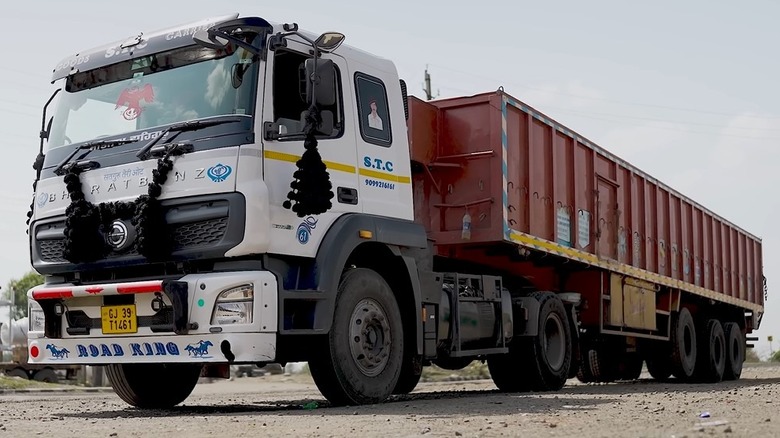
Daimler AG pressed forward with its plans anyway, launching Daimler India Commercial Vehicles (DICV) as its Indian subsidiary, establishing BharatBenz in 2012. The same year saw the launch of BharatBenZ's first heavy-, medium-, and light-duty trucks. BharatBenz trucks are produced at DICV's Oragadam manufacturing facility near Chennai in Tamil Nadu. In a little over a decade of operation, more than 200,000 vehicles have been produced for the domestic market at the plant, with a further 73,000 units shipped overseas.
 VanderWolf Images/Shutterstock
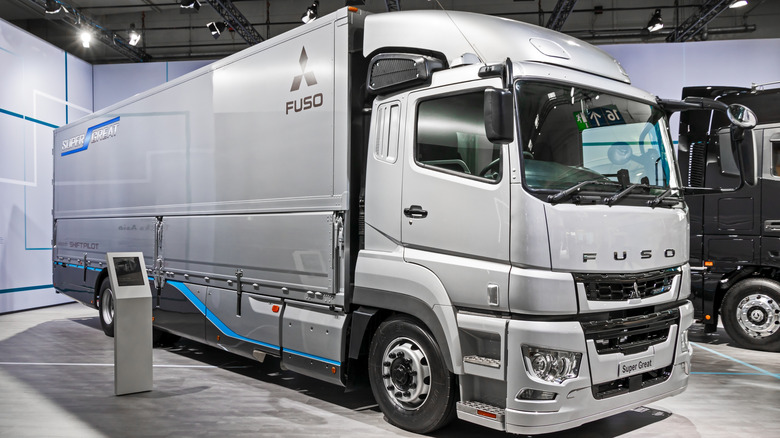
When Mitsubishi Fuso Truck & Bus Company (MFTBC) was spun off into its own entity in 2003, DaimlerChrysler AG had already been involved with Japanese automaker Mitsubishi Motors Corporation (MMC). The German automotive group had purchased a significant 34% stake in Mitsubishi Motor Corp(worth 2.1 billion) in March 2000 in a bid to expand its presence in Japanese and East Asian markets. So when the opportunity arose to secure a further foothold, DaimlerChrysler didn't hesitate to spend an additional $767.7 million for a 43% stake in MFTBC, with Mitsubishi Motors Corporation and other Mitsubishi Group companies retaining ownership stakes of 42 and 15%, respectively.
In January of 2004, Mitsubishi Motors Corp. agreed to sell 22% of its shares in MFTBC to DaimlerChrysler AG in a deal worth $489.4 million. That gave the German giant a larger 65% stake, which was further increased to 85% in February, when it was granted an additional 20% as compensation for financial damages resulting from quality issues and defect coverups at Mitsubishi Fuso. In 2011, Daimler raised its stake in MFTBC to 89.29% through a €271 million investment, leaving Mitsubishi Group Companies with only 10.71%. By 2017, Mitsubishi Fuso had introduced a couple of interesting vehicles, including the all-new Mitsubishi Super Great.
Now, MFTBC is looking to push even further into truck stratosphere, as it prepares to merge with Toyota's truck subsidiary, Hino, in 2026 to form a new holding company, Archion. Operations are expected to begin in April 2026, although Fuso and Hino will continue to run as two separate companies.
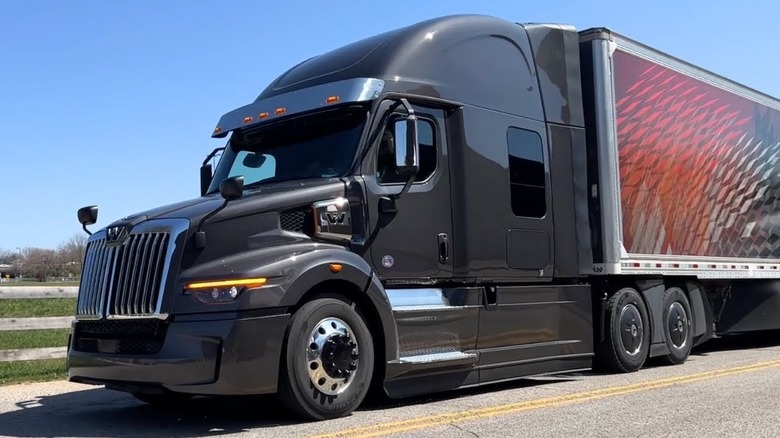
Western Star was one of the companies acquired by Daimler through Freightliner, and is by virtue of that takeover now owned by Daimler Truck North America. The $670 million investment gave DaimlerChrysler ownership of several properties, including Western Star's headquarters and truck plant in Kelowna, British Columbia, along with a 460,000-square-foot manufacturing facility in North Charleston, South Carolina. Ontario Bus Industries — and its bus manufacturing sites in Mississauga, Ontario and Oriskany, New York — was also part of the deal.
Western Star has since moved production to Portland, Oregon. It currently offers premium Class 8 trucks for special-purpose and long-distance haulage. These include models such as the Western Star 47X and 49X for vocational applications, as well as on-highway trucks like the Western Star 57X. However, Western Star's niche focus means it doesn't turn out as many vehicles as some of its competitors. Western Star's sales remain well below those of larger rivals such as Freightliner and Kenworth.