

Happy Tuesday! It's March 3, 2026, and this is The Morning Shift — your daily roundup of the top automotive headlines from around the world, in one place. This is where you'll find the most important stories that are shaping the way Americans drive and get around.
In this morning's edition, we're looking at the state of the European auto supplier industry, as well as an odd counterpoint to rising gas prices due to war with Iran. We'll also look at Tesla leveling out in Europe, and Hyundai and Kia's numbers in the United Sates.
 nitpicker/Shutterstock
European parts makers are bullish on EVs, and built up their supply chains to accommodate what they thought would be the future of personal transportation. Unfortunately for them, they're now finding that the future is a lot tougher than they'd hoped — and all those regulatory promises of an all-electric world are vanishing into internal combustion smoke. From Automotive News:
European suppliers face a "polycrisis" — a collision of slow electric vehicle adoption, intensifying Chinese competition, rising demands from automaker to reduce prices, and regulatory fragmentation. Those combined challenges threaten 350,000 jobs by 2030, according to the European Association of Automotive Suppliers (CLEPA).
Between 2024 and 2025, automotive suppliers announced 104,000 job cuts, CLEPA Secretary General Benjamin Krieger said in a release.
Germany's Tier 1 suppliers have been hit particularly hard.
* ZF Friedrichshafen is axing 7,000 jobs in its electric and hybrid powertrain division by 2030.
* Bosch is cutting 13,000 jobs, primarily in its German-based mobility division, by the end of 2030.
* Continental is slashing 10,000 to 11,000 jobs from 2024 through the end of 2026.
* Schaeffler plans 4,700 job cuts across Europe, responding to a ramp-up in electromobility that is "much too slow."
As a red-blooded Brooklynite, I'm well familiar with poly crises. One person gets strep, and suddenly half your rock climbing group is out sick. Ours are poly in who they affect, though, rather than in the number of causes — I don't envy what Europe now has to navigate. There's no amoxicillin for what they're dealing with.
 Simonkr/Getty Images
The United States and Israel decided to go to war with Iran this past weekend, in what our extremely normal and regular U.S. military leaders are calling "all part of God's divine plan" with the goal of "light[ing] the signal fire in Iran to cause Armageddon and mark [Jesus'] return to Earth." This move is bad for a lot of people, and you're one of them — your gas prices are climbing thanks to international disruptions from the war. Your EV batteries, though, might actually get cheaper. From Reuters:
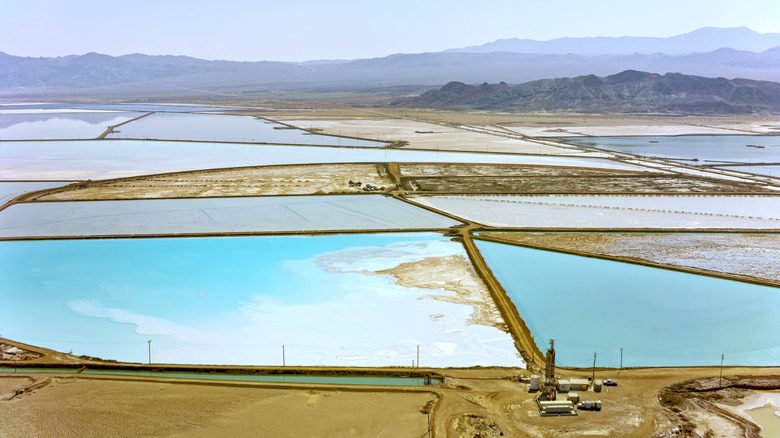
Lithium prices in China plunged on Tuesday as weaker sales from major electric vehicle manufacturers and escalating Middle East tensions dampened demand prospects.
The most-active lithium carbonate contract on the Guangzhou Futures Exchange fell 12.99% to close daytime trading at 150,860 yuan a metric ton, hovering near its 13% daily limit.
The decline followed reports of softer February sales from several Chinese EV manufacturers, including industry leader BYD whose EV sales plunged more than 40% year-on-year during the month.
The Middle East conflict is expected to curb demand in the region, one of the fastest-growing markets for China's battery energy storage system.
This isn't great for those lithium miners, but the lack of Middle East demand may mean cheaper batteries for the rest of us. Unless we all get bombed, or something. The silver linings here are slim, I'll admit.
 Alexandre Prevot/Shutterstock
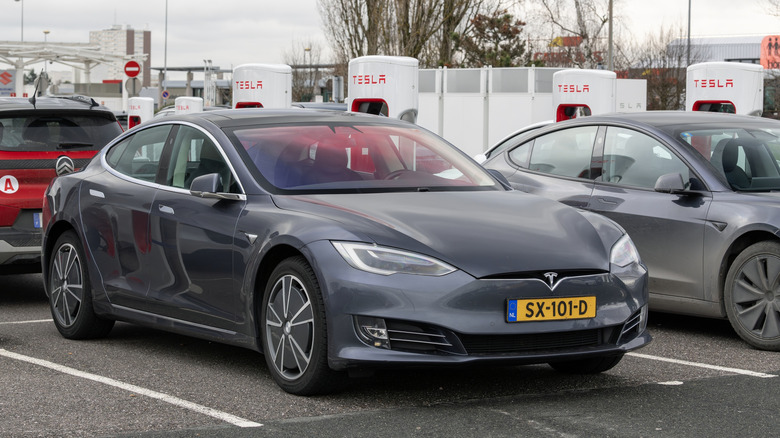
Tesla has been plummeting recently, as its CEO uses his funds to back far-right politicians and pivot his car company away from cars. Last month, though, things seemed a little less grim for the automaker. Sales in Europe ticked up, ending a years-long losing streak. From Reuters:
Tesla gained market share in key European markets in February, official data showed, signalling some stabilisation on the continent after two straight years of declining sales.
In France, the U.S. electric vehicle maker's registrations, a proxy for sales, rose 55% even as most rivals sold fewer cars in the country than a year ago.
Registrations more than doubled from February 2024 in Portugal. They increased 74% in Spain, 32% in Norway and 14% in Belgium, but fell 45% in the Netherlands, 18% in Denmark and 7% in Italy.
The UK and Germany, Europe's largest car markets, are set to report later in the week.
Tesla's European sales fell 27% last year amid rising competition, particularly from Chinese EV brands, controversy over Elon Musk's politics and an ageing model lineup.
Tesla's market share is still down in Europe, meaning its gains were outpaced by gains from the competition. Still, maybe the Cybertruck is really the savior the company needed— ha! Sorry, couldn't get through it with a straight face.
 Jonathan Weiss/Shutterstock
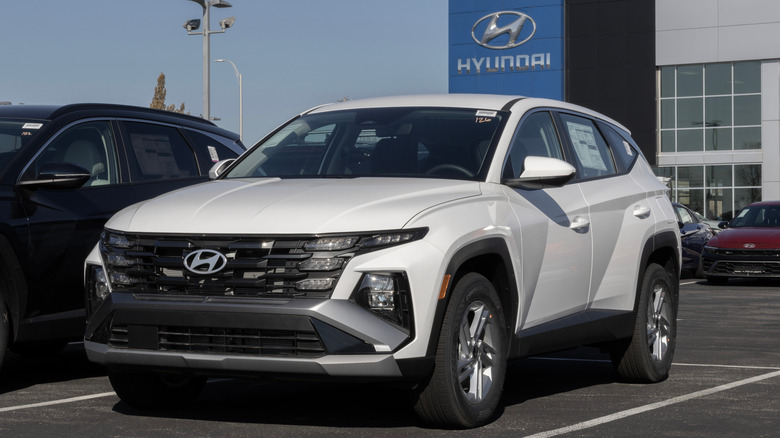
As the United States faces rising economic uncertainty, buyers have been loath to shell out for high-priced cars. Kia and Hyundai, which offer good value for the money, seem to be the exception — they're winning out on buyers who want something to ferry them through the downfall of our civilization. From Automotive News:
Hyundai and Kia posted higher U.S. sales in February, driven by strong crossover and hybrid volume, as well as incentives, bucking what is expected to be another weak month across the auto industry.
Sales last month rose 6 percent to 65,677 at Hyundai and 4.3 percent to 66,005 at Kia, the companies reported March 3.
Both companies set February sales records and it marked the second month in a row Kia outsold Hyundai.
Gasoline-electric hybrid sales surged 79 percent at Hyundai and 53 percent at Kia, the companies said.
Remember when "The Walking Dead" had that brand-new Hyundai in the apocalypse? Maybe that's some truth in television. Not the zombie parts, just the Hyundai.
I haven't been watching "Heated Rivalry," but I hear it's sort of the opposite of this.
Gotta love Porter. My favorite Robinson sibling.