

There was a time when the first thing you were taught while learning to drive was to warm up the engine, allowing the fluids to circulate and lubricate all components for smoother and more efficient operation. This was especially important in older, carbureted vehicles. However, advancements in engine design and modern lubricants have largely eliminated the need for idling to warm up the car.
If modern gasoline engines no longer need to be warmed up, does the same apply to hybrid vehicles? Experts say hybrid cars don't require any warm-up time — just buckle your seat belt and drive off. Plus, idling a hybrid can actually lower efficiency and consume the energy that helps these cars achieve excellent gas mileage. The brief moment it takes for you to settle into your hybrid is enough time for the oil to reach the vital components, so it is generally not necessary to warm up the vehicle.
The only time you may need to let your hybrid car warm up is in extremely cold conditions, since battery efficiency decreases as temperatures drop. However, modern hybrids feature advanced engine management systems and insulated battery packs that help bring the battery up to optimal temperature before — or shortly after — you start driving. And you don't need to cover the grille to help the car warm up either, since this could obstruct the radiator and reduce cooling efficiency.
 Tanit Boonruen/Getty Images
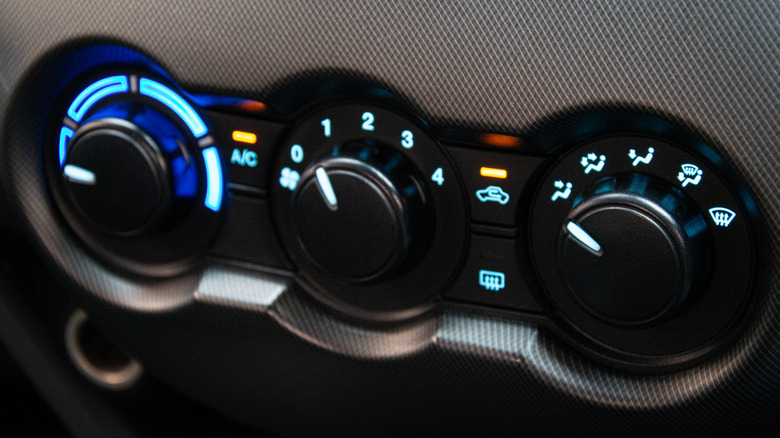
Hybrids are among the most efficient vehicles available today and are the go-to choice for drivers who want to maximize their mpg. However, they are not at their most efficient in very cold weather. For this reason, the AAA recommends that hybrid owners warm up the interior while the car is still plugged in — doing so uses less of the vehicle's energy than heating the cabin while driving.
It is advisable to use the seat and steering wheel heaters if your car is equipped with them, as they consume far less energy than the cabin heater. Manufacturers also recommend charging plug-in hybrid cars immediately after driving, preferably in a covered or sheltered area to improve charging efficiency. Additionally, some plug-in hybrids come with thermal management systems that preheat the battery and cabin to maximize efficiency and range.
The bottom line is that hybrid cars don't need to be warmed up, but it is recommended to preheat the cabin and battery in extreme conditions before driving.