

Sports cars are generally a good thing – we can all agree on that. Any car designed first and foremost for the pleasure of driving is perfectly okay in our books. But every so often, a sports car comes along that’s less than brilliantly executed, and while the world is still a better place for their existence, negative press reception or slow sales have given them something of a poor reputation.
Today, we’re examining 10 sports cars that never quite hit the spot with either the press or the buying public, and deciding if their reputation is deserved or whether they’re actually hidden gems.
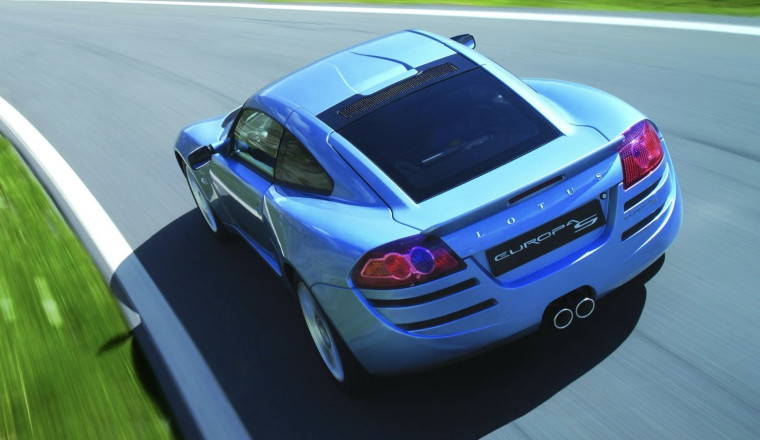
Lotus Europa S

Lotus Europa S
What is it? An attempt to spin a more upmarket, touring-oriented coupe off the Elise’s aluminium platform. A name from the ’70s was brought back, and a turbocharged GM engine took the place of the Elise’s n/a Toyota unit.
What was the problem? While fundamentally still a good car to drive, there was no real reason for the Europa to exist. It occupied an awkward middle ground, not as unashamedly pure as the Elise but still nowhere near as plush and usable as, say, a Porsche Cayman. 2008’s SE version improved the focus, but dented its daily credentials even further.
Did it deserve better? Well… there’s a reason fewer than 500 Europas were built over four years. People who wanted typical Lotus traits were perfectly well-served by the Elise and Exige, while the luxury and refinement on offer was meagre compared to a Cayman or Audi TT. It arguably didn’t quite deserve the kicking it took from the press, but equally, there seemed to be little purpose to its existence.
Alfa Romeo 4C

Alfa Romeo 4C
Read More
7 Cars You Didn’t Realise Have Boxer Engines 10 Surprising Cars With BMW Engines
What is it? A desperately pretty, carbon-tubbed baby supercar with a laser-guided focus on lightness and purity, with a dry weight of under 900kg.
What was the problem? There were a few, from the less-than-glamorous soundtrack of the 1.8-litre turbo engine to the cheap interior, but the big one was that in its relentless pursuit of purity, Alfa opted not to give the 4C power steering. Sounds great, but to make this workable, it had to have bizarre suspension geometry that made it alarmingly fidgety and wayward over anything but the smoothest asphalt.
Did it deserve better? From its manufacturer, yes. With just a slightly different setup approach, the 4C could have been sensational, and indeed, there are numerous aftermarket upgrades out there that are said to massively improve things. As it stands, though, the 4C stands out as one of numerous Alfas that missed greatness by millimetres.
Chrysler Crossfire

Chrysler Crossfire
What is it? A surprising entry into the sports car market for a brand with very little sporting heritage to speak of, and essentially an Americana-drenched rebodying of the original Mercedes SLK, a car that was already seven years old when the Crossfire launched.
What was the problem? Aside from those dated underpinnings, there was the uninvolving driving experience, the tacky interior and the, erm, interesting styling – we all remember what the side profile of the coupe version was likened to by Jeremy Clarkson…
Did it deserve better? Just look at the alternatives that were around at the time – Honda S2000, Porsche Boxster, Mazda RX-8, Audi TT, BMW Z4, Nissan 350Z, the SLK itself. With all these on the market, there was very little reason for European buyers to opt for the Crossfire unless they were the sort of person whose wardrobe consisted of cowboy boots and those tasselled shirts.
BMW Z3

BMW Z3
What is it? The first mainstream entry in BMW’s Z-series of sports cars, following on from the limited-run, funky-doored Z1.
What was the problem? Mainly that it initially didn’t go or handle like a BMW roadster should have. It launched without any six-cylinder options, with the most powerful 1.9-litre engine making just 138bhp, and the handling was stodgy compared to other four-pot sports cars of the time like the Mazda MX-5 and MG F.
Did it deserve better? It arguably received better when a 2.8-litre, 189bhp inline-six was added to the range in 1997 followed by several other six-pots, but even these aren’t held in as high regard as the Porsche Boxster that had arrived around the same time. In period, it was arguably only the unhinged 316bhp M version that saved the Z3’s reputation, but there’s something appealing about the lower-rung versions these days as stylish, affordable top-down cruisers.
Ferrari Mondial

Ferrari Mondial t Cabriolet
What is it? A mid-engined, V8-powered 2+2 that served as the entry point to the Ferrari range between 1980 and 1993.
What was the problem? According to lots of hardcore Ferrari enthusiasts, everything. The Mondial was considered underpowered (early cars made a meagre 214bhp, although the late ‘t’ model had 300bhp), its high-roofed styling a little dorky, and its entry-level remit a dilution of the Ferrari brand’s almost mythological status. It didn’t help that for years used Mondials were the cheapest way into Ferrari ownership, which saw it further saddled with the slightly mean-spirited title of ‘the poor person’s Ferrari’.
Did it deserve better? Absolutely, and people have finally started to realise that. It may have been a move (slightly) downmarket for Ferrari, but it still had a bonafide Ferrari V8, handled well, and seated four comfortably. By the end of its life, it could comfortably keep pace with rivals too, and its build quality and ergonomics were a major step forward for Maranello.
Nissan 370Z

Nissan 370Z
What is it? The successor to the Nissan 350Z, and something decidedly old-school by the time it went out of production in 2020 – a rear-drive sports car with a big, brawny 3.7-litre V6 up front and not a turbocharger in sight.
What was the problem? The 370Z’s recipe was undoubtedly appealing, especially as its rivals dropped like flies, but there were a few things it got wrong. Most glaringly, it sounded gruff and industrial rather than smooth and tuneful as you’d hope for from a V6, and the squishy suspension was at odds with the sports car brief, leaving it uncontrolled and unsettled during hard driving.
Did it deserve better? It’s arguably too soon to decide whether time will be kind to the 370Z. It was unquestionably a one-of-a-kind car by the time of its death, but that doesn’t really excuse it missing the mark in some fundamental areas.
Plymouth Prowler

Plymouth Prowler
What is it? The entirely bizarre answer to the question: ‘what happens if you take inspiration from a 1950s approach to modifying a car from the 1930s and try to reinterpret it on a new car in the 1990s?’
What was the problem? The powertrain. Despite being inspired by the golden age of hot rodding, when a V8 engine was pretty much a non-negotiable, the Prowler was saddled with a fairly miserable 3.5-litre V6 that initially made just 214bhp. A 1999 update saw that upped to 253bhp, but that didn’t alter the fact that the only gearbox available was a four-speed automatic. Didn’t help that it had a name that sounded like a Devon-based serial killer, either.
Did it deserve better? The Prowler had novelty value, we’ll give it that. It emerged at a time when the car industry was far more open to doing fun, silly stuff. But as a sports car? Erm, no.
Triumph TR7

Triumph TR7
What is it? The last of Triumph’s long-running TR-series roadsters, and a radical departure from what came before with its ultra-’70s wedgy styling.
What was the problem? The TR7’s radical styling was hardly beloved at launch, especially given the traditional looks of what had come before, and it was a softer, more comfort-oriented car than its TR6 predecessor too, mainly to appeal to the US market. By far the biggest problem, though, was that this was a car built by British Leyland in the 1970s – in other words, not very well built at all.
Did it deserve better? Like the Mondial, the TR7’s undergone something of a reappraisal in recent years. People are more appreciative of its wedgy looks and its laid-back attitude, and it remains a genuinely affordable classic today, even if prices are slowly creeping up like everything else. So yeah, it did deserve better.
Maserati Biturbo

Maserati Biturbo Spyder
What is it? A boxy grand tourer sitting on a platform that carried Maserati through the ’80s and much of the ’90s, powered by a V6 with – get this – two turbos.
What was the problem? After several decades of exotic-looking, big-engined and high-end GTs and sports cars, the more mass-market, decidedly conservative-looking Biturbo with its downsized engine was seen as a bit of an affront to the Maserati brand. This was bad enough at its 1981 launch, but with Biturbo lasting 13 years in production across various versions, it was starting to feel seriously dated by the end of its life too. Plus, it was an ’80s Maserati, so, y’know, it broke down. A lot.
Did it deserve better? It did indeed. Quite apart from the fact that Maserati arguably wouldn’t have survived the ’80s without it, the Biturbo was a compact, rear-wheel drive sports coupe with a lusty turbocharged V6 and a good chassis. With so many other once-derided cars of this era having undergone revisionist reappraisals, it’s about time this one had its moment in the sun too.
MG TF (2008)

MG TF LE500
What is it? The first car produced by a reborn MG under its new Chinese ownership in 2007, although it wasn’t a new model – instead, it was a lightly tweaked version of the TF roadster that had died with MG Rover in 2005, with all the components built in China then shipped to the UK to be assembled at the re-opened Longbridge plant.
What was the problem? Mainly that the reborn model changed little from the original TF, which was five years old by that point, and in turn was closely based on the original MGF, a car dating from 1995. When the re-introductory LE500 special edition cost more than a base model NC Mazda MX-5, its dated interior and dynamics really were laid bare, even if updates to the suspension and brakes brought some slight but welcome improvements.
Did it deserve better? It’s a tough one to say. These reborn TFs were always meant as a stopgap while an all-new MG range was readied, but that didn’t change the fact that it was a seriously dated product by the time it went back into production. At least the minor updates it did receive make it a slightly more appealing second-hand buy.
Subscribe to our Newsletter
Get the latest car news, reviews and unmissable promotions from the team direct to your inbox

Context:
Some poorly-received sports cars were flawed by design choices rather than fundamental engineering problems.
Context:
These "failures" show how narrow margins separate automotive greatness from mediocrity in the sports car market.
Context:
The Lotus Europa produced fewer than 500 units over four years, making it extremely rare today.