
INDIANAPOLIS -- IndyCar officials announced Tuesday they will no longer consider the running order or the pit windows to determine when to throw a full-course caution flag.
It's the second rule change officials have made since the series moved to Indianapolis for the month of May, though this one won't affect the series biggest race -- the Indianapolis 500 on May 24 -- since there are no local yellows on oval courses.
"The most important job in race control is to ensure the safety of our drivers, crews, safety workers and fans," IndyCar President Doug Boles said. "Saturday highlighted that we must not waver from that central mission and aligning everyone on that philosophy was critical to discuss over the last 48 hours."
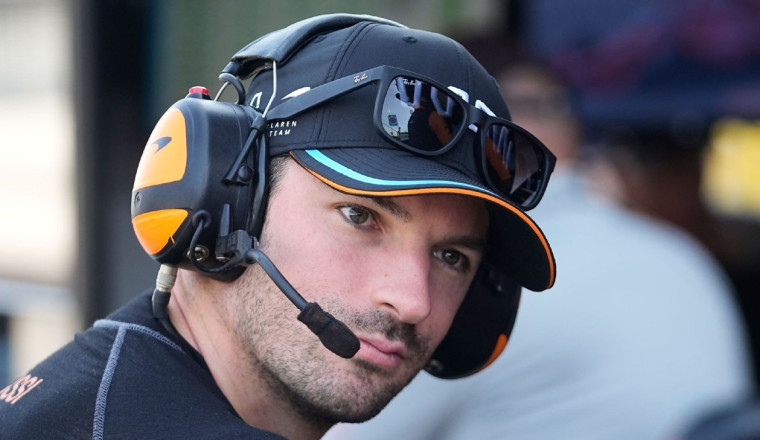
IndyCar will no longer consider running order or pit windows to determine when to throw a full-course caution flag after Alexander Rossi criticized race officials for not throwing one after his car stalled on Lap 21 of the Indianapolis Grand Prix. Darron Cummings/Associated Press File
The move comes three days after an angry Alexander Rossi criticized race officials for not immediately throwing a full-course caution when his No. 20 car stalled on the front straightaway next to a concrete wall and out of the standard racing line on Lap 21 of the Indianapolis Grand Prix.
Rossi, the 2016 Indianapolis 500 winner, eventually climbed out of the car and over the wall separating pit lane from the race track and walked to his pit stall.
Race officials initially responded by throwing a local yellow to alert other drivers to the stalled car near the track's start-finish line before throwing a full-course caution on Lap 22.
The series' Independent Officiating Board tried to clarify what happened Tuesday, saying in a news release Rossi's car was out of the normal racing line and that Saturday's decision to throw a local yellow was based on a standard set of factors that included both pit windows and running order.
Moving forward, though, those two factors will not be used in the equation of when a full-course yellow is needed.
"The Lap 21 incident on Saturday made clear there needs to be a cleaner standard for how race control moves from a local to a full course yellow," said Raj Nair, chairman of the series' Independent Officiating Board. "IndyCar Officiating, with IndyCar's full support, has made this change of approach to ensure that the only inputs to the full course yellow escalation are safety ones."
Drivers almost universally lauded the change, just hours before Rossi and 32 other drivers began their first Indianapolis 500 practice.
"I was surprised it took so long to be thrown," Marcus Armstrong of Meyer Shank Racing said Tuesday. "But there was also debris on the track at the time on the race line, which is what they threw the yellow for at Long Beach, so I thought a yellow would be thrown for that. Not sure why it wasn't, but I think it should be totally yellow when there is danger for drivers. Rossi trying to jump out of his car -- safety needs to be the priority."