
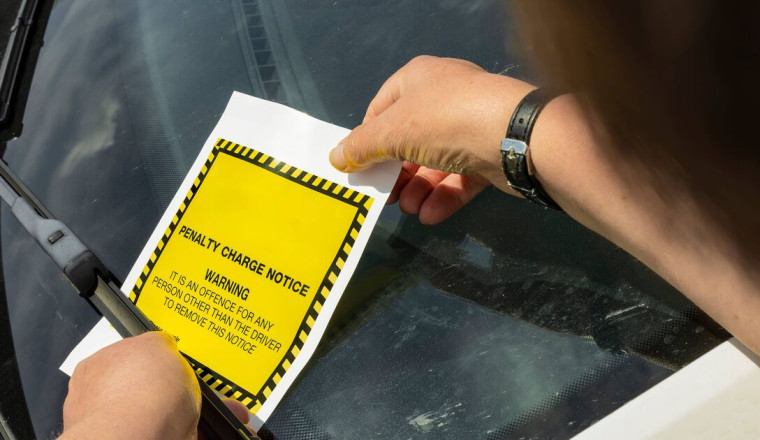

More than 161,000 penalties have been handed out to motorists misusing electric vehicle (EV) charging bays since 2020, according to new research from car retailer cinch. The company submitted Freedom of Information (FOI) requests to all 218 upper-tier local authorities in the UK to reveal the extent of EV charging bay misuse nationwide.
Out of these, 194 responded, providing data on where the most fines were issued and highlighting significant inconsistencies in how councils enforce regulations. While some have issued thousands of fines to drivers parking without charging, others confessed they don't enforce misuse at all.
With an increasing number of motorists opting for electric vehicles, access to public charging points is becoming more crucial. As the charging network expands, councils have also stepped up enforcement, cinch discovered.
Over the past five years, a total of 161,303 fines were issued to drivers misusing EV bays, with the number rising sharply year-on-year:
The data indicated that enforcement has significantly increased since 2020, as councils have become more proactive in safeguarding charging bays and ensuring they're available for those who need them most. Although the year-to-date figure for 2025 is lower than 2024's total, monthly averages tell a different story.
Councils have handed out an average of 4,791 penalties per month so far in 2025, compared to 3,844 per month in 2024 - a rise of around 24.6%. Should present patterns persist, EV charging bay misuse is set to surpass 57,000 fines by year's end, hitting a record peak.

London authorities lead the rankings, though Newcastle and Coventry emerge as the sole councils beyond the south east to feature prominently, cinch revealed.
Whilst a select few councils have implemented genuine measures to prevent misuse, the majority have imposed minimal or zero sanctions, exposing widespread enforcement gaps nationwide.
With over 1.3 million electric vehicles now travelling UK roads, the need for public charging points has reached unprecedented levels. There are currently more than 86,000 public charging stations, rising from 50,000 in 2022.
cinch revealed its research demonstrated that whilst enforcement was advancing, inconsistent regulations and confusing signage continue causing difficulties throughout sections of the UK. Implementing more uniform policies and enhanced public education could assist in making charging more straightforward and equitable for all, according to Ben Welham, motoring specialist at cinch.
He said: "As the number of EV parking bays increases to meet demand, it's key that councils manage misuse. Otherwise, there's a risk of charging infrastructure being overwhelmed or drivers being turned off going electric."
Only a handful of councils were able to provide detailed location-level data, but where this was available, the scale of misuse was evident, according to cinch. Millharbour in Tower Hamlets, London, recorded 664 fines, making it one of the most abused charging locations in the UK.
In Brighton and Hove, seafront bays on King's Road saw 231 fines, highlighting the strain on chargers in areas popular with tourists.
Some local authorities confirmed they currently do not enforce EV charging bays, often because Traffic Regulation Orders (TROs) have not yet been established or resources are scarce. Others stated that they "hold no data" on misuse.
However, West Lothian Council confirmed that while there is currently no enforcement of EV charging bays, officers are developing TROs for all existing sites. This variation in approach reflects the ever-evolving nature of EV infrastructure across the UK. As more councils implement TROs and expand their charging networks, consistent enforcement will play a crucial role in ensuring fairness for all drivers.
cinch submitted Freedom of Information (FOI) requests to all 218 upper-tier local authorities across the UK, seeking data on penalty charge notices (PCNs) issued for misuse of electric vehicle (EV) charging bays from 2020 to 2025 year-to-date (YTD). The councils were asked to provide the number of fines issued annually, any available data on the value of the fines, and details of the specific charging bay locations where violations occurred.
The councils were also asked to confirm whether they currently enforce EV charging bays. As of October 21, 2025, 194 out of the 218 councils contacted responded with full, partial, or "data not held" responses.
All figures reflect the number of PCNs issued, not the number paid or successfully appealed. Some councils provided data based on financial years, which were included where comparable. The 2025 figures reflect year-to-date totals at the time of each response.