

By FREDA LEWIS-STEMPEL, MOTORING REPORTER
Britain's vehicle production fell last month, with a particularly dramatic slump in commercial vehicles produced, new industry figures show.
Overall, the total combined production of cars and commercial vehicles dropped by 14.3 per cent in November, the Society of Motor Manufacturers and Traders' (SMMT) latest data confirmed on Friday.
Car output was down 1.7 per cent compared with a year ago while there was a cataclysmic 78 per cent dive in the number of vans and trucks produced by British factories.
A total of 63,126 passenger cars and 2,806 commercial vehicles were built in November, the figures show.
November marked the fourth successive monthly decline in car production and the eighth successive drop in van outputs.
The SMMT has pointed to output gradually normalising following the cyber incident in the summer - which saw JLR, the UK's largest automotive employer, close its production lines in September and October following August's breach - and a new generation of EVs starting production as reasons for the sluggish performance.
And it said the European Union's decision this week to water down its electric car sales targets, abolishing its 2035 ban on sales on new petrol and diesel models, could have a negative impact on UK car makers.
Car output was down by 1.7% compared with November last year while there was a 78% drop in the number of commercial vehicles built, new figures from the SMMT show
Indicating that UK car production is heading in the right direction again, only 1,090 fewer cars were made than in the same month last year.
Mike Hawes, SMMT chief executive, said: 'Car production is normalising following August's cyber incident and, with the manufacture of a new EV model starting this week in Sunderland, the sector can look forward with some optimism.
'Growth is expected next year, with the industry poised to reap the benefits of recent UK Government backing - notably new funding, modernised trade deals and efforts to reduce energy costs.'
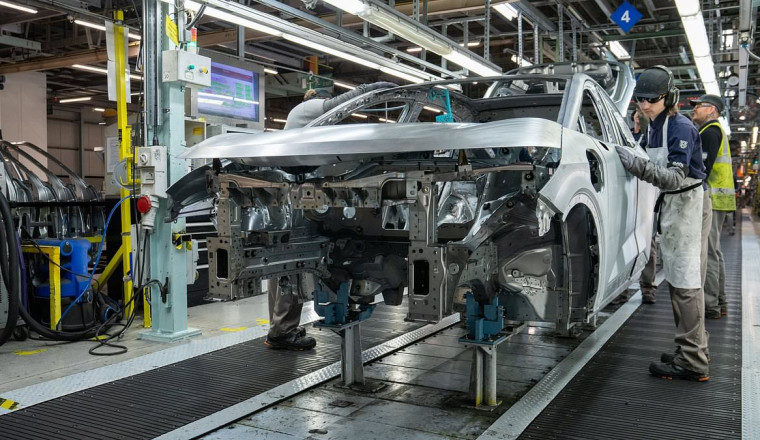
The third generation Nissan Leaf rolled off the production line in Sunderland earlier this week as part of a £450million investment by Nissan across its operation and supply chain.
For now that secures the future of the 40-year-old factor and 6,000 jobs.
JLR, Britain's largest automotive employer suffered a cyber attack in August which caused tools to be down for September and October. Now production is back, UK car production is improving again
Cars built for the UK market rose by 46.9 per cent to 14,589 while output for export declined by 10 per cent as shipments to the top five export markets - the EU, US, Turkey, China and Japan - all fell.
In total, 48,537 cars were produced for global markets, representing more than three quarters of total output.
Meanwhile the eight-month continuous decline in van, truck, bus and coach volumes reflected the consolidation of two plants into one in the North West.

The UK's car production figures arrive as the EU backed away from its push to end petrol and diesel car sales by 2035, opting for more relaxed CO2 emissions-based targets instead of an electric-only mandate.
The SMMT warns that the proposal by the EU to permit a greater range of technologies beyond 2035 will put the UK out of step with its biggest market and biggest source of vehicles.
Hawes warned that the growth from the UK Government modernising trade deals and efforts to reduce energy costs could be counteracted by the EU's move, saying: 'The growth would be undermined if the UK becomes the main unintended victim of new EU local content requirements.
'We must instead work on a pragmatic and inclusive approach, one which protects and enhances competitiveness across the European automotive ecosystem.'