

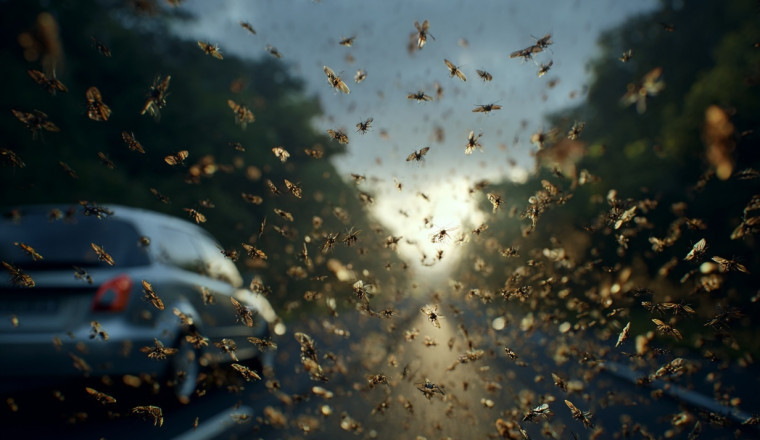

Drivers across the UK are witnessing a disturbing trend on their windshields and number plates ... a sharp decline in the bugs splattered during their journeys. The latest findings from the Bugs Matter survey, conducted in partnership between Kent Wildlife Trust and Buglife, paints a grim picture for insect populations nationwide.
Analyzing over 25,000 recorded journeys, the survey reveals a staggering 59% decline in insects splattered on car number plates since 2021. Although this rate of decline has slightly slowed compared to prior years, the overall trend remains alarmingly negative. Similar percentage drops were observed across all parts of the UK, with England and Scotland recording falls around 60%, while Wales and Northern Ireland saw declines just over 55%.
Experts express deep concern as insects play a crucial role in our ecosystems, pollinating crops, maintaining soil health, and sustaining wildlife food chains. The decrease likely reflects the combined impacts of habitat loss, pesticide use, pollution, and climate stressors.
Citizen scientists participating in the survey have expanded coverage, including the Republic of Ireland for the first time in 2025, providing a more comprehensive view of regional population shifts. Continued data collection is vital to track these trends and inform conservation efforts.
This dramatic decline in the invisible yet indispensable insect world is a loud warning bell for the health of nature and humanity alike. The message is clear: urgent and coordinated action is needed to halt and reverse the slide before the consequences become irreversible.
The Bugs Matter survey also invites everyone to join in collecting data, empowering communities to contribute to saving vital insect populations and the natural balance they underpin.
This growing awareness is critical, for the bugs splatered on your journey are more than a mess to be cleaned off, they are a gauge of the fragile state of the environment we all depend on.
[Data sourced from report by Kent Wildlife Trust and Buglife, November 2025]