

- PROS ›› Interior, good tech, great value
- CONS ›› Inefficient, slow A/C, heavy
Electric car startups are everywhere these days, but most struggle to move beyond the hype. Zeekr is one of the rare exceptions. In just five years, Geely Group’s premium EV-focused brand has already rolled out a handful of genuinely impressive models and is making real progress with its battery tech.
Review: The 2026 Ioniq 9 Calligraphy’s Biggest Threat Is Another Hyundai
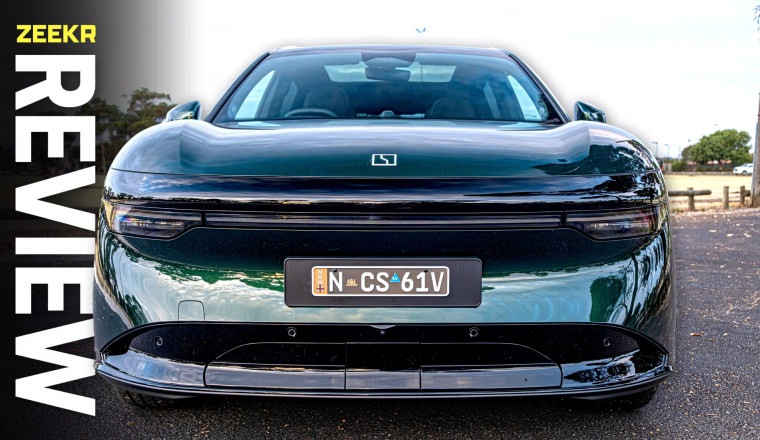
Initially, Zeekr’s models were sold only in China, but the company has since expanded quickly abroad. First came the smaller X, a compact SUV that shares its tech with the Volvo EX30 and Smart #1. Most recently, Zeekr launched the 7X in Australia. It’s been pitched as a Tesla Model Y rival, but can it really measure up to the world’s most popular EV?
After spending time living with the flagship 7X Performance AWD, we came away convinced. It doesn’t just keep up with Tesla’s best, it beats it in several areas, and in some cases, rivals EVs that cost two or even three times more. In short, it’s well worth your attention.
How Much Does It Cost?
Three different versions of the 7X are available. The range starts at AU$57,900 (equal to US$40,400 at current exchange rates) for the RWD, undercutting a Model Y Rear-Wheel Drive by AU$1,000 (US$700). Sitting in the middle of the 7X family is the Long Range RWD, priced at AU$63,900 (US$44,500), or AU$5,000 (US$3,500) less than the Model Y Long Range All-Wheel Drive.
Perched at the top of the line-up is the Performance AWD, starting at AU$72,900 (US$50,800), making it comparatively cheap compared to the AU$89,400 (US$62,300) Model Y Performance All-Wheel Drive.
So, what do you get for your money? The 7X Performance AWD uses a 100 kWh NMC battery and has electric motors at the front and rear, combining to produce a monstrous 475 kW (637 hp) and 710 Nm (524 lb-ft) of torque. Thanks to its advanced 800-volt architecture, it supports DC charging at up to 420 kW and AC charging at 22 kW.
What’s It Like Inside?
It’s also a certifiable tech-fest, and this is no more obvious than in the cabin. Unlike Tesla and some competitors like Xpeng, Zeekr hasn’t adopted the same ultra-minimalistic approach that appeals to some but, to us, is usually an exercise in penny-pinching.
After pressing a button on the B-pillar to open the driver’s door, I was immediately struck by the remarkable fit and finish of the 7X’s cabin. Not only does it feel more premium and way more interesting than a Model Y, but it also feels of a higher standard than cars from legacy rivals like Kia’s EV5, and even BMW and Audi. In fact, the 7X’s cabin feels almost as plush as the Lotus Eletre I tested last year, which also comes from Geely but costs three times as much.
A 16-inch infotainment display sits in the center of the dashboard and is brilliant. It’s among the snappiest I’ve ever used, thanks to the high-end Qualcomm processor, and is an absolute joy to use.
Review: New Zeekr X Got Me Questioning My Feelings For Volvo
Like so many other EVs, it has a smartphone-inspired setup with a swipe-down menu for shortcuts and notifications, as well as an in-depth settings menu. You don’t have to wait even a split second for the screen to load after sitting inside, and if your phone’s connected, Apple CarPlay or Android Auto will load instantaneously.
All the climate control settings are on the screen, and while auto scribes like ourselves often complain about this, it didn’t bother me in the 7X, as it’s easy to use, even on the move. However, I found it could take up to 5 minutes for the AC to start blasting really cold air on hot days.
What Else Makes The Cabin Stand Out?
The 13-inch digital instrument cluster and 36-inch head-up display are also superb, although the cluster offers very little scope for customization, which is a shame.
Zeekr’s designers and engineers were incredibly thoughtful when crafting the 7X’s cabin. There are beautiful knurled metal switches below the screen, metal speaker grilles on the pillars and door panels, and beautiful soft-touch materials across virtually every square-inch of the cabin, even along the lower parts of the door panels.
Elsewhere, there are hidden pockets on the door’s armrests, two 50-watt cooled wireless charging pads, and a gargantuan center console storage area. There are plenty of luxurious features too, including heated and ventilated seats, as well as massage functions for the front pews, which are among the best I’ve ever used. In the rear, there are even electronic sunshades that deploy at the press of a button, and hidden storage draws under the seats.
The 7X Long Range RWD and Performance AWD also include a 21-speaker audio system that’s incredibly adjustable and of great quality, although it didn’t sound quite as crisp as I would have liked. Zeekr has also added a panoramic glass roof, and unlike some rivals, it includes a folding shade. There’s even an interior camera on the B-pillar, which displays a live video to the infotainment screen, allowing drivers to keep a watchful eye on their kids at any time.
What About The Trick Doors?
Then there are the doors. As mentioned, they’re electric. From inside, you touch a button, and they will open, using sensors to determine if there’s an object nearby, automatically adjusting how far they’ll open. When entering, the doors can be pulled shut manually or by pressing the same button. The driver can even close the doors by stepping on the brake, just like a Rolls-Royce.
For the most part, these doors work well, although there were occasions when they didn’t open as wide as they could have, even if there was nothing blocking them. Fortunately, the electric functions can be disabled, and they can be used like manual doors.
The 7X also has adaptive Magic Carpet air suspension with Zeekr’s Continuous Damping Control system and five different ride heights, including one where it looks slammed to the ground, and one where it sits high enough for off-roading.
Visibility is good, though the rear window view is very limited. Given how much tech is found inside the 7X, it’s perhaps surprising that there isn’t a digital rearview mirror, similar to what sister brand Polestar uses. Storage space is great with 539 liters (19 cubic-feet) of cargo space, and 1,978 liters (69.8 cubic-feet) with the rear seats folded down. There’s also a 42-liter (1.4 cubic foot) frunk.
How Does It Drive?
With a serious amount of power, it’s no surprise that the 7X Performance AWD feels absolutely ferocious in a straight line. Zeekr says it needs just 3.8 seconds to hit 100 km/h, (62 mph) and that’s a figure we were able to match. There’s no need to worry about the acceleration being capped as the battery drains either, as it’ll still run sub-4.0 second times even below 30 percent state of charge.
The ‘Performance’ name could easily lead you to think this is a focused, razor-sharp model like a BMW M or an Audi RS, but that’s not the case. Let me explain.
SUVs, particularly heavy electric ones that place too much emphasis on dynamic handling, often have compromised levels of comfort. Some owners may be willing to live with this for an occasional blast along a mountain road, but for the vast, vast majority of driving scenarios, luxury EVs like the 7X need to feel polished and comfortable. That’s exactly the feeling Zeekr has achieved.
If you throw the 7X aggressively into turns, it offers immense levels of grip, but can feel a little unsettled. Additionally, the front seats offer very little bolstering, so you can slide around while behind the wheel. However, drive it at 80 percent of its capabilities, or below, and it feels just about perfect.
First is the ride. The adaptive suspension offers Comfort, Standard, and Sport options. The first is very supple, but perhaps is a little too floaty. For most of my time with the 7X, I drove it with the ride in Standard mode, finding it remained soft over speed bumps, without bouncing around unnecessarily. Even in the stiffer Sport mode, it feels softer than some other heavy electric SUVs, like the Kia EV5.
The steering also offers Comfort, Standard, and Sport settings. Regardless of which is selected, the steering remains sharp, even though it lacks communication like virtually all electronic steering systems on the market. Much to my surprise, I left it in Comfort most of the time, enjoying how light and direct the steering was.