





Rear-engine cars are not as widespread today, save for the evergreen Porsche 911. However, the first ever automobile — the Benz Patent Motorwagen — had its engine positioned behind the rear axle. Genius German engineer Ferdinand Porsche then perfected the formula with the Volkswagen Beetle, which went on to become one of the best-selling vehicles of all time. Further down the line, Fiat mobilized Italy with the rear-engine 500 and 600.
Still, there were many unique rear-engine cars that appeared before and after the war that are forgotten today. These cars dared to be different and tried to break the norm back in the day. Some offered better practicality; others pushed the performance game to a whole new level. Even the American auto industry had its fair share of rear-engine cars that made history. Regardless, these rear-engine machines stood the test of time and influenced the industry going forward. So, get ready, because on this rear-engine adventure, you'll meet fallen heroes, Kei car gems, rally conquerors, and grin-inducing machines.
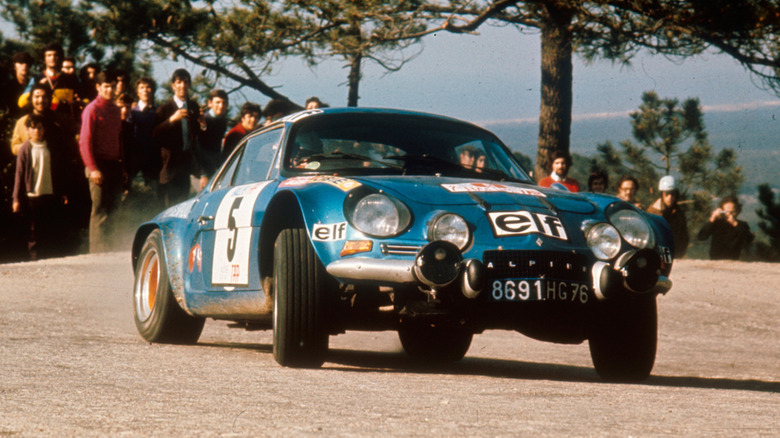
1,144 pounds (565 kg). That's how little one Alpine A110 weighs, and it should give you a clear picture of what this French masterpiece is all about. Lightness equals more speed. Better handling. Better braking. Thanks to it, Alpine was able to get away with a rear-mounted, miniscule 1.0-liter four-cylinder engine, which was good for only 52 hp. Yes, the initial model wasn't quick, but it has set the tone for one of the best sports cars in history.
But Alpine, which was a standalone company at the time, wasn't going to let the excellent chassis go to waste. The company competed with the A110 in world rallies, after all, so it needed more power to be competitive. So, in 1965, Alpine launched an improved A110 with the 1.3-liter engine from the Renault 8 Gordini. Sounds small? It produced a healthy 120 hp, which was enough for a top speed of 141 mph! Power only continued to go up with subsequent models, with the pinnacle A110 being equipped with a 1.86-liter, 180-hp engine.
But the way the Alpine A110 makes you feel is second to none. In its review, MotorTrend praised everything from the engine's sound to the lively yet stable handling. This surely helped the A110 win the first inaugural World Rally Championship in 1973, and the Rally Monte Carlo in 1971 and 1973, but it also makes it a blast to drive. Manual transmission with four or five speeds was also standard on the A110, which only added to the excitement. Unfortunately, the brand-new Alpine A110 is automatic only, but is still an amazing sports car.
 Mr.choppers / Wikimedia Commons
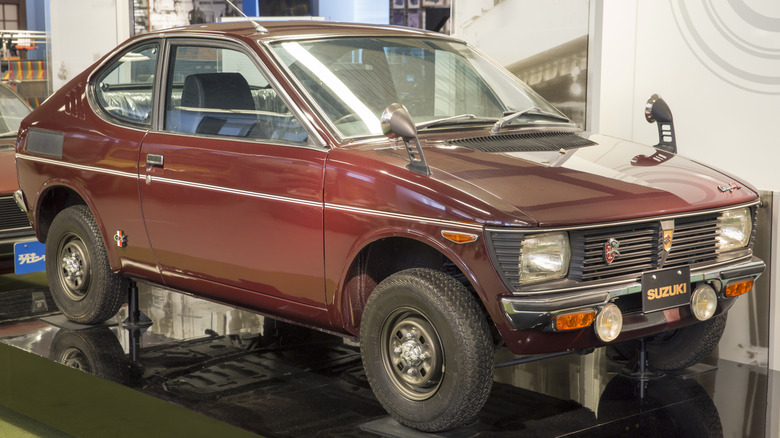
Few cars look as harmonious as the Suzuki Fronte Coupe. The fact that Giugiaro managed to stuff so many details in a car that's just 117.9 inches long and 60 inches wide is truly astonishing. Wait – that Giorgetto Giugiaro? Yup, the legendary Italian designer penned Suzuki's wedge-shaped sports car, and we have to say, it's a rakish little thing.
But the design is only a part of the story. The Fronte Coupe was developed as a Japanese Kei car, meaning apart from being less than 3 meters long (118.1 inches), it had to have a tiny, sub-356cc engine. In the Forte Coupe, that engine sat in the back, though Suzuki still achieved an excellent 48:52 weight distribution. In other words — it was fun to throw around corners. Suzuki knew this and even offered crazy accessories, like bucket seats, a JAF-spec roll cage, and aero parts!
And here is the saucy part: Suzuki opted for a two-stroke, three-cylinder layout to extract as much power as possible. As a result, the air-cooled engine produced 37 hp. Yeah, yeah, keep your lawn mower comparisons to yourself because that translates into a specific output of 103.9 hp per liter. Besides, the Fronte Coupe weighed just 1,100 pounds, so it had a top speed of 78 mph.
A bigger and more powerful version called the Cervo arrived in 1977. It was equipped with a far more potent 970cc four-stroke inline-4 with 47 hp. Cervo's top speed was bumped to 85 mph, but it was also marred by a 342-pound weight penalty.
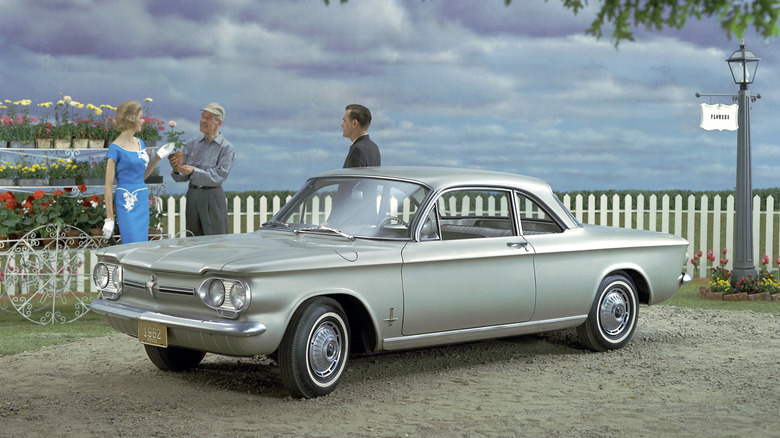
The Corvair is one of Chevy's most fascinating cars ever made. A rear-engine rebel that went against the norms of the post-war American auto industry, the Corvair could've been the next great thing. It had all the good ingredients from the beginning. Lightweight unibody construction? Check. Four-wheel independent suspension and an advanced, all-aluminum, air-cooled flat-six engine? Check and check. The Corvair was even named Motor Trend's 1960 Car of the Year, alongside universal praise from other media outlets. Had it attracted more buyers, we would've probably lived in an alternate timeline, where most American cars had rear flat-six engines.
The sporty Monza Spyder, launched in 1960, was an even more impressive piece of kit. People called it the "American Porsche" at the time, a nickname that was even more deserved once the Corvair Monza Spyder received a turbocharger in 1962. This bumped the 2.4-liter flat-six's output from 102 to 150 hp and enabled a 0-60 time of 10.3 seconds. The Monza Spyder model also had a floor-mounted four-speed manual transmission and bucket seats. The second-gen Corvair Corsa was even saucier, packing an 180-hp tune of the flat-six engine. 0-60 took just 7.8 seconds, an impressive feat for the time.
Unfortunately, a chain of events sealed Corvair's fate from the outset. Ralph Nader's 1965 book, "Unsafe at Any Speed," criticized the safety of American cars, and he used the 1960-1963's Corvair as the first example, although it handled corners quite well. The story quickly went viral, hurting sales. Ford also launched the Mustang that same year, a blow that the Corvair could not recover from.
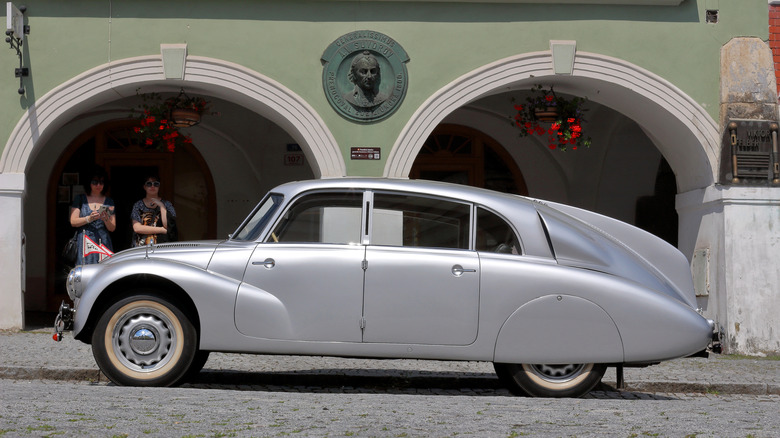
The Tatra T77 has earned the 'Secret Weapon' moniker quickly after it went live. The reason? It reportedly killed enthusiast Nazi drivers, who exceeded the car's capabilities while cornering, leading to quite a few accidents. And it was all due to the rear-engine layout, long wheelbase, and swing axle suspension. Put simply, there was too much weight on the rear axle. According to some reports, Hitler even banned the T77 from being sold in Germany.
While we can't factually confirm most of these reports, it's true that the T77 had twitchy handling. Still, let's not forget that this futuristic-looking automobile was launched in 1934. Yup, cars weren't exactly corner-carving machines back then. It was also (probably) the most advanced pre-war car, with a streamlined design that allowed for excellent aerodynamics. Of course, the rear-engine layout was crucial to achieve that, but Paul Jaray, a Zeppelin designer, even used a wind tunnel to reach an outstanding drag coefficient of 0.36. The fin in the back looks kind of rad, too.
Still, the star of the show was the 3.0-liter air-cooled V8 in the back. This thing had hemispherical combustion chambers way before Chrysler launched its first HEMI V8 in 1951. Also, it had a magnesium alloy block. Dry sump oil system with a remote oil cooler. As a result, the V8 produced 60 hp and propelled the T77 to 87 mph. A year later, Tatra introduced the T77A, which had a larger 3.4-liter engine with 75 hp. Top speed: 93 mph. For a massive, luxury-oriented 1930s car, that's quite the achievement.
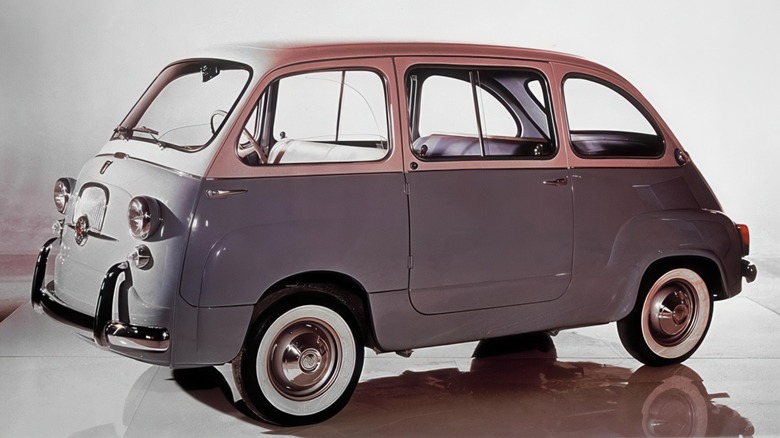
Picture a car 139.2 inches long, 57.1 inches wide, and 62.2 inches high. Now imagine fitting six people in three seating rows inside. Sounds impossible, right? Well, Fiat did just that with the Fiat 600 Multipla back in 1956! Of course, the credit goes to the rear-engine, rear-wheel-drive setup, which meant that there was no driveshaft under the floor.
Ah, yes, you are not imagining — there is no front hood. It makes us uneasy, too, but safety was obviously not part of the plan. Affordability and practicality were king here. And to make it as affordable as possible, the Multipla was built on the highly successful Fiat 600, the city car that motorized post-war Italy. Like its smaller sibling, the Fiat 600 Multipla proved hugely popular, particularly as a taxi or fleet vehicle. Still, people also converted it into a camper van or a commercial vehicle used to transport goods. It truly deserved its name, which translates into 'multipurpose.'
If all that sounds familiar, it's because the Fiat 600 Multipla had all the traits of a modern minivan. So, in a sense, its layout stood the test of time. Yes, modern minivans are significantly safer. Faster, too. The Multipla had only 21.5 hp and a top speed of just 56 mph. However, it could also fit through tight city streets and didn't cost a fortune to buy or own. Besides, its cutesy design still looks kind of appealing today.
 Heritage Images/Getty Images
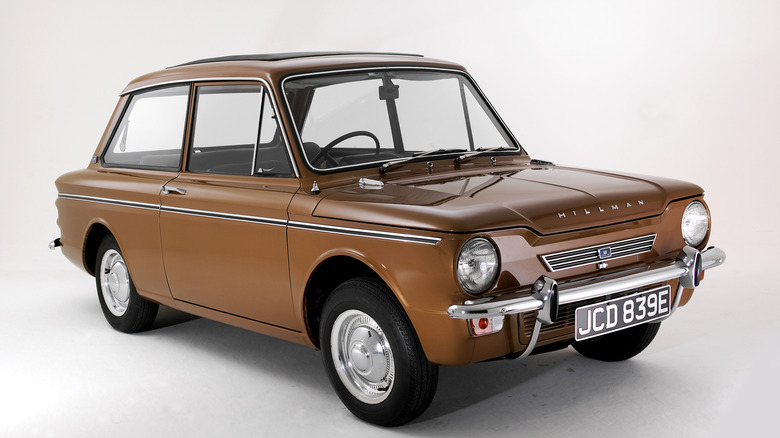
The Mini sits atop the British industry's auto pile as the most successful small car. However, during its era, it had a fierce rival: the Hillman Imp. The antithesis of the Mini, Hillman's small family car had a rear-engine, rear-wheel-drive layout, but was packaged in a unique, novel way. Namely, Imp's 875cc engine was canted at 45 degrees for a lower center of gravity.
Why does that matter in a small family car, you might ask? Well, British drivers value handling more than their American counterparts. So, for the Imp, success meant it had to be playful on a twisty road. Hillman also equipped the Imp with fully independent suspension and a slick four-speed gearbox. It was so good, apparently, that Auto Express called the handling 'kart-like.' Hillman even spiced things up with the wonderfully bizarre Lady Imp and Lord Imp concepts at the 1965 San Francisco International Car Show, each designed for the two genders.
Yes, the Imp wasn't fast. The small four-cylinder engine produced only 39 hp, enough for a 0-60 time of 24 seconds. Even so, the all-aluminum motor was willing to rev up to its 7,000-rpm redline. For those who wanted more oomph, Hillman introduced a 50-hp version in 1966, which sprinted to 60 in 16.6 seconds and had an 86-mph top speed. The Imp was decently practical, too, at least for its size.
Unfortunately, poor reliability and build quality killed Imp's chances of beating the Mini's vastly superior sales numbers. Although Hillman planned to build 150,000 Imps annually, it only produced 440,000 units over the model's 13-year production span.
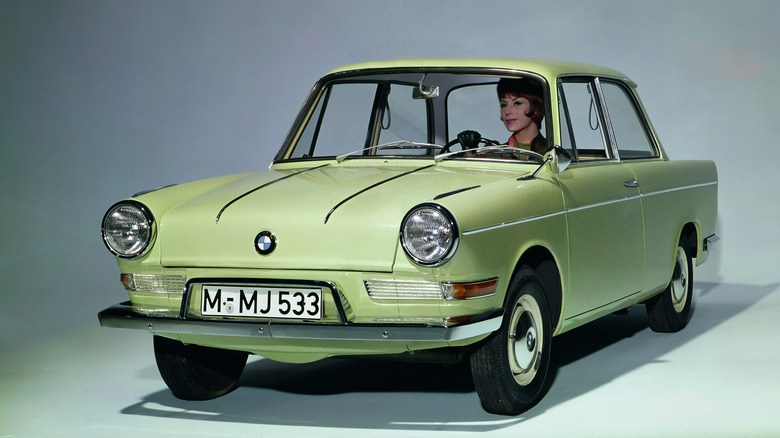
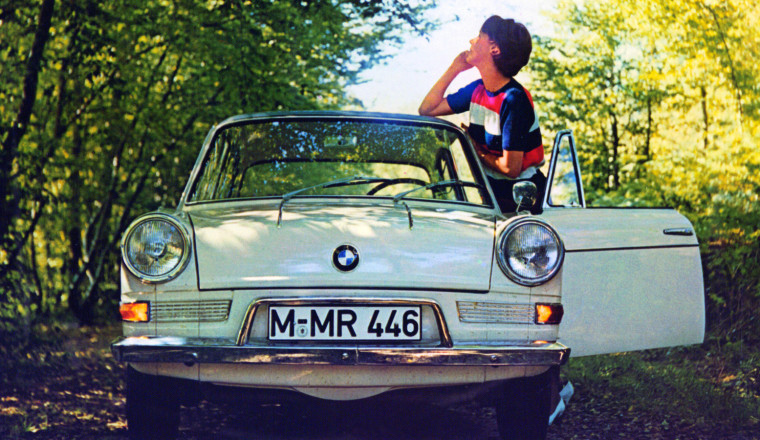
Do you think you know BMW? Think again, because way before the 2002 Turbo and E30 M3, the Bavarian automaker was building a VW Beetle rival with an air-cooled engine behind the rear axle. But don't let that fool you into thinking that this wasn't a real BMW. Yes, the BMW 700 was a cheap family car, but one that went racing and won against rivals like the Porsche Spyder and RSK.
The road-going BMW 700 was equipped with a flat-twin 'boxer' engine borrowed from BMW's motorcycle division. It produced just 30 hp, which translated into a glacial 0-60 time of 32 seconds. Hey — at least it got past 60! The official top speed was 75 mph, with the improved 32-hp Luxus version bumping that to 78 mph.
Yet the version everyone wanted was the BMW 700 Coupé Sport, which had a higher 9:1 compression ratio and two carburetors. This increased the output to 40 hp and the top speed to 85 mph. 0-60 took less than 20 seconds. BMW even offered an optional stiffer suspension and sports gearbox, hinting at its future success as a performance brand.
In fact, had it not been for the 700, BMW would've probably not existed today. BMW sold 200,000 examples of its cheap family car in the short, six-year production span. This has saved the struggling automaker from certain bankruptcy, allowing it to turn into one of the industry's most revered brands.
 JoshBryan/Shutterstock
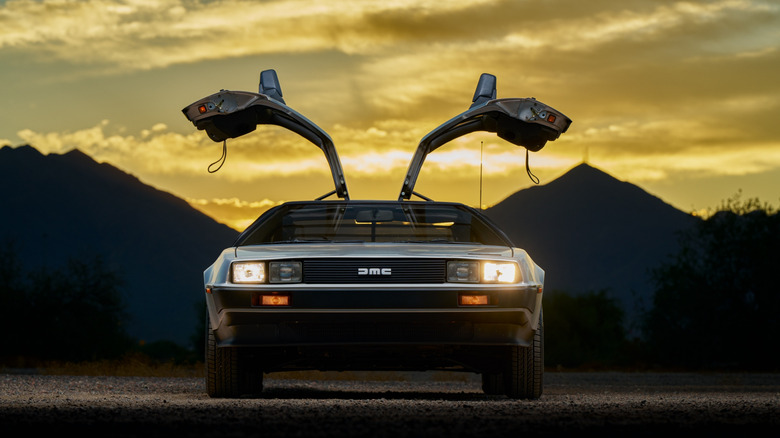
Ah, the DeLorean DMC-12. The Hollywood legend of our teens certainly brings fond memories. The car's cool, stainless-steel body was a perfect match for its time machine role. It made you believe it could really travel through time — once it reached 88 mph, of course. Unfortunately, in the real world, the time machine never took off, ending as one of the industry's greatest disasters.
So, what happened? Let's say that the car's creator, John Zachary DeLorean, aimed too high. Yes, most of what he planned ended up in the futuristic sports car. The stainless-steel bodywork made it quite unique among its contemporaries, with Tesla borrowing the idea for its recent Cybertruck. The gullwing-style doors look good to this day, especially because they are placed on a gorgeous, angular body designed by none other than Giorgetto Giugiaro.
Still, DeLorean also planned to use 'Elastic Reservoir Moulding' composite for the chassis, only to end up with the cheaper Vacuum Assisted Resin Injection (VARI) structure. The DMC-12 also suffered from electronics issues. The Gullwing doors were too heavy. Oh, and the engine overheated because of poor ventilation.
The DMC-12's mechanical heart was also seriously underpowered. The 2.85-liter V6, developed by Peugeot, Renault, and Volvo, produced just 130 hp, and propelled the car to 60 in a slow 9 seconds. Top speed: 120 mph. For $25k, the DMC-12's base price when new, that was not enough. For comparison, the 1981 Chevy Corvette had a 190-hp, 5.7-liter V8, and came at around $16k. Hey, at least the DeLorean DMC-12 looked fast!
 Nikonysta/Shutterstock
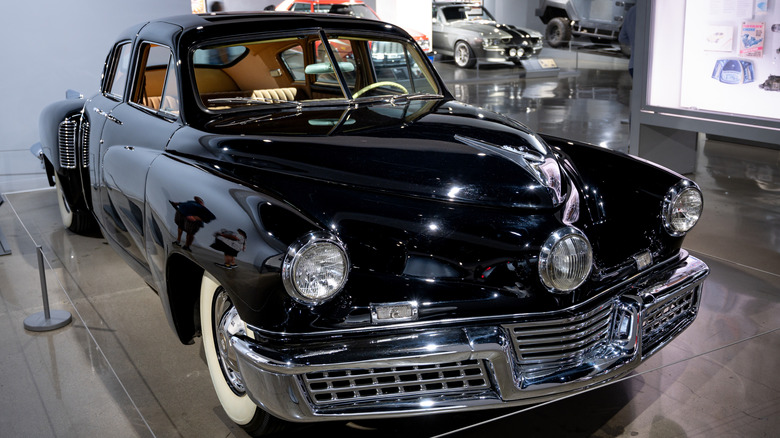
Much like John Zachary DeLorean, Preston Tucker also aimed high with his first creation. Only in this case, he flopped not because he couldn't deliver, but because the Tucker 48 was too good for Detroit. According to Tucker, the Detroit Big Three sent spies into the company's plant and carefully organized a campaign that would not allow the Tucker 48 to enter production. The SEC also launched an investigation into the Tucker Corporation, which halved the brand's value. Oh, and he was also not allowed to buy two steel plants, even though he was the highest bidder. All this led to production stalls and, two years later, killed the company entirely.
That's sad, because the Tucker 48 was a seriously impressive automobile. In the rear, it housed a 5.5-liter Franklin Helicopter flat-6. The water-cooled engine produced 166 hp and 372 lb-ft of torque and reportedly brought it to 120 mph. The Tucker 48 also had fully independent suspension and four-wheel disc brakes, which weren't very common at the time.
Still, it was the focus on safety that made the Tucker 48 unique. Inside, there was no dashboard; instead, there was an empty safe area for passengers in the event of a crash. The rest of the dash was padded, and the cabin was reinforced, just like in modern vehicles. The windshield also popped out during a crash, so it didn't break over the passengers. And, yes, the star of the show was the center 'cyclops' headlight, which turned with the wheels to illuminate the corners.
 Heritage Images/Getty Images
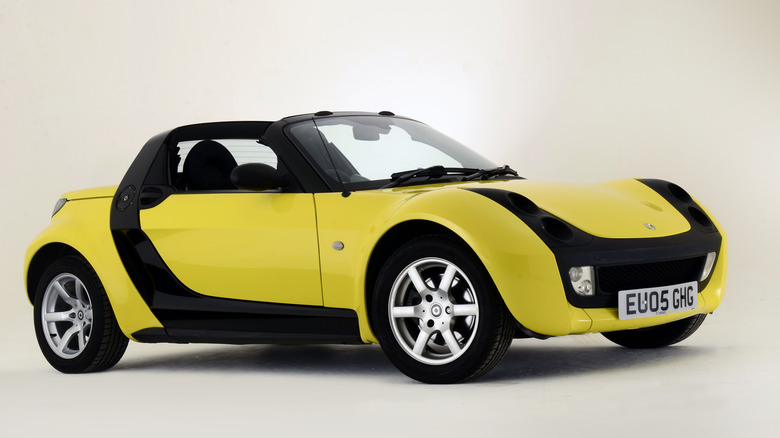
The Smart Roadster is one of those cars that you need to see in person to truly appreciate its size. At just 134.9 inches long and 63.6 inches wide, it's significantly smaller than a Mazda MX-5 Miata. The Roadster is low like a racecar, too, measuring just 46.9 inches in height. Oh, and it weighs just 1,742 pounds, so it's a fun thing to throw around corners. The rear-engine, rear-wheel-drive layout with 44:56 percent weight distribution favors the handling, too.
Unfortunately, the Smart Roadster missed a few ingredients to reach legendary status. The 698cc three-cylinder engine might've been turbocharged, but it still produced just 80 hp in the Coupe. 0-62 mph (0-100 km/h) took a leisurely 10 seconds. The convertible was even available with a 60-hp tune, which sprinted to 62 in snail-like 15.5 seconds. Still, the automated manual was the biggest letdown. Slow. Clunky. Just a pain to use. Why on Earth Smart didn't offer a manual option is baffling, as it would've been a much better option.
But the Smart Roadster was all about being chic. Modern. And at the turn of this century, a sequential gearbox certainly fitted that leitmotif. It looked the part, too. Oh, and it was also available as a regular, soft-top convertible and the targa-like Roadster Coupe. The highlight, though, came from Brabus. The esteemed German tuner merged two 698cc engines together, creating a 1.4-liter biturbo Smart Roadster with 168 hp and 162 lb-ft of torque. Sounds exciting, right? Unfortunately, it was only a prototype.
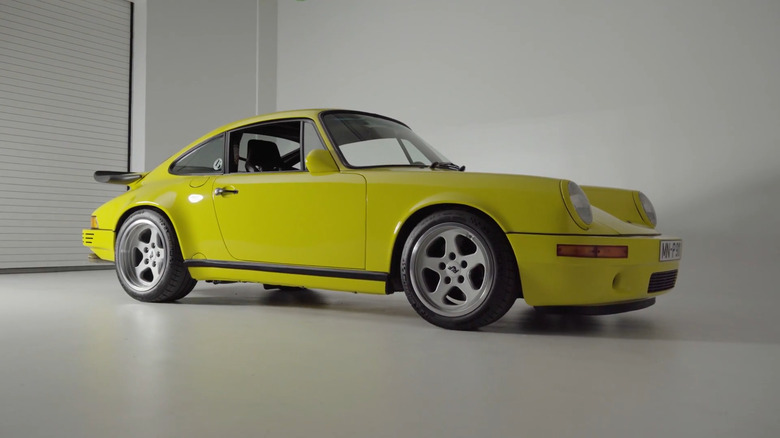
Yes, the RUF CTR Yellowbird is a Porsche 911 underneath. But in reality, RUF built 29 examples from scratch using proprietary or upgraded parts. Admittedly, some Yellowbirds were converted from customer cars. Still, the RUF tuner did such a great job that the CTR Yellowbird was the world's fastest sports car in its era with a top speed of 213 mph. Not a small feat when you consider CTR Yellowbird's rivals at the time. The Ferrari F40 topped out at 201 mph. Porsche 959: 199 mph. The stunning Countach 5000QV could only muster 183 mph.
RUF achieved the feat using a 3.4-liter twin-turbo flat-six, good for 469 hp. Yes, this doesn't sound like much from today's perspective, but in a body that weighed just 2,579 pounds, that's frankly bonkers. 0-60 in 3.7 seconds and 0-100 in 7.8 seconds is bonkers. The CTR Yellowbird was slippery, too; RUF deliberately chose a narrow 911 Carrera body and implemented a single 935-style side mirror for aerodynamics. A crucial add-on was also the five-speed transmission, though one example was also equipped with a six-speed. Porsches at the time only had four-speed transmissions.
Still, the CTR Yellowbird wasn't just a straight-line demon. RUF also added a roll cage and made significant improvements to the chassis, brakes, and cooling for better performance on the track. The rear tea-tray spoiler also ensured that the CTR Yellowbird remained stable at higher velocities. All this resulted in a brisk 8-minute, 5-second lap around the Nürburgring Nordschleife.






















.JPG)