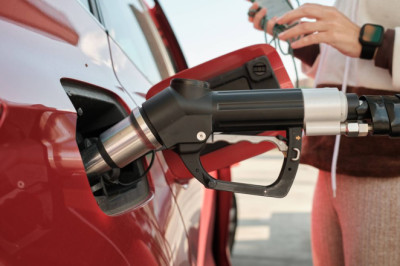

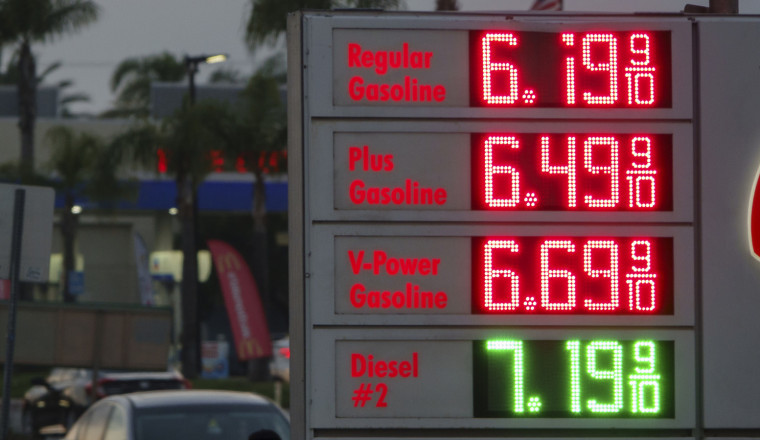

On February 28, the United States and Israel struck Iran. Within days, Iran closed the Strait of Hormuz. Brent crude surged past $100 a barrel. Gasoline prices in the United States climbed by more than $1 a gallon in a single month. As of the middle of May, the average American is paying $4.51 for a regular gallon of unleaded. A new analysis from Brown University's Watson Institute for International and Public Affairs puts the additional fuel bill for American consumers since the war began at more than $40 billion over $300 per household and the meter is still running.
That is not a side effect. That is a foreseeable consequence of a decision that was made anyway.
The Strait of Hormuz is the most critical single chokepoint in global energy supply. Around 20 per cent of the world's seaborne oil and a substantial volume of liquefied natural gas pass through it. Military strategists, energy economists, and intelligence agencies all knew exactly what a war with Iran would do to that waterway. Iran's response was not a surprise. It was the obvious move, anticipated for years in planning documents, think tank papers and congressional briefings. The decision to strike Iran was made with that consequence fully visible on the table.
So who benefits?
The six largest Western oil companies, Chevron, Shell, BP, ConocoPhillips, Exxon and TotalEnergies are on course to collectively pocket $94 billion in profit in 2026, according to an Oxfam International analysis. That is an increase of nearly $37 million a day compared to their 2025 earnings. BP called its first quarter 2026 performance "exceptional." Global oil prices have soared more than 50 per cent since the conflict began. Governments that levy fuel taxes calculated as a percentage of the pump price collect more revenue the higher the price climbs, without changing a single line of tax code. And anyone who placed the right trades in energy futures in the weeks before February 28 has had a very good spring.
None of this is unique to this war. We watched the same pattern in 2022 with Russia and Ukraine. We watched it with Covid, where the disruption of supply chains and the pricing power handed to certain industries translated into wealth transfers of a scale that still have not been fully reckoned with. The mechanism is consistent: a crisis arrives, ordinary people absorb the cost, a concentrated group of players absorbs the gain.
Like this? Get the app: iOS | Android
The Brown University researchers who produced the $40 billion figure put it plainly: energy price shocks of this kind function as a broad, unacknowledged tax on households. The difference between an acknowledged tax and an unacknowledged one is that the acknowledged kind comes with a vote. Nobody asked American drivers whether they would like to contribute $300 to cover the fuel cost implications of a military operation conducted in their name.
Asked last week whether the financial strain on American households was influencing his approach to negotiations with Iran, President Trump answered: "Not even a little bit."
There is an argument, a real one that the Strait disruption reflects genuine supply reduction and that higher prices are an inevitable market response. The IEA has called this the largest supply disruption in the history of the global oil market. The closure is real. The reduced tanker traffic is real. Producers in the Gulf have curtailed output because they have run out of storage. These are not manufactured numbers.
But the scale of corporate profit accumulation during a period of civilian pain is also real. Oxfam's figures show those six companies earning close to $3,000 a second. At the same time, BP has cut investment in renewable energy. Shell has watered down its 2030 climate targets. Exxon has reduced planned spending on cleaner energy projects. Crisis, it turns out, is not universally bad for business.
The $40 billion figure will keep climbing through the summer driving season. Analysts at OilPrice.com already have the running total closer to $45 billion. Prices could reach $5 a gallon if the Strait remains effectively blocked through the northern summer. Spirit Airlines has ceased operations, citing fuel costs. Jet fuel is up 95 per cent since the war began. The cost of groceries, freight and consumer goods is following energy prices upward through every supply chain they touch.
Wars have always been expensive for the people who don't start them. What has changed is how precisely we can now measure who ends up with the bill ... and who ends up with the money.
Sources
- Brown University Watson Institute — The U.S. Energy Cost of the Iran War
- Brown University Costs of War PDF — Research Brief: The U.S. Energy Cost of the Iran War, May 18, 2026
- Oxfam International analysis via Fortune — Activists call out soaring oil and gas profits as energy companies cash in on the Iran war
- Oxfam / CNN — Giant fossil fuel companies made about $12,000 in the time it took you to read this headline
- ABC News — Are oil companies profiting from the Iran war? Experts explain
- Al Jazeera — US faces rising costs with Iran war driving energy prices, inflation higher
- Al Jazeera — Why the oil and gas price shock from the Iran war won't just fade away
- Brookings Institution — Another oil crisis is here. How will American drivers respond?
- OilPrice.com — Higher Oil Prices Have Cost U.S. Consumers $45 Billion Since Iran War Began
- Wikipedia — 2026 Iran war fuel crisis
- Common Dreams — Trump's Iran War Has Already Cost Americans Over $40 Billion Extra on Gas and Diesel