A car that is leaking on the street can be disgusting and unpleasant to look at. However, those dark smears on the pavement can do more than just ruin someone's mood. They don't just stay neatly under the offending vehicle. They spread out, and they create problems for everyone who uses the same street afterward.
Drivers who park next to a leaking car risk getting oil or other greasy substances from the leak on their tires, and even a thin layer of oil is enough to reduce traction and make a tire slip on smooth pavement. Kids and pets aren't any better off – they often like to jump and splash in small puddles on the street, and some of these can contain toxic automotive residue.
There's also the fire hazard risk that many motorists tend to forget. If oil is leaking near hot engine parts, it can go ablaze once the vehicle starts. Many leaks also signal failing car components, like gaskets, seals, and stressed lines. That means that the leaky car may be one hard turn or sudden stop away from a mechanical failure that puts a lot of people in danger, including the owner themself. A leaking car can turn a shared public space into a place where others pay the price for someone else's neglect. Fixing the leak is just a basic responsibility.
 Nafadh/Shutterstock
Several automotive fluids share similar colors, so the clearest way to identify the leak under your car is by paying attention to where it's dripping from, how it feels, and what it smells like.
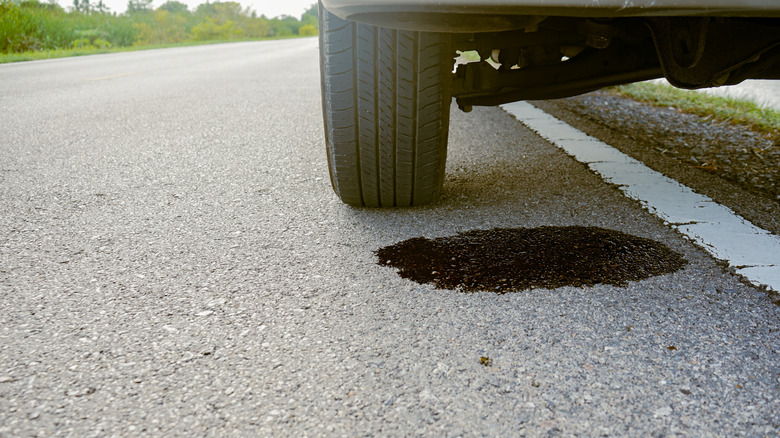
First, there's the engine oil. It can take on a different color, ranging from light amber to dark brown or black, depending on how long it's been in the engine. It feels slick and greasy, and older oil can leave a heavy residue on paper towels or your fingers. Oil usually leaks from areas like the valve cover, oil pan, or worn engine gaskets, landing directly beneath the engine or on nearby components.
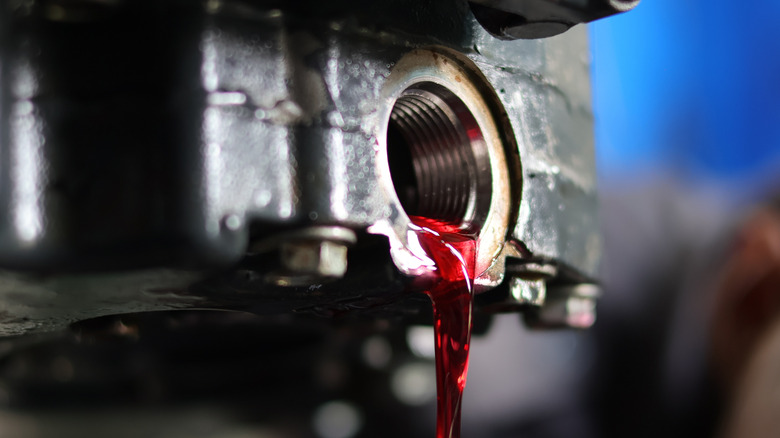
Then there's the transmission fluid, which usually starts as bright red before darkening to brown with age, though manual transmission fluid is often amber. It's greasy as well, and the leaks often show up closer to the middle of the car or along the transmission cooling lines. Next is the power steering fluid, which is typically red and looks almost identical to transmission fluid. You'll find it under the very front of the car.
Visually, coolant is one of the easiest to spot. It comes in bright colors, like green, orange, or pink, and is thin, watery, and usually carries a sweet odor. You'll see this under the radiator or the engine at the front of your vehicle. Brake fluid, on the other hand, is clear to yellow, very slippery, and has a sharp odor. You'll normally see it near a wheel or beneath the driver-side firewall.
 Mr.Anuwat Rumrod/Shutterstock
Once these fluids leak onto the pavement, they don't just sit there. Every rainfall turns roads and parking lots into a direct pipeline to nearby rivers, lakes, and coastal waters. Improper disposal or spills of automotive fluids can also contaminate soil and groundwater with toxic substances like oil, grease, and heavy metals, posing environmental and health risks.
Motor oil is the worst offender. A single quart can contaminate up to 2 million gallons of water, and, according to the Washington Stormwater Center, vehicles collectively leak 7 million quarts of oil into the Puget Sound every year. Furthermore, according to the EPA, the oil drained during a single oil change can contaminate up to 1 million gallons of drinking water.
That's because oil forms a toxic layer on the water's surface that can kill the oxygen supply, suffocating the habitat and poisoning fish. Coolant is no better. Most antifreeze uses ethylene glycol, a chemical that's toxic to aquatic life. It dissolves easily in water, spreads quickly, and disintegrates into compounds that can stunt growth and reproduction in fish when ingested.
And because ethylene glycol has a sweet taste, animals and sometimes even kids are drawn to it. Accidental ingestion can cause nausea, respiratory problems, kidney failure, neurological damage, comas, or even death.
 Simonskafar/Getty Images
Fixing a car leak can come off as costly and time consuming to most people, but for reasons that extend beyond your safety, the fix is necessary. Even if you personally don't care about the environment, there's a selfish reason to act, because what starts as a small leak can later turn into thousands of dollars in repairs if left unaddressed.
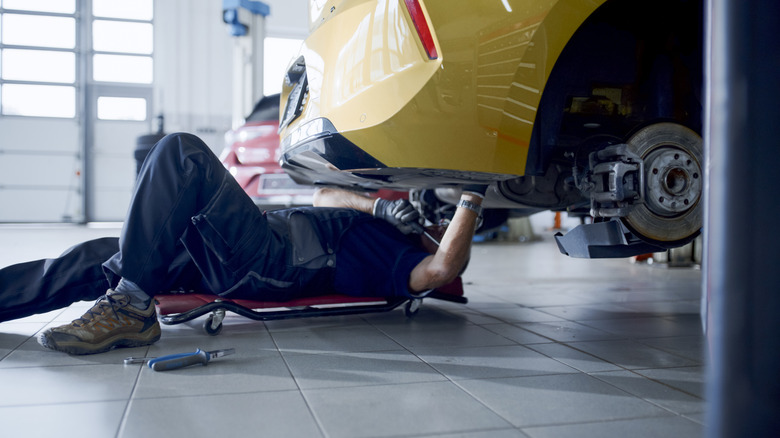
The first step is identifying what's leaking by placing a piece of cardboard underneath your car and inspecting the leak using the visual and sensory clues outlined earlier. If repair cost is a concern, many shops offer free leak inspections and will show you exactly what's wrong before charging a cent.
If you spot stains under your car, don't leave them there. There's a proper way to get engine oil off your garage floor. Soak up fresh spills immediately with kitty litter, sand, or rags. For older stains, try scrubbing them with a degreaser or an absorbent product designed to lift oil. Never hose down spills because that simply sends toxins straight into the stormwater system. A leaky car costs more than a stain on the driveway. Fix the leak (check the most common causes of car oil leaks for help), clean the mess, and don't be the reason someone else pays the price.