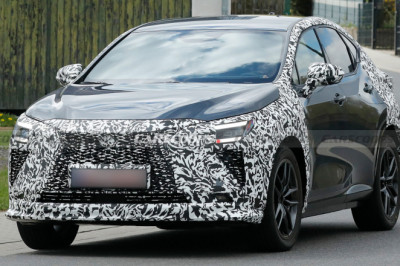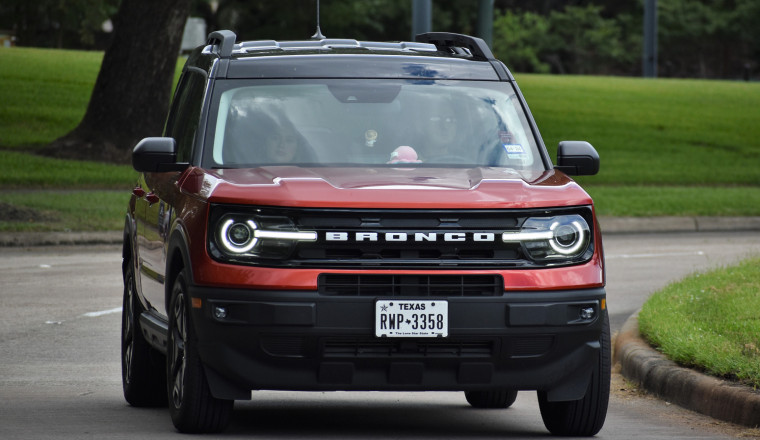

Like most things in life, the reason some states no longer require front license plates starts with money: It's less expensive for states — and drivers — to deal with a single plate instead of two. Of course, there are some exceptions to this motivation. Pennsylvania, for one, temporarily required just one plate in 1944 to save metal during World War II, and it went back to the single-plate system in 1952 for the same purpose during the Korean War. And the Keystone State has kept things that way ever since, though State Sen. Katie Muth was working to change that as of mid-2025.
Beyond financial considerations, there's the matter of maintaining a vehicle's design integrity. The short story is that a lot of people just don't like the way cars look with metal license plates sticking out like a sore thumb on their stylish front bumpers. It's further worth noting that manufacturing twice the number of plates has a non-trivial negative impact on the environment.
Safety can be a concern as well, especially due to the increased availability of advanced driver assistance systems. Features like forward collision warning, adaptive cruise control, automatic emergency braking, and more require front-facing sensors that need to be unobscured by license plates to work properly. That tech can be difficult and expensive to repair, too.
 Yanguolin/Getty Images
Front license plates can play an important role in law enforcement, and that's one of the top reasons that many states continue to require them on both the front and back of vehicles. The obvious benefit is that the front plate gives officers another opportunity to get the exact number and year right. It works the same way for witnesses and victims — they may get only one view of a vehicle involved in criminal activity. And if they only see the front when a license plate is only on the rear, they may not be able to read and identify it.
You know who else likes to get two chances to look at your license plate? Plate-reading companies that use the images for things like tolls, camera-based speed traps, and seeking partnerships with dashcam companies. So if a vehicle only has a rear plate and that gets missed by a camera, the state could be missing out on some significant revenue sources.
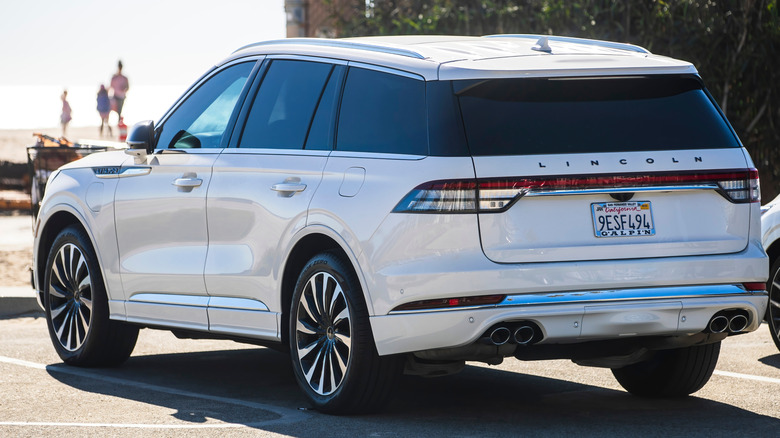
It's also worth touching on the new wave of digital license plates, which are now legal in states like Arizona, California, Michigan, and Texas. Currently, they're only allowed on rear bumpers for reasons having to do with the technology. So if you're in a state that requires two plates and allows digital ones, such as California or Texas, you'll be riding with a metal (or sticker-style) front plate and a digital one in the back.
 Karolis Kavolelis/Shutterstock
We'll finally get down to brass tacks here and report on which states require which plates. Please remember, though, that state requirements can always change — and in both directions. While one Pennsylvania lawmaker wants to bring back front plates, folks in Virginia are trying to get rid of them (and trying to force reckless drivers to install speed limiters). With that said, Washington, D.C., along with 29 states, require cars to display license plates mounted at both the front and rear:
California
Colorado
Hawaii
Idaho
Illinois
Iowa
Maine
Maryland
Massachusetts
Minnesota
Missouri
Montana
Nebraska
Nevada
New Hampshire
New Jersey
New York
North Dakota
Oregon
Rhode Island
South Dakota
Texas
Utah
Vermont
Virginia
Washington
Wisconsin
Wyoming
That, in turn, leaves 21 states that currently only require rear license plates:
Alabama
Arizona
Alaska
Arkansas
Delaware
Florida
Georgia
Indiana
Kansas
Kentucky
Louisiana
Michigan
Mississippi
New Mexico
North Carolina
Ohio
Oklahoma
Pennsylvania
South Carolina
Tennessee
West Virginia