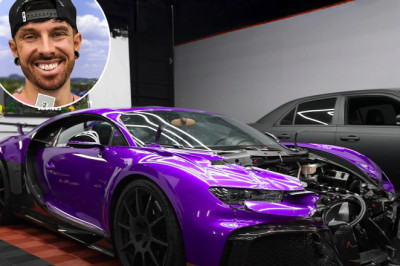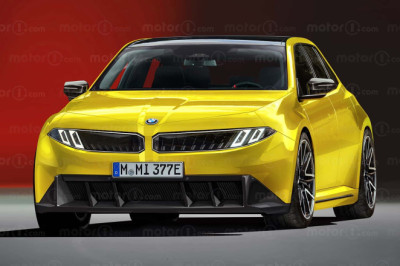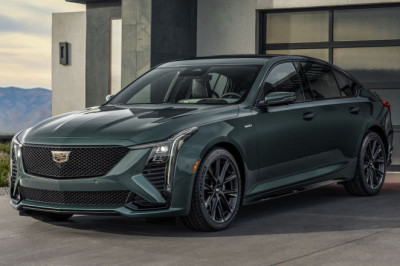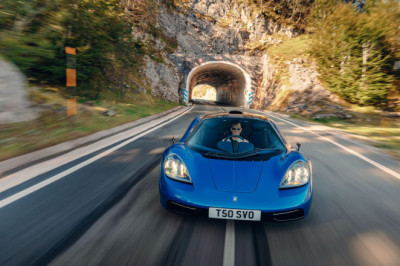


Concept cars lie to you. They look like cars, but they're unicorn whispers and fairy dust. These design exercises are like utopian science fiction novels pointing to a potential future where cars have flexible skin-like exteriors (like the creepy BMW GINA), nuclear reactors (a real thing envisioned in the nuclear-powered 1958 Ford Nucleon scale model), or built-in shopping carts full of plastic balls (as seen in the Peugeot e-Doll).
In truth, almost all concept cars are unsafe, street-illegal, undriveable billboards. The concept of a concept car isn't clickbait, per se, but it is an overly friendly neighbor who likes to pop into clickbait's house uninvited to raid the fridge. What you're looking at is likely a mockup meant to make the brand in question look as if it's peering ahead to the trends and needs of buyers 30 years down the road. Then, once the billboard has ceased its usefulness, to the crusher it goes. In a best-case scenario, it goes to a museum.
The more complete concept vehicles often contain proprietary designs and intellectual property manufacturers don't want out in the wild. Carmakers also don't want to sell non-functioning or incomplete props when they can sell you the final product. Consider the Cadillac Evoq that morphed into the XLR. GM would rather you own the XLR, which had replacement parts and service manuals. The history of the Chrysler Turbine Car proves that even working and usable concepts can face destruction if manufacturers aren't willing to support them with parts and service.
Oh, that video hurts every time. Look away!
Polestar claims, "concept cars are prototypes designed to showcase new developments in automotive design and technology." That's neat, Polestar, but "concept cars" and "prototypes" have different purposes. Prototypes could actually enter production. They face the same rigors as any other car, i.e. safety and crash tests, emissions tests, and other legal requirements that govern products companies actually sell to people. Meanwhile, concept cars may have zero safety equipment, zero emissions equipment, or power train.
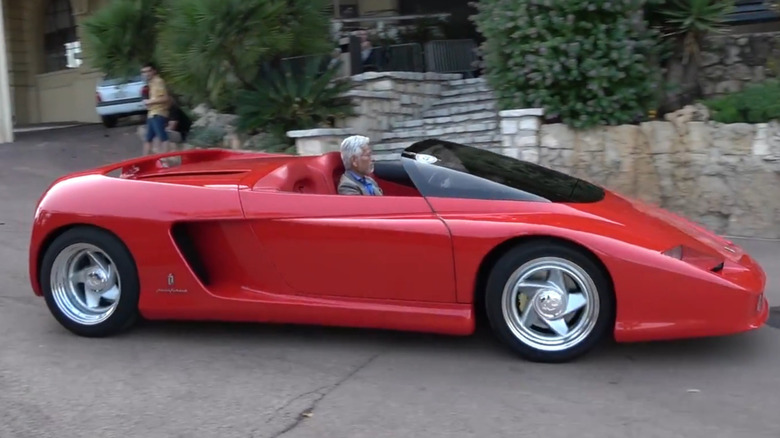
And this is the problem with so many concept cars. The public doesn't look at them as test beds for features that may hit the market in 10 years, the public looks at them as cars. Sometimes a few top-rung concepts can actually be considered cars, like the awesome Ferrari Mythos that — thankfully — still graces car shows.
But most are a rung below, built on power trains and platforms that are far more mundane (looking at you, Aston Martin Lagonda Vignale and your Lincoln Town Car underpinnings). Go down another rung and you get to 'cars' that show off tech that may or may not be feasible. While they look pretty, those tend to be just fancy dioramas made of superglue, fiberglass, and corkboard — closer to non-functioning sculptures than actual cars.
Then, when you hit bedrock, you get to concept cars that really are clickbait. They're complete and fully functioning, but the manufacturer had no intent to make them and likely never did. Remember the Chrysler Howler? Perhaps the Cadillac Sixteen? Oooh, how about the stunning 1995 Hyundai HCD-1 concept sports car on the cover of the May 1992 issue of Car and Driver? It looked sort of like a mini-Dodge Viper and was supposed to cost $14,000. What did Hyundai actually make? The Tiburon.
 Zoran Karapancev/Shutterstock
It's nice when carmakers admit that concepts really are just that. Nissan's PR head Dan Bedore told Inside Hook, "Many concepts are not even 'cars,' and sit on plywood and aluminum underpinnings and feature fiberglass panels that can warp in the sunlight." So, not only can a concept vehicle age poorly from a styling or performance standpoint, but from a literal "melt in the sun" standpoint, too. Nissan would likely rather turn its electric Denki Cube concept into an actual cube via the crusher than deal with some buyer complaining about 17-year old dead batteries.
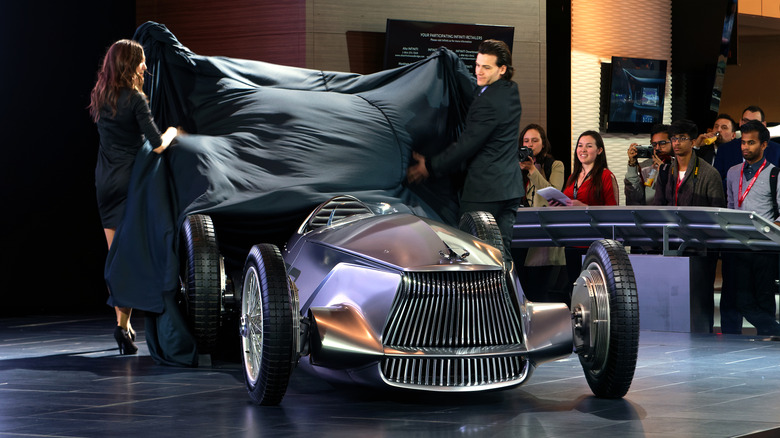
This doesn't stop Infiniti, Nissan's luxury division, from coming out with new, insane concepts every few hours, though. Remember the Prototype 9 open-wheeled electric roadster that looked like a '50s Grand Prix car with weird dental work? The Infiniti dumpster has got to be overflowing with "hmmm, nah" concept vehicles.
It's unfortunate, but concept cars are nothing more than concepts, dreams, wishes, and ephemeral glimpses. Sometimes they make it to production with nary an alteration, like the blobfish-adjacent Chevrolet SSR pickup/convertible, but that doesn't mean you'd want the rough concept example that's been sitting neglected for 25 years. Carmakers crush concept carcasses so you don't get disappointed when you buy one and realize it's a facade.
Uncrushed concepts do get sold occasionally, but often come with contracts preventing them from getting registered for road use. If you do somehow buy a legally drivable concept car not made of cardboard and hope, it might be missing niceties like mirrors or working door handles. We'd still trade lesser internal organs for a Cadillac Cien, though.