

Apple is preparing to bring support for its Car Keys feature to Toyota vehicles, with evidence from leaked kernel debug kit files showing the feature going live on Apple's backend. Apple's backend has been updated to include Toyota in the list of companies that support Apple car key. No official announcement. No timeline. Just backend infrastructure appearing where it didn't exist before, suggesting Toyota finally stopped fighting the inevitable.
Apple launched Car Key support in 2020. BMW was first. Genesis, Hyundai, Kia, Mercedes, Volvo followed. At WWDC 2025, Apple announced 13 additional automakers would soon adopt digital car keys, including Audi, Acura, Porsche, Cadillac, Chevrolet, Rivian, and Lucid. Toyota, selling more vehicles globally than any other manufacturer, stayed absent. Not because of technical limitations. Because of money.
Toyota offers a proprietary digital key system on 2024 and newer models including 4Runner, Tacoma, Land Cruiser, Grand Highlander, Prius, Mirai, bZ4X, and Sienna, requiring a Remote Connect subscription costing $8 monthly for standalone service or $15 monthly bundled with navigation and other connected features. That's $96 to $180 annually for functionality that should be standard. Apple Car Key costs nothing beyond owning an iPhone. The revenue conflict writes itself.
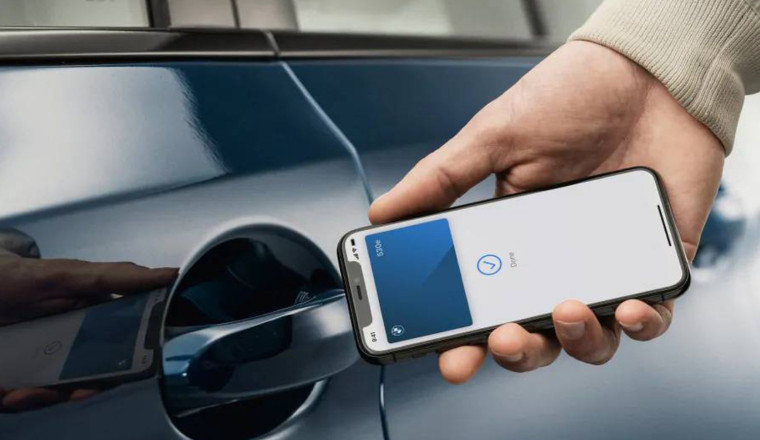
Introduced in 2022, Car Keys allows an iPhone or Apple Watch to unlock a vehicle via the Wallet app, with a digital version of a car key stored in the Wallet, and unlocking completed by holding an Apple Watch or iPhone near a compatible vehicle's NFC reader. Tapping on the door handle is enough to initiate an unlock, and while Face ID authentication is a security option, Apple offers an Express Mode that eliminates the need to authenticate for an even faster unlocking process. Walk up to your car with your phone in your pocket. Door unlocks. Get in. Drive away. That's the experience. No app opening, no subscription renewal, no wondering if you paid this month's fee.
The resistance stems from three factors: subscription revenue, data control, and development resources. Connected services generate recurring income, with Toyota charging $8 to $15 monthly for digital key access, Ford's FordPass, Chevrolet's OnStar, and other manufacturer apps bundling digital keys with subscriptions costing $15 to $30 monthly. Automakers built entire business models around charging monthly for features that should be included with the vehicle. Apple Car Key threatens that model by offering the same functionality for free.
The data control angle matters too. Toyota Digital Key requires cellular data for account verification and initial key provisioning, with local Bluetooth handling day to day operation, though loss of cellular service can impact key management features. Toyota controls the system. Toyota sees the usage data. Toyota decides when support ends. Apple Car Key removes that control, putting the functionality in Wallet where Toyota can't monetize it or harvest data from it.
At its core, Apple's Car Key leverages near field communication and, in newer implementations, ultra wideband for precise, secure interactions, with users able to add their vehicle's key to the Wallet app, share it digitally with family members, and even set restrictions like time limited access or speed limits for younger drivers. This system operates offline, meaning no internet connection is needed once the key is set up. That offline capability is critical. Toyota's system breaks without cellular service. Apple's works anywhere.
The rollout details remain unclear. Toyota has yet to comment on the report, and it's still unclear which models will get the feature first. If Toyota follows a similar path to other manufacturers, Apple Car Key may initially be available on a narrow range of models before expanding further. Expect it on newer, premium vehicles first. The Camry owner might wait years while Lexus buyers get it immediately. That's how these things typically roll out.
Among the brands already offering Car Key support include Audi, BMW with most of its 2021/2022 and newer vehicles, Genesis, Hyundai, Kia, Lotus, Mercedes, Mini, Ram, Polestar, Rivian, and Volvo, with Chinese models from BYD and Nio also working with Apple Car Key. Toyota arriving this late to the party looks increasingly awkward. The feature is five years old. Competitors across every segment support it. Toyota held out protecting subscription revenue while alienating customers who saw the feature work perfectly on other brands.
Five years ago, BMW introduced the ability to unlock vehicles with an iPhone as an exclusive premium feature, but today Apple Car Key functions across 20 manufacturers. What started exclusive became standard. Toyota watched this happen and still tried to maintain its walled garden approach. Backend evidence suggests that strategy just collapsed.
The timing is telling. Toyota's sales remain strong, but customer satisfaction with connected services is not. Forcing buyers to subscribe monthly for basic smartphone integration while every competitor offers it free creates resentment. Backend infrastructure appearing now suggests Toyota finally acknowledged that resentment matters more than subscription revenue from a feature most buyers refused to pay for anyway.
Apple won this one through patience and market pressure. They built the infrastructure, signed up competitors, and waited for holdouts to realize they couldn't stay isolated forever. Toyota blinked. The backend confirms it. Official announcements will follow. And millions of Toyota owners will finally get functionality they should have had five years ago, without paying $96 annually for the privilege.