

Every driver reading this has encountered all nine of these. Most will have committed at least one. A few will be doing several right now while reading this on their phone at a red light, which would make them eligible for the list on multiple counts.
The common thread running through every item below is not malice. Genuinely dangerous drivers are rarely trying to cause harm. The problem is indifference to other road users, to stopping distances, to the consequences of decisions made at speed. Indifference, it turns out, kills just as efficiently as intent.
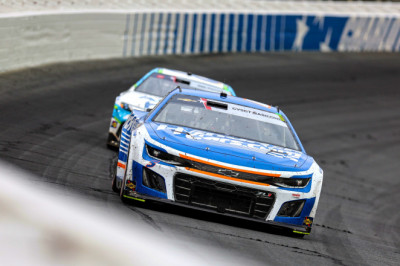
The Wannabe Racer
Young men with new licences and modified exhausts are not the only offenders here, but they are the most visible. The tell is easy to spot: unnecessary acceleration between junctions, late hard braking, weaving without signalling, and a conviction that the outside lane exists for their personal use.
Here is the mathematics they have not yet done. On a typical cross town run in a 30mph zone, your actual average speed, factoring traffic, junctions, and lights, sits closer to 15 to 20mph. To raise that average to 40mph requires hitting 60 or 80mph between every stop to compensate for the slower sections. The time saved on a 30 minute journey at that average? Around seven and a half minutes. Watch the cars you blew past catch you at the next red light. The gap between the thrill and the actual journey time gain is almost never worth the risk and the risk includes everyone else on the road who did not choose to participate in the experiment.
If the sensation of speed is genuinely what you are after, every major racing circuit in the country runs track days. They will teach you how to use speed properly, in an environment designed for it, without the pedestrians, junctions, and cyclists.
The Undertaker
Overtaking on the inside on a motorway or dual carriageway is not just aggressive. It is acutely dangerous because of where it positions you relative to the driver ahead. The car being undertaken cannot see you in the most critical place: the moment they pull left into the lane they have every right to assume is empty. You are, in that moment, precisely where they are about to be.
The driver who triggers undertaking is usually a lane hogger sitting in the middle or outside lane at below the speed of surrounding traffic. That is genuinely frustrating, but the frustration does not transfer the risk. When an undertaking manoeuvre goes wrong, the person most likely to be pushed off the carriageway is the undertaker.
The Tailgater
Tailgating serves two practical purposes, neither of them helpful to the tailgater. It intimidates the driver ahead, which occasionally prompts them to slow down in irritation, and it eliminates forward visibility by positioning you directly behind a vehicle large enough to block your sightline to anything happening further up the road.
The physics are simple and do not care about intentions. Good drivers do not watch the car immediately in front. They watch the space beyond it, reading what is developing ahead so they have time to respond before brake lights appear. If you are close enough to be watching brake lights, you are already reacting to an event rather than anticipating one. At motorway speeds, the difference between those two things is measured in metres.
Two seconds of following distance is the minimum under normal conditions. Four seconds in the wet. If the car ahead brakes without warning and you cannot stop, the gap was not sufficient. The car that hits the back of another is, in law and in physics, the car that was too close.
The Dangerous Overtaker
Overtaking a queue of moving traffic on a single carriageway road by crossing into the path of oncoming vehicles is among the most catastrophically optimistic things a driver can do. The manoeuvre requires an accurate assessment of the speed and distance of oncoming traffic, the speed of the vehicle being passed, the acceleration available in the overtaking car, and the length of clear road needed to complete the pass safely. Getting any single element wrong produces a head on collision at combined closing speeds.
When the gap runs out, the instinct is to force back into the queue. The space the overtaking driver needs belongs to someone else, who had been maintaining a safe stopping distance. That gap disappears, the car behind has to brake, and the chain reaction goes backward through the queue. The dangerous overtaker created a risk for every vehicle in the line.
The Fog Light Offender
Rear fog lights are ten times brighter than standard rear lights. In actual fog, that intensity is the point: they make you visible at distance in conditions where nothing else would. In drizzle, light mist, or simply because the driver has forgotten they are on, that same intensity renders your brake lights almost invisible to the driver behind.
The consequence is specific and serious. A driver following you in clear conditions, relying on your brake lights as their primary cue to slow, receives no useful signal when you brake because the fog lights have washed it out. They find out you have stopped when they arrive at the same point.
Fog lights are a weather instrument, not a styling choice. The legal threshold in the UK is visibility below 100 metres. Below that, they are mandatory and effective. Above it, they are a hazard to the person behind you.
Like this? Get more MotorBuzz delivered to your browser. Click here to add MotorBuzz as a preferred news source on Google.
The Full Beam Holdout
There is a narrow window between seeing the glow of oncoming headlights and seeing the vehicle itself. That window is the moment to dip. Not when the car appears. Not when you make eye contact with the driver. When the light first appears over the brow of a hill or around a bend, because by the time you see the vehicle, you have already blinded them.
Full beam at close range at night produces temporary visual impairment lasting several seconds. The driver you have just dazzled on a country road cannot see the bend they are about to take. The tree, the wall, the cyclist, the animal — none of it is visible while your headlights are burning into their retinas. The rule is not complicated: oncoming light means dip, immediately.
The Lane Hogger
The outer lanes of a motorway are overtaking lanes. This is not a preference or a suggestion encoded somewhere in the Highway Code for completeness. It is the rule of the road: keep left unless overtaking.
Hogging the middle lane does not make you a safer or more cautious driver. It forces traffic around you into the outside lane, compressing three lanes of movement into one functional lane, creating the exact congestion it claims to be avoiding. MotorBuzz has covered the data on middle lane hogging and its measurable contribution to motorway congestion across the UK's busiest stretches. The police have the power to issue fixed penalty notices for it. They do not use it often enough.
The Pedestrian Intimidator
Pedestrians are road users. They have priority at pedestrian crossings, legal right of way in multiple circumstances, and approximately zero protection from the consequences of a driver misjudging the interaction.
The driver who accelerates toward a crossing to discourage a pedestrian from stepping out, or who blasts past someone waiting at a zebra crossing, is not saving meaningful time. They are making a threat. That most pedestrians respond by stepping back rather than asserting their right of way is a survival instinct, not a concession.
The Lane Hopper
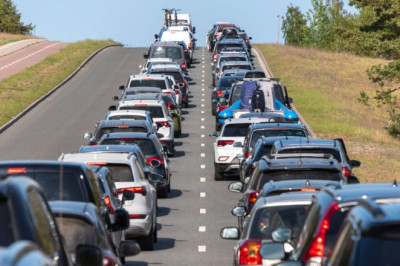
The lane hopper in stationary traffic is easy to spot and even easier to study, because the results are visible in real time. Every lane in a motorway queue speeds up and slows down in sequence. The car that cuts across repeatedly arrives at the front of the jam, if at all, one or two minutes ahead of the car that sat in one lane and waited. Multiple studies of queue dynamics confirm this. The time gain is marginal at best and negative at worst once you account for the moments spent waiting for a gap to open.
What the lane hopper reliably achieves is elevated stress, elevated stress in the drivers around them, and occasionally, an accident caused by the exact gap closure they were banking on.
Seven of these nine behaviours attract fixed penalty notices or endorsements under current UK law. The other two, intimidating pedestrians and lane hopping in jams, sit in murkier legal territory but fall clearly under careless or inconsiderate driving provisions when pursued.
All nine are, at their core, the same mistake: the belief that the road belongs to the individual driver more than it belongs to everyone else using it at the same time. It does not. It never did. The driver who grasps that early drives better, arrives less stressed, and vastly improves the odds that everyone around them gets where they are going in one piece.