

There is a very specific type of bad decision that begins with a moment of irritation and ends in a courtroom. Jordan Sneddon, 28, of Tamworth, managed to compress what might be the entire spectrum of terrible choices into a single evening on the M6 Toll. It started with a £6.40 charge. It ended with 14 months in prison, a two year driving ban extended by seven months, and a conviction for failing to provide a breath specimen. All to avoid paying less than the cost of a large pizza.
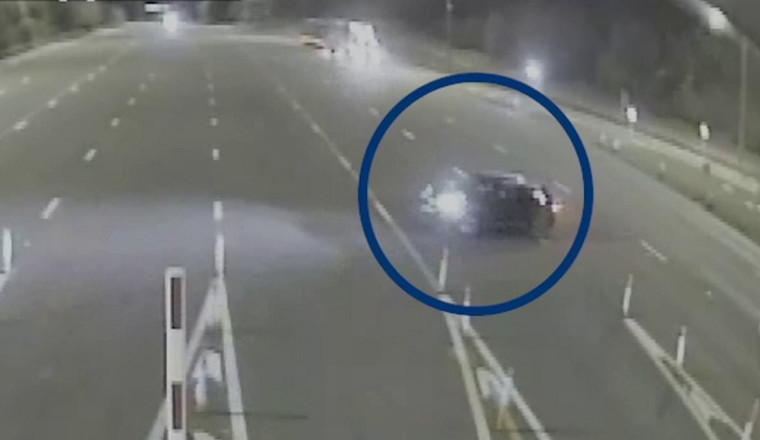
The facts, as reported by the Daily Mail and confirmed by Staffordshire Police, are as follows. Sneddon approached the M6 Toll plaza in his black MG, decided he had no interest in paying the toll, executed a U-turn, and drove back down the south carriageway directly into oncoming motorway traffic. He covered approximately six miles the wrong way before leaving the toll road near Burntwood, Staffordshire. Other drivers, understandably alarmed by a car hurtling towards them at motorway speed, called the police.
What happened next is the stuff of police pursuit footage that inevitably ends up on Channel 5. Officers gave chase. Sneddon hit 90mph in a 30mph zone. He ran a red light. He crashed into a roundabout. The car sustained enough damage that it eventually stopped of its own accord, which is the only reason this story does not end considerably worse than it did.
At Stafford Crown Court, Sneddon pleaded guilty to dangerous driving. PC Mark Boyles of Staffordshire Police described his driving as "incredibly reckless" and stated it "could have easily resulted in someone being seriously or fatally injured." That is, by any standard, a significant understatement. Driving the wrong way down a motorway at night into live traffic is not reckless in the way running a yellow light is reckless. It is the kind of reckless that ends multiple lives.
The M6 Toll: Britain's Most Resented Road
The M6 Toll opened in December 2003 as the UK's first, and so far only, privately operated motorway. Running for 27 miles between Junction 3a near Coleshill and Junction 11a near Cannock, it was built to relieve chronic congestion on the adjacent M6 through Birmingham, which has consistently ranked among the most congested stretches of motorway in Europe.
The toll has never been popular. Drivers resent paying for a road when adjacent alternatives exist, even when those alternatives add significant time to journeys. The current standard car toll sits at £6.40, a figure that has increased multiple times since opening and is subject to further review. For drivers making the journey regularly, the cost accumulates to a meaningful annual sum. For a daily commuter using it five days a week, that is around £1,600 a year just for the privilege of moving slightly faster than the traffic on the free alternative.
That resentment is understandable. What Sneddon did is not. The gap between "I begrudge paying this toll" and "I will drive six miles into oncoming motorway traffic rather than pay it" represents a catastrophic failure of risk assessment that no financial grievance can explain or excuse.
The M6 Toll debate is a legitimate one. Whether a public motorway should have been handed to private operators, whether the pricing model is fair, whether the road has delivered on its original promise of congestion relief — all of that is worth discussing. MotorBuzz covers the ongoing debate around UK road charging regularly, and the arguments against tolling are not without merit.
But they stop well short of justifying what happened that night.
Like this? Get more MotorBuzz delivered to your browser. Click here to add MotorBuzz as a preferred news source on Google.
Wrong Way Driving: Rarer Than You Think, Deadlier Than Almost Anything
Wrong way driving on motorways and dual carriageways represents a small but disproportionately lethal category of road incident. The reasons drivers end up travelling against traffic fall into three broad groups: medical episodes, alcohol or drug impairment, and deliberate acts. Sneddon's case sits firmly in the third category, which makes it exceptionally rare. Most wrong way incidents are the result of confusion, missed junctions, or incapacity. Deliberately executing a U-turn and driving into live motorway traffic requires a series of active choices.
The National Highways agency has invested significantly in wrong way driver detection technology, including automated systems at motorway junctions that can alert authorities within seconds of a wrong way entry. The M6 Toll, as a privately operated road with its own operator — Midlands Expressway Limited — manages its own detection and monitoring infrastructure. In Sneddon's case, the alert came not from automated systems but from other drivers who had the presence of mind to call 999 while dealing with an oncoming car on a motorway.
That Staffordshire Police were able to respond quickly enough to intercept Sneddon after he left the toll road, and that the pursuit ended without a fatality, is more a matter of fortune than design. The 90mph speed through a 30mph zone after leaving the motorway created a second, equally serious risk to pedestrians and other road users who had no connection to the toll dispute whatsoever.
The Sentence and What It Reflects
Fourteen months custodial, two years and seven months off the road. To some, that will feel insufficient for conduct that could realistically have killed a dozen people. To others, custodial sentences for driving offences remain a point of genuine legal debate — whether prison actually deters the kind of impulsive, catastrophically bad decision making that characterises cases like this.
The refusal to provide a breath specimen is a separate conviction carrying its own weight. Under UK law, refusing a roadside breath test carries the same legal consequences as a positive result, a provision specifically designed to prevent drivers from using refusal as a strategy to avoid drug drive or drink drive findings. The fact that Sneddon declined to blow tells a story the court would have noted regardless of whether it changed the outcome.
Courts dealing with dangerous driving cases have shown an increasing willingness to impose custodial sentences where the conduct shows sustained recklessness rather than a single moment of poor judgement. Six miles of wrong way motorway driving, followed by a high speed pursuit through residential areas, a red light run, and a roundabout collision, is about as far from a single moment of poor judgement as it is possible to get. The 14 month sentence reflects a court taking that seriously.
Whether it reflects the full danger of what occurred is a different question.
£6.40
It is worth returning to the number, because it is the number that makes this story. Not the driving. Not the pursuit. Not the sentence. The number.
£6.40.
That is the cost Sneddon decided was too high to pay. The cost that triggered a U-turn on a motorway. Six miles against live traffic. A police chase at three times the speed limit. A crash. An arrest. A court appearance. A prison sentence. A multi year driving ban.
The M6 Toll charges around £6.40 for a reason people find genuinely irritating: because the road was built with private money and needs to recover that investment through users rather than taxpayers. Whether that is good policy is debatable. Whether it justifies the conduct that followed is not.
Jordan Sneddon is serving 14 months for making one of the most expensive free decisions in recent British motoring history.
The toll would have cost him £6.40. It ended up costing considerably more than that.