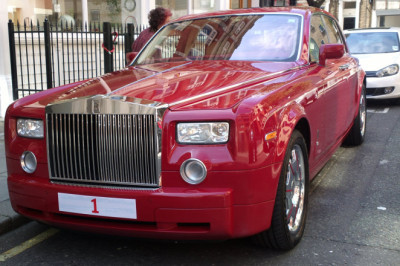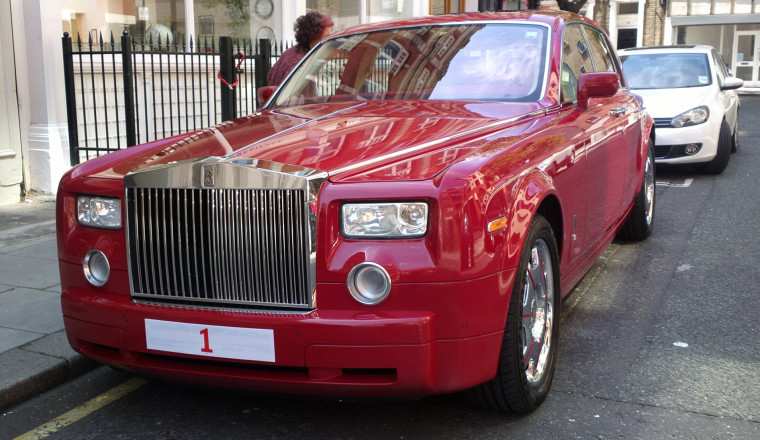

Britain has a number plate problem. Or, depending on how you look at it, a number plate opportunity.
New figures obtained through a Freedom of Information request to the DVLA, commissioned by luxury car retailer Stratstone, show the UK's personalised registration market generated £288.6 million in the 2024/25 financial year. That figure covers three revenue streams: DVLA auctions, online direct sales and the transfer fees paid when plates change hands between private owners. It works out at roughly £792,000 a day, every day of the year, spent on rearranging letters and numbers on a piece of aluminium.
The scale of what has happened to this market over the past decade is worth understanding. Auction revenues have almost doubled, rising from £24.7 million in 2015/16 to £44 million in 2024/25. Online direct sales have climbed from £77.5 million to £111 million over the same period. Transfer fees, paid when existing private plates are sold between owners rather than bought fresh from the DVLA, have risen from £94.8 million to £133.6 million. That last figure is the most telling. Transfer fees represent the secondary market, the plates that have already been issued and are now trading between collectors. A transfer fee market worth £133.6 million means there is a mature and active investment market sitting inside what most people think of as a vanity purchase.
Since the DVLA began selling personalised registrations at auction in 1989, more than 9.4 million private plates have been issued. The total is heading for ten million. Nearly half of the top 20 most valuable plates ever sold through the DVLA were sold in the 2020s, suggesting the era of serious money entering the market is recent and continuing.
The numbers at the top end are striking. The most expensive plate sold through the DVLA's direct online channel was HU57 LER, which sold for £4,999 in September 2012. That looks modest against the record for an auction sale. The plate 25 O achieved a hammer price of £400,000 at a DVLA auction in November 2014. Two characters. Four hundred thousand pounds. The auction house fees and VAT on top of that, which the DVLA does not hold separately in its data, are not included in the figure.
Like this? Get the app: iOS | Android
The pandemic accelerated everything. During 2020/21, online direct sales jumped 55 per cent in a single year, rising from 393,237 sales to more than 608,000. People locked at home with disposable income, limited ways to spend it and apparently significant feelings about what their car's registration said about them. Auction revenues also climbed through the Covid period, continuing a trend that has not reversed.
A Stratstone spokesperson described the market in terms that will be familiar to anyone who has watched alternative assets attract serious money:
"The data shows that the UK's obsession with personalised plates is not just cultural — it's a serious and growing market that's quickly closing in on 10 million private plates. Plus, the buoyant secondary resale market tells you that for many buyers, a personalised plate is an appreciating asset that's as much an investment as it is a statement."
The investment logic is not obviously wrong. A desirable plate carries no maintenance cost, no storage fee beyond a modest DVLA retention charge, and no mechanical depreciation. It can be transferred between vehicles. It can be held without owning a car at all. The supply of genuinely short plates and those tied to common names or initials is finite and shrinking. Basic economics suggests values for the rarest plates will continue to rise regardless of what the car market does around them.
Whether spending £400,000 on two letters constitutes rational asset allocation is a question for someone else. The DVLA is not complaining.
Sources
- GB News — Britons fork out £289m on personalised number plates as demand surges
- AM Online — UK private plate market nears £290m as demand surges
- Relentless Magazine — UK's Private Plate Market Worth Nearly £290m a Year, DVLA Data Reveals
- Motoring Research — Value of UK private number plate market soars to £289M a year
- DVLA FOI reference FOIR13160, responded to 13 March 2026 (data via Stratstone/Relentless Magazine)