

On 17 February, a section of the A431 between Bristol and Bath collapsed. The ground beneath the road near the village of Kelston had shifted by up to seven metres. Bath and North East Somerset Council closed the road immediately and announced that a fix would take months. The official diversion added up to 14 miles to every journey. For residents and business owners on either side of the closure, that meant up to an hour added to every commute, every delivery, every school run.
The council considered building a temporary bypass and decided against it.
Mike Watts, a 62 year old Bath retailer and entrepreneur who lived on the Bristol side of the landslip and owned businesses in Bath, was among those taking the full force of the closure every day. He was also the sort of person who, when presented with a problem and a gap, starts calculating what it would take to fill it.
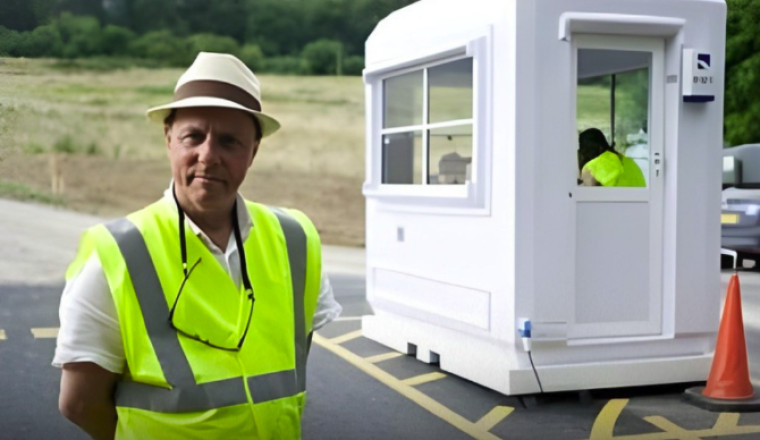
He approached John Dinham, the farmer who owned Roundhill Farm, Kelston, and proposed running a road through his field. Dinham agreed. Watts built a 400 metre gravel road in three days, erected toll booths at both ends, and opened the Kelston Toll Road on 1 August 2014.
The toll was £2 per car. Motorcycles, villagers and parents of local schoolchildren paid £1. Emergency vehicles went through free.
As Watts told reporters at the time:
"Building a toll road isn't easy to do. This is the first private road in Britain for 100 years. I think people are very grateful that we have taken this risk."
The numbers
The construction cost £150,000. Watts estimated a further £150,000 to operate the road for five months, bringing the total exposure to around £300,000, roughly $390,000. He and his wife put their home up as collateral to fund it. His breakeven calculation required 1,000 cars a day.
According to Wikipedia's detailed account of the road, the Kelston Toll Road ultimately carried 163,000 journeys. People came from around the world to drive it as a tourist experience after it went viral online. Watts received postcards from across the globe.
He still finished roughly £10,000 to £15,000 in the red.
Like this? Get the app: iOS | Android
The council's response
Bath and North East Somerset Council responded with what can charitably be described as enthusiasm for process. It launched a planning enforcement investigation. It raised concerns about insurance, safety standards and the structural impact of traffic loading on land above the landslip. Later in the operation it flagged a potential archaeological issue, claiming the road had been laid through an area of medieval strip lynchets and field boundary earthworks. Watts called the objections "ridiculous."
The council did not, at any point, close the road. It required Watts to apply for retrospective planning permission, which was still being processed when the A431 reopened.
The original highway came back into use on 17 November 2014, four weeks ahead of the council's original schedule, and the toll road closed the same day. The early reopening was directly responsible for Watts failing to break even: each week of lost revenue pushed the final balance further into the red.
HMRC eventually waived the shortfall in VAT owed from toll fee revenue. Bath and North East Somerset Council, at time of the road's closure, still had an outstanding business rates demand of £3,500 against Watts' company. His argument was straightforward: the toll never officially existed as a road because the council had never approved it, therefore the council had never provided it with any services, therefore business rates were not owed.
Kelston Toll Road Limited was formally dissolved in July 2015.
Watts' wife Wendy collected stones from the road after it closed and glued eyes on them. She sold them as pet rocks for £1 each, or £2 if sprayed gold.
The story has circulated repeatedly since 2014 as a case study in what happens when a private individual decides that waiting for the state is not an option. The math never quite worked. The road did exactly what it was built to do. And the council that investigated it for months never managed to shut it down while it was actually open.
Sources:
- Wikipedia — Kelston Toll Road
- Supercar Blondie — Man set up his own toll road without planning permission
- Farmers Weekly — Somerset farmer's toll road opens for traffic
- Global Highways — UK's first private toll road in a century being investigated
- UK Parliament Written Evidence — Kelston Toll Road as infrastructure case study