
The average transaction price for new vehicles in the United States reached an all-time high in December 2025, exceeding $50,000 for the first time according to data released by automotive research firm Cox Automotive in January 2026. The milestone marks the continuation of a multi-year trend that has pushed new car ownership beyond the financial reach of many American households despite industry predictions that prices would moderate.
Cox Automotive's analysis, which tracks actual transaction prices including dealer fees, taxes, and accessories rather than manufacturer suggested retail prices, found that the average buyer paid $50,364 for a new vehicle in December 2025. This represents a 3.8 percent increase over December 2024's average of $48,528 and a 42 percent increase compared to December 2019's pre-pandemic average of $35,441.
The data encompasses all vehicle segments from compact sedans to full-size trucks, weighted by actual sales volumes. Breaking down by category reveals that trucks and SUVs, which account for approximately 80 percent of new vehicle sales, drive the overall average upward with transaction prices often exceeding $55,000. Passenger cars, representing the shrinking 20 percent of the market, average lower prices around $38,000 but insufficient volume to pull the overall average down significantly.
"We've reached a point where the average new vehicle costs more than many Americans earn in a year," said Charlie Chesbrough, senior economist at Cox Automotive. "A $50,000 average transaction price represents over 90 percent of median household income in the United States. The affordability crisis in automotive retail has reached levels that fundamentally alter who can participate in the new car market."
Multiple factors contribute to escalating prices. Vehicle complexity has increased dramatically, with advanced driver assistance systems, infotainment technology, and electrification adding thousands of dollars to manufacturing costs. Regulatory requirements for safety equipment and emissions controls impose additional expenses. Supply chain disruptions during and after the COVID-19 pandemic created shortages that allowed manufacturers and dealers to eliminate discounting and charge premium prices, habits that persisted even as inventory normalized.
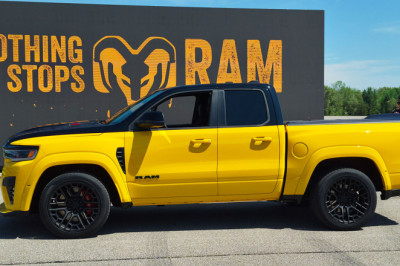
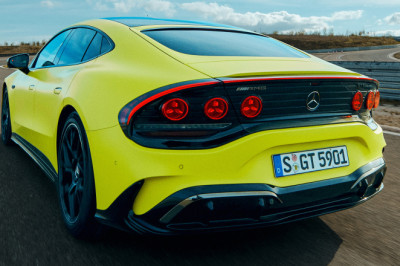
The shift toward trucks and SUVs amplifies the trend. Full-size pickup trucks from Ford, General Motors, and Ram regularly transact over $60,000 with popular trim levels and option packages. Luxury SUVs from brands including BMW, Mercedes-Benz, and Land Rover commonly exceed $80,000. Even compact crossovers from mainstream brands like Toyota and Honda now frequently break $40,000 with desirable features and all-wheel drive.
Electric vehicles, representing approximately 9 percent of new vehicle sales in December 2025, carry average transaction prices around $56,000 according to Cox data. While Tesla's Model 3 and Model Y offer relatively affordable entry points starting in the low $40,000 range, luxury EVs from Porsche, BMW, and Lucid push the average upward. The limited availability of affordable electric options below $35,000 keeps EV transaction prices elevated compared to the overall market.
Incentives and discounts have effectively disappeared for many popular models. Manufacturer cash rebates that once reduced transaction prices by thousands of dollars barely exist on high-demand vehicles. Dealers routinely charge above sticker price for scarce models, adding market adjustments that can reach $10,000 or more on desirable trucks and performance vehicles. These practices, normalized during pandemic shortages, continue despite improved inventory levels.
The financing implications prove concerning. With average interest rates on new car loans hovering around 7.2 percent in December 2025 according to Edmunds, monthly payments on a $50,000 vehicle with typical down payment and loan term exceed $800. Many buyers stretch to 72 or 84-month loan terms to reduce monthly payments, but longer terms mean more interest paid and extended periods of negative equity where loan balances exceed vehicle values.
"We're seeing loan terms and payment-to-income ratios that would have been considered irresponsible ten years ago now becoming standard," explained Ivan Drury, director of insights at Edmunds. "Buyers are taking seven-year loans on depreciating assets, paying interest that adds thousands to total costs, and remaining underwater on their loans for years. The math doesn't work for many households, yet they proceed because they need transportation."
Subprime lending has expanded to accommodate buyers unable to qualify for traditional financing at these price points. Interest rates exceeding 15 percent are common for borrowers with poor credit, turning already expensive vehicles into financial burdens that consume substantial portions of household income. Default rates on subprime auto loans have increased according to Federal Reserve data, suggesting some buyers are overextended.
The affordability crisis has multiple consequences. First-time buyers find themselves priced out of new vehicle markets entirely, forced into used markets where prices have also climbed substantially. According to Cox Automotive, the average used vehicle transaction price in December 2025 reached $29,450, still expensive but at least within theoretical reach for more buyers than new vehicles at $50,000-plus.
Lower-income households face particular challenges. Transportation represents necessity for employment in most American communities lacking comprehensive public transit, yet vehicle costs consume ever-larger portions of limited budgets. Some households resort to questionable financing arrangements or purchase unreliable older vehicles that require expensive repairs, creating cycles of transportation insecurity.
Manufacturers argue that price increases reflect genuine value additions rather than profit gouging. Modern vehicles offer safety technology preventing crashes that would have been unavoidable decades ago. Infotainment systems provide connectivity and convenience unimaginable in earlier generations. Build quality and reliability have improved substantially, extending useful vehicle life and reducing long-term ownership costs even if purchase prices are higher.
"A $50,000 vehicle today delivers capabilities and safety that didn't exist at any price twenty years ago," stated a spokesperson for the Alliance for Automotive Innovation, the industry trade group, in response to questions about affordability. "Automatic emergency braking, blind spot monitoring, and advanced crash structures save lives daily. Yes, vehicles cost more, but they also provide more value and protection."
Critics counter that mandatory features many buyers don't want or need drive prices beyond affordability. Touch-screen infotainment systems, power-adjustable seats, and other convenience items add costs without providing the essential transportation function many buyers seek. Manufacturers' decisions to discontinue affordable base models in favor of well-equipped, higher-margin variants effectively eliminate entry-level options.
The sedan's near-extinction exemplifies this dynamic. Models including the Ford Focus, Chevrolet Cruze, and Chrysler 200 once provided transportation for under $20,000. Manufacturers discontinued these vehicles citing low profitability compared to trucks and SUVs, leaving buyers with expensive crossovers as the cheapest remaining options from many brands. The few surviving sedans like the Honda Civic and Toyota Corolla now commonly transact in the mid-$30,000 range when optioned to match average buyer preferences.
International comparisons reveal that American vehicle prices have escalated more dramatically than in other developed markets. European new car prices increased approximately 25 percent over the same 2019 to 2025 period according to European Automobile Manufacturers' Association data, substantial but less than America's 42 percent. Regulatory differences, market preferences favoring smaller vehicles, and greater price sensitivity among European consumers contribute to the gap.
Used vehicle values remaining elevated provides some offset for existing owners trading toward new vehicles. Strong used prices mean trade-ins provide more equity for down payments, reducing financing required for new purchases. However, this benefit only helps current owners, not first-time buyers or those whose previous vehicles have depreciated normally.
The question becomes whether $50,000 average transaction prices represent a sustainable new normal or a peak that must eventually correct. Economic theory suggests that prices exceeding buyer capacity eventually force adjustments through reduced demand. However, transportation necessity and limited alternatives mean automotive demand proves relatively inelastic, allowing prices to remain elevated even when affordability suffers.
Some analysts predict gradual moderation as manufacturers introduce less expensive electric vehicles and competition intensifies from Chinese automakers entering global markets with lower-cost offerings. Others suggest that until manufacturers face genuine sales volume declines from affordability constraints, little incentive exists to reduce prices or reintroduce stripped-down economy models.
For the average American household, the $50,000 new car represents an increasingly unrealistic aspiration. The decision increasingly becomes whether to stretch budgets beyond prudent limits, compromise by purchasing used vehicles, or simply drive existing vehicles longer while hoping they remain reliable. None of these options represents the carefree new car shopping experience that existed when average prices sat in the mid-$30,000 range just six years ago.
December 2025's record $50,364 average transaction price symbolizes an automotive market that has fundamentally changed. Whether through necessity, preference, or manufacturer strategy, vehicles have become expensive durable goods accessible primarily to upper-middle-class and wealthy households. The middle-class new car buyer, once the industry's bread and butter, finds themselves increasingly squeezed between escalating prices and stagnant incomes, forced to make difficult choices about transportation that affects employment, family logistics, and quality of life. The $50,000 average represents more than inflation or feature content. It represents a market leaving millions of Americans behind.