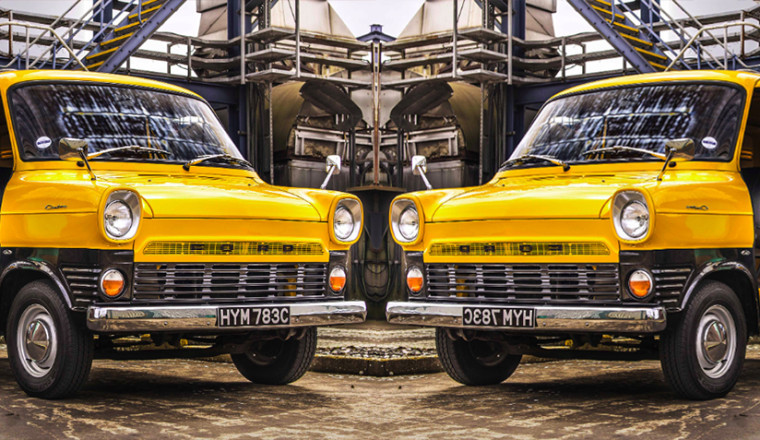

Back in the early 1960s, Ford UK churned out the Thames 400E from its Berkshire plant while Ford Germany built the rival Taunus Transit FK1000 in Cologne, creating internal chaos as the two arms battled for European sales with near-identical vans that shared zero parts. Henry Ford II, fed up with the inefficiency, issued a 1961 directive demanding a unified "one Ford Transit" design from both teams under Project Redcap, launching in 1965 with the first unit rolling off the Langley line on August 9. Production split between UK (Langley, later Southampton) and Germany (Cologne), pumping out a semi-forward-control workhorse with innovations like printed circuit dashboards, optional steering locks, and side-loading doors.
Externally flawless twins, yet every component diverged thanks to national suppliers: UK models ran Lucas electrics and imperial measurements (inches, Whitworth bolts), while German versions stuck to Bosch wiring and metric standards (millimeters, standard threads). Engines differed too, UK favored V4s and later four-cylinders, Germany its own lineup making cross-border repairs a nightmare and full interchangeability a myth until later standardizations.
This compromise birthed a 10-million-plus sales legend, but exposed Ford's early European growing pains.
Spot the difference? Start with the bolts!