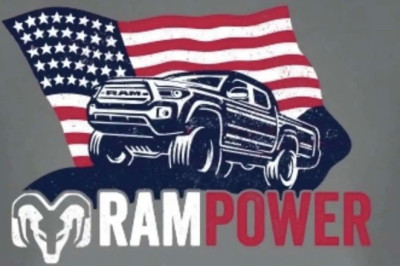

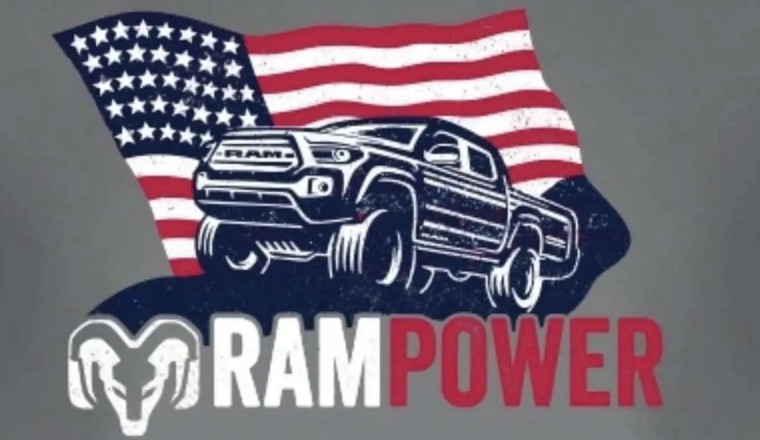

Ram's official online merchandise store was selling a "2026 Ram Patriotic Unisex T-Shirt" for $29.95. The shirt's centrepiece was a pickup truck printed in front of a waving American flag with the words "Ram Power" across the bottom. By every visual indicator available the round projector headlights, the hexagonal grille structure, the body proportions and the side window profile the truck was a Toyota Tacoma from the previous generation. Someone, or something, had simply placed a RAM badge on the front of it and shipped it to the print queue.
The flag had issues too. A real American flag has 50 stars, representing 50 states. The flag on the shirt had somewhere between 35 and 40, depending on which reviewer's count you trust, because the AI's grasp of American vexillology was as approximate as its understanding of Ram's model range. The 13 stripes representing the original colonies were also short by at least one. The shirt was, in summary, a patriotic tribute to America that featured the wrong truck, the wrong number of states and an incomplete rendering of the national flag.
Shortly after screenshots began circulating surfaced initially by Motor1 the product listing disappeared entirely, redirecting to a blank page. The internet had already saved its receipts.
The banner product that Ram was also selling at the time got the flag correct. It still had the Tacoma on it.
Like this? Get the app: iOS | Android
This was not Stellantis's first encounter with the consequences of using generated imagery in official material. Less than two months earlier, the company was criticised for posting images on Ram's official social media channels that appeared to have been generated by AI, one of which featured a visually distorted Ram alongside an equally distorted Dodge Neon. That incident produced the requisite round of industry commentary. The lesson was apparently not retained at the merchandise approval stage.
The specific failure here is not that AI tools are imperfect. They are, and everyone who uses them knows it. The failure is that a major automotive brand, one whose entire identity is built around its trucks, allowed an image of the wrong truck to pass through whatever approval process exists for official branded merchandise and appear on sale at the company's own storefront. The Tacoma is one of the most recognisable pickups in America. The Ram 1500 is a different vehicle in almost every visible dimension. The difference between them is not subtle or technical. It is the difference between the product you are selling and your primary competitor's product.
Ram has not commented publicly. The shirt is gone. The screenshots are not.
Whether the image was fully generated by AI or simply created using generic stock artwork remains unclear. The outcome is identical either way: a brand that builds trucks paid to put a competitor's truck on its own shirt, priced it at $29.95, and put it on sale before anyone with eyes caught it.
Somewhere in Toyota's marketing department, someone is having a very good week.
Sources
- Carscoops — Ram Accidentally Put A Toyota Tacoma On Its Own Patriotic Truck Shirt
- The Autopian — Ram Appears To Be Using AI To Design Its Merch And Is Selling A 48-Inch Banner With A Toyota Tacoma On It
- The Drive — Ram Is Selling A Patriotic T-Shirt With An AI-Generated Tacoma And Botched American Flag
- Motor1 — Yikes: Ram Made An AI-Generated Shirt With A Tacoma On It (first to surface the story)
- Autoblog — Ram Merch Pulled After Pickup Appears To Be A Toyota Tacoma
- CarBuzz — Oops: Ram's Idea Of A 'Patriotic' Pickup Truck Is Apparently A Toyota Tacoma
- Jalopnik — Ram's New Midsize Pickup Is A Toyota Tacoma According To Its Own AI Slop T-Shirt Design