

Rachel Reeves was warned Friday night that her fuel tax raid will push thousands of businesses 'to the brink', ramp up food costs for millions of households and stoke inflation.
Amid mounting calls for the Chancellor to ditch her planned fuel duty hike, nearly 500 haulage bosses told her now is the 'wrong time' amid rocketing pump prices.
In a letter to her, seen by the Daily Mail, they warn the rise will pile more cost-of-living pressures on 'everyday consumers' after their fuel costs already soared 40 per cent because of the Iran war.
This will be passed on to consumers in the form of higher prices on supermarket shelves, the bosses, responsible for moving billions of pounds-worth of goods around Britain, warn.
They go on to starkly declare: 'We cannot afford another inflation crisis caused by the cost of fuel.'
Amid spiralling global oil prices sparked by the conflict in the Gulf, most governments around the world have cut fuel taxes to help out hard-pressed motorists and keep inflation down.
But Ms Reeves and Sir Keir Starmer have repeatedly refused calls to ditch their fuel duty hike, slated to kick in from September.

Chancellor Rachel Reeves (pictured) is refusing to ditch her fuel duty hike despite pressure from haulage bosses
It will reverse the current 5p a litre fuel duty relief, originally introduced by the Tories in 2022 after Russia's invasion of Ukraine, adding on average over another £3 to the cost of a fill-up.
Families' and haulage firms' petrol and diesel bills have already soared by the equivalent of hundreds of pounds a year.
The letter, drawn up by industry body the Road Haulage Association (RHA) and signed by 475 of the sector's bosses, adds: 'On behalf of HGV, coach and van operators, alongside all other road users and the entire UK economy, we ask you to end the planned increases in fuel duty.
'A 5p cut was introduced in 2022 as a result of international conflicts sending fuel prices soaring.
'We are now in the same situation four years later, and it is the wrong time to reverse those cuts now.
'Higher prices for fuel drives up prices for everyday consumers and pushes businesses and employers to the brink.'
RHA boss Richard Smith added: 'We need the Chancellor to act now.
'Commercial vehicles move around 80 per cent of Britain's goods and generate more than a third of fuel duty revenues.
'Yet they are being hit hardest by rising fuel costs.
'These increases are inflationary, pushing up the cost of everything from food to construction.
'That's why we're calling on the Government to scrap planned fuel duty rises… Other countries already back their transport sectors in this way. It's time the UK did the same.'
It comes after analysis by the RAC Foundation found that drivers have taken an extra £1billion hammering at the pumps because of rocketing prices sparked by the conflict.
Diesel drivers, also the fuel most used by hauliers and tradesmen, have been the worst hit, as it has spiralled at about twice the rate of petrol.
Yesterday the RAC said diesel has risen daily for the last 40 days at a rate not seen for more than a decade.
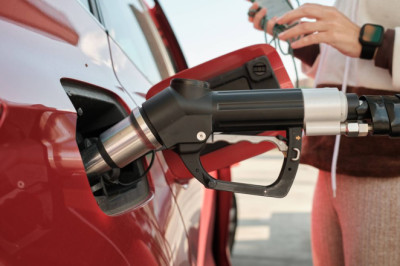
Average forecourt prices surged again yesterday to 191.31p a litre - nearly a 50p increase (34 per cent) since the conflict started on February 28.
Petrol also jumped to 158.16p a litre, a 25 per cent increase.
It means filling the average 55-litre tank in a family car with petrol now costs £87 - £14 more than before the conflict.
Filling up with diesel, meanwhile, costs an eye-watering £105 - a £27 increase.
And with the US-Iran ceasefire being 'fragile', according to Sir Keir yesterday, global oil prices are expected to remain volatile for several weeks.
It means prices may not start falling for several weeks or even months as there is often a considerable lag between oil prices dropping and that being passed on at the pumps.
Reform UK, the Tories and Liberal Democrats have all called for Labour to ditch the hike, with the latter's party leader Sir Ed Davey even calling for a 10p a litre cut in the levy.
The party's Treasury spokesman, Daisy Cooper, told the Daily Mail: 'The Chancellor is playing a dangerous game with the economy.
'At a time when local businesses and families are being hammered by a global energy crisis, it's irresponsible for the Government to be digging its heels in on its planned fuel duty hike.
'If Rachel Reeves pushes ahead with this fuel raid, she'll be forcing thousands of small firms into the red and sending food prices back through the roof.'
Reform UK deputy leader Richard Tice said his party has 'been calling for fuel duty savings as seen in other countries', adding: 'Rachel Reeves is the tone-deaf Chancellor.'
The Tories' Shadow Transport Secretary Richard Holden branded the Prime Minister 'spineless', adding: 'Starmer is abandoning British businesses, hauliers, and families.'
Several European countries have taken action to help motorists. Spain launched a £4.3billion fund that reduces VAT on fuel by around 26p a litre, with Portugal and Sweden announcing similar schemes.
Croatia, Greece, Austria and Hungary either introduced caps on pump prices or forecourt profits.
Austria also cut petrol taxes while Germany banned forecourts from hiking prices more than once a day.
Last month, the Australian government announced it was halving petrol taxes for three months and reducing excise duty on diesel by 20 cent per litre and petrol by 15 cent per litre.
Edmund King, AA president, said: 'Households across the country are still feeling the financial hit from the conflict and need some extra help to keep costs down.'
The RAC's Simon Williams said: 'The average prices of both petrol and diesel have now increased every day for the last 40 days.
'For diesel this is a new record for consecutive daily price rises since 2015 and for petrol it matches the run of rises seen at the end of June 2022.'
A Treasury spokesman said: 'Motorists are paying more because of the war in Iran. This is not our war and that is why we did not join it.
'We are determined to keep costs down for motorists.
'That’s why we have extended the 5p fuel duty cut twice until September and will continue to monitor the situation.'
Context:
Nearly 500 haulage bosses warn fuel duty hike will push businesses to brink and increase food costs.
Context:
Higher transport costs directly impact grocery prices, affecting millions of households already facing inflation.
Context:
Diesel prices have risen daily for 40 consecutive days, the fastest rate in over a decade.