

Porsche achieved its strongest-ever US sales performance in 2025 while simultaneously reporting its worst global delivery decline in 16 years and a sharp profit collapse, highlighting the diverging fortunes between North American and international markets. The German sports car manufacturer delivered 91,374 vehicles in the United States during 2025, surpassing the previous record of 86,767 set in 2023, yet global deliveries fell 10 percent to 279,449 vehicles from 310,718 in 2024.
The contradiction between record American sales and catastrophic overall performance stems primarily from Chinese market collapse, where Porsche deliveries plunged approximately 28 percent year-over-year according to company figures released in January 2026. China, which briefly overtook the United States as Porsche's largest single market in 2023 and 2024, saw customers retreat from luxury purchases amid economic slowdown and intense competition from domestic electric vehicle manufacturers.
Operating profit fell to €4.1 billion for 2025 compared to €6.3 billion in 2024, a 35 percent decline that exceeded the delivery volume reduction and indicated margin compression beyond simple volume effects. The company's operating margin, closely watched by analysts as a key performance metric, dropped from 18.0 percent in 2024 to 13.2 percent in 2025, the lowest level since 2020's pandemic-disrupted year.
"2025 presented exceptional challenges that we navigated with some success in North America but could not overcome globally," stated Oliver Blume, Porsche CEO, during the company's annual results presentation on January 22nd, 2026. "The Chinese market's rapid transformation and geopolitical tensions affected premium automotive sales significantly. Our American performance demonstrates continued brand strength, but one region cannot compensate for global headwinds."
The Chinese decline reflects multiple factors beyond general economic conditions. Domestic manufacturers including BYD, NIO, and Li Auto have launched electric vehicles combining luxury appointments, advanced technology, and competitive pricing that appeals to younger Chinese buyers previously attracted to European premium brands. Porsche's electric Taycan, while successful in Europe and North America, faces fierce competition in China where electric vehicles represent over 40 percent of new car sales compared to roughly 9 percent in the US.
Geopolitical tensions between China and Western nations created additional complications, with some Chinese consumers deliberately avoiding Western luxury brands as expressions of nationalism or concerns about diplomatic complications affecting vehicle support and resale values. Social media campaigns encouraging purchases of domestic brands rather than foreign alternatives gained traction throughout 2025, affecting not just Porsche but also BMW, Mercedes-Benz, and other European manufacturers.
The American market told a starkly different story. Porsche's 91,374 US deliveries represented 5.3 percent growth over 2024's 86,767 units, driven primarily by strong Cayenne and Macan SUV sales. The electric Macan, launched in North America during 2025, contributed approximately 8,400 sales despite limited availability for much of the year. The 911, Porsche's iconic sports car, maintained stable volumes around 11,200 units, while the Taycan electric sedan contributed roughly 9,800 sales.
Wealthy American buyers, benefiting from strong stock market performance and resilient economic growth, continued purchasing premium vehicles despite higher interest rates that affected mainstream automotive markets. Porsche's positioning at the luxury segment's upper end insulated it from financing cost sensitivity affecting mass-market brands, while the company's sports car heritage and SUV practicality combination resonated with American preferences.
"The US customer values Porsche's blend of performance, luxury, and usability in ways that sustain demand even during economic uncertainty," explained Kjell Gruner, Porsche's North American CEO, in comments to Automotive News. "We've maintained our brand's sporting credentials while delivering vehicles suitable for daily driving, school runs, and family transportation. That versatility drives American sales in ways unique to this market."
However, American success couldn't offset profit margin compression affecting the entire company. Development costs for electric vehicle technology, hybrid powertrains, and software systems continue rising while average transaction prices face pressure from competition and market conditions. Porsche's average vehicle price declined approximately 3 percent globally in 2025 according to company data, reflecting both model mix shifts toward less expensive variants and reduced ability to command premium pricing in competitive markets.
The Taycan, Porsche's first pure electric vehicle launched in 2019, has struggled with profitability despite respectable sales volumes. Electric vehicle manufacturing costs, particularly battery expenses, remain higher than combustion powertrains, while development investments required to create the electric platform haven't been fully amortized across sufficient volumes. Porsche reportedly loses money on each Taycan sold according to industry analysts, though the company declined to confirm specific model profitability.
Currency fluctuations compounded financial challenges, with the strong US dollar reducing euro-denominated profit when American revenues are repatriated to Germany. While this dynamic typically affects all automakers with international operations, Porsche's increased US revenue concentration in 2025 meant currency impacts proved particularly significant.
European sales, representing Porsche's home market, showed modest 2 percent decline to approximately 88,000 deliveries. Regulatory pressures around emissions, economic uncertainty in key markets including Germany and France, and electric vehicle transition complications all contributed to muted performance. The European market's importance extends beyond sales volumes to brand heritage and engineering credibility, making weakness in home markets symbolically damaging even when volumes prove smaller than China or America.
The model mix shift toward SUVs continued, with Cayenne and Macan combined representing approximately 63 percent of global deliveries. This dependency on SUVs, while financially lucrative and meeting customer demand, creates tension with Porsche's sports car heritage. Purists argue that the brand has become an SUV manufacturer that happens to build sports cars rather than the inverse, though commercial reality shows SUVs fund the development and production of 911s and other sporting models.
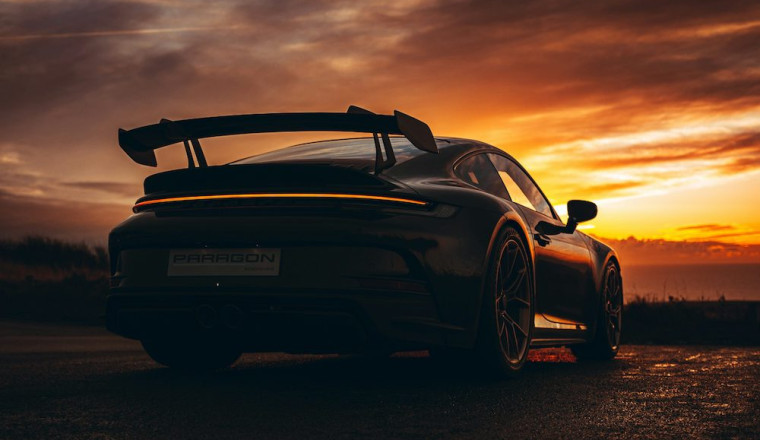
The 911 itself maintained stable global volumes around 41,000 units, demonstrating enduring appeal despite proliferating variants and pricing that now sees top-specification models exceeding £200,000. The 718 Boxster and Cayman mid-engine sports cars contributed roughly 23,000 combined sales, while the Panamera luxury sedan added approximately 31,000 deliveries. These sporting models generate prestige and halo effects supporting brand positioning but provide smaller volume and profit contributions than SUVs.
Looking toward 2026, Porsche faces uncertain prospects. Chinese market recovery remains questionable given ongoing economic challenges and intensifying domestic competition. American sales might moderate as economic expansion slows and the record 2025 performance proves difficult to repeat. European markets show little growth potential absent significant economic improvement or compelling new model launches.
The electric Macan's full-year availability in 2026 should boost EV sales, though profitability questions persist. Porsche has delayed the next-generation 718 Boxster and Cayman, initially planned as pure electric vehicles, acknowledging that sports car customers remain reluctant to abandon combustion engines. This delay illustrates the challenge of transitioning heritage sports car brands to electrification when core customers value engine character alongside performance.
Cost reduction programmes announced alongside the results presentation target €500 million in annual savings through production efficiency improvements, reduced development timelines, and streamlined administrative processes. Whether these savings can offset margin pressures from competition, technology investment, and market challenges remains uncertain.
Porsche's 2025 results demonstrate that even iconic brands with premium positioning cannot escape broader market forces. Record American sales provided positive narrative but couldn't prevent profit collapse when China, the world's largest automotive market, turned hostile. The divergence between regional performances creates strategic questions about market prioritization and resource allocation.
Does Porsche double down on American success, potentially developing US-specific models or variants that might not suit other markets? Does the company accept reduced Chinese presence or invest heavily attempting to reclaim market share from domestic competitors? Can European sales be revitalized or has that market reached maturity for premium sports cars and SUVs?
These questions lack easy answers, particularly as electrification transition costs continue rising and regulatory environments grow more complex. Porsche navigates waters where traditional strengths including engineering excellence, brand heritage, and passionate customer base must coexist with new realities of electric powertrains, software-defined vehicles, and markets where Western premium brands no longer automatically command respect and sales.
The 91,374 American deliveries represent genuine achievement and testament to Porsche's continued relevance in the world's wealthiest automotive market. But the 279,449 global total and €4.1 billion profit tell the complete story: success in one region cannot compensate for global challenges, and 2025 brought challenges that even Porsche's considerable strengths couldn't fully overcome. The road ahead looks bumpy, with no guarantee that 2026 brings easier conditions. For now, Porsche can celebrate American records while acknowledging the difficult reality that records in one market mean little when the global picture looks so troubled.